Solar generators are a game changer for anyone looking to tap into renewable energy. They provide power for camping trips, outdoor events, or even during emergencies at home. With a variety of sizes and features, you can easily find one that fits your needs and budget.
Solar Generators
Power your adventures and stay off the grid with reliable solar generators
Product List
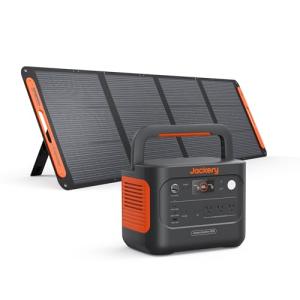
Jackery Solar Generator 1000 v2 with 200W Sol...
Product Review Score
4.19 out of 5 stars
111 reviews$709.00
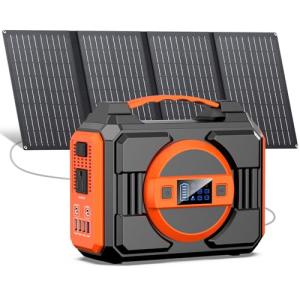
Apowking Portable Solar Powered Generator 300...
Product Review Score
4.8 out of 5 stars
66 reviews$189.99 $159.99
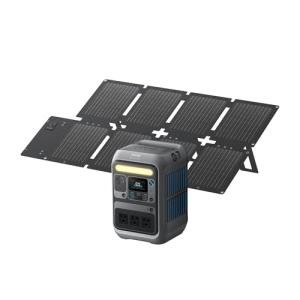
Anker Solar Generator SOLIX C300 with 60W Sol...
Product Review Score
4.99 out of 5 stars
195 reviews$399.99 $329.99
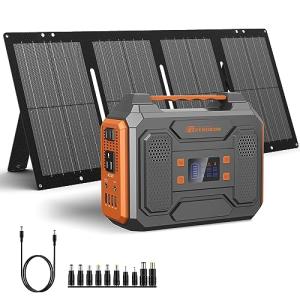
Portable Solar Generator, 300W Portable Power...
Product Review Score
4.12 out of 5 stars
150 reviews$189.97 $177.88
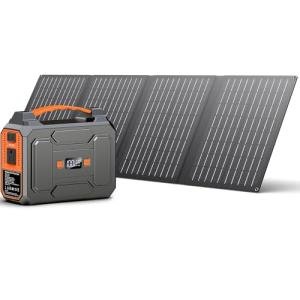
Solar Powered Generator 200W Peak/100W Rated,...
Product Review Score
4.96 out of 5 stars
84 reviews$179.99 $119.97
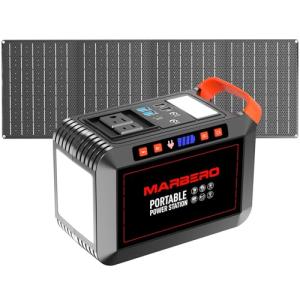
MARBERO 148Wh Solar Generator with Solar Pane...
Product Review Score
4.7 out of 5 stars
100 reviews$159.99 $134.99
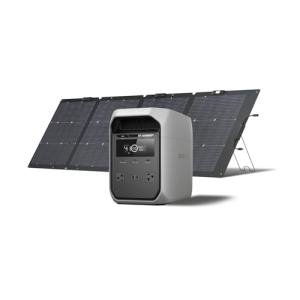
EF ECOFLOW Solar Generator DELTA 3 Classic wi...
Product Review Score
4.72 out of 5 stars
209 reviews$999.00 $599.00
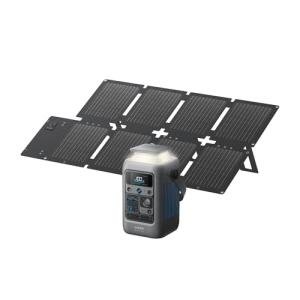
Anker SOLIX C300 DC Power Bank Station and 60...
Product Review Score
4.68 out of 5 stars
190 reviews$369.99 $259.99
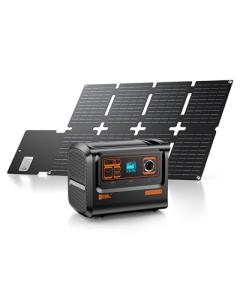
EBL 300W Portable Power Station with 40W Fold...
Product Review Score
4.73 out of 5 stars
150 reviews$299.99
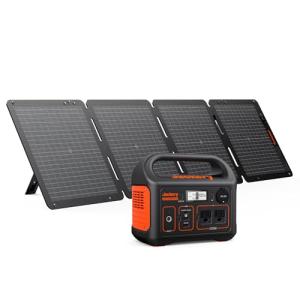
Jackery Solar Generator 300, 293Wh Backup Lit...
Product Review Score
4.52 out of 5 stars
52 reviews$499.00 $369.00
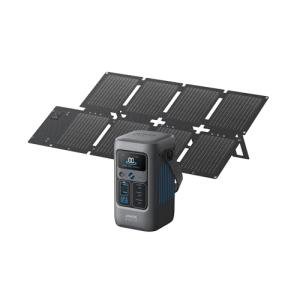
Anker SOLIX C200 DC Power Bank Station and 60...
Product Review Score
4.45 out of 5 stars
57 reviews$259.99 $189.99
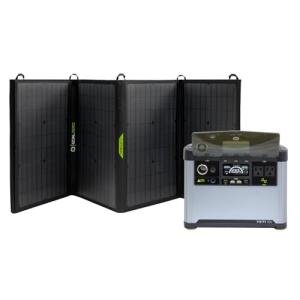
Goal Zero Yeti Portable Power Station, Yeti 7...
Product Review Score
4.17 out of 5 stars
24 reviews$1,099.95
What Exactly Is a Solar Generator?
The term "solar generator" gets used loosely, so let's pin it down. At its core, a solar generator is a portable battery-based power station that can be recharged using solar panels. It stores energy in a lithium battery pack, then delivers that energy through standard AC outlets, USB ports, DC outputs, and other connection types.
This distinguishes it from a traditional fuel-powered generator in every meaningful way. There's no combustion engine, no exhaust fumes, no oil changes, and no trips to the gas station. The trade-off is capacity — solar generators typically store less total energy than a full-sized gas generator can produce over hours of running time. But that gap has closed dramatically over the past few years, and for most real-world use cases, it no longer matters.
Think of a solar generator as a giant, intelligent battery with built-in power management, paired with one or more solar panels that keep it topped off using sunlight.
How Solar Generators Work
The system has three core components working together:
Solar Panels capture sunlight and convert it into direct current (DC) electricity. Most solar generators are compatible with foldable or rigid monocrystalline panels, which are the most efficient type available for portable use. The panels feed power into the generator through a solar charge controller.
The Battery Pack stores that captured energy. Modern solar generators almost universally use lithium-based batteries — either Lithium-Ion (Li-Ion) or Lithium Iron Phosphate (LiFePO4). LiFePO4 chemistry has become the industry favorite for its superior cycle life (often 3,000 to 3,500 full charge cycles before noticeable degradation), thermal stability, and long-term reliability.
The Inverter converts stored DC energy into AC power — the kind your appliances, laptops, and tools are designed to use. Inverter quality matters. Pure sine wave inverters produce clean, stable power that's safe for sensitive electronics, motors, and medical devices. Lower-quality modified sine wave designs can cause problems with certain equipment and should generally be avoided.
Wrap all of that into a portable housing with a display screen, charge management software, and a lineup of output ports, and you have a solar generator.
Who Needs a Solar Generator?
The honest answer is: a lot more people than you might think. Solar generators have moved well beyond the niche of hardcore outdoor enthusiasts. Here's how real people are actually using them:
Emergency Home Backup
Power outages are becoming more frequent and lasting longer in many parts of the world. A mid-to-large solar generator can keep your refrigerator running, charge phones and laptops, power medical devices like CPAP machines, and keep lighting on throughout your home for hours or even days — especially when paired with enough solar input to recharge during daylight hours.
Unlike gas generators, you can run a solar generator inside without ventilation concerns. That alone is a major safety and convenience advantage during a storm or extended grid failure.
Off-Grid and Van Life
The nomadic living movement has been one of the biggest drivers of solar generator innovation. Van dwellers, overlanders, and tiny house residents depend on solar power systems to run their entire lives — cooking, working, sleeping, and everything in between. Solar generators offer a modular, scalable approach to off-grid power that doesn't require permanently wiring a system into a vehicle or structure.
Camping and Outdoor Adventures
Car camping with a solar generator means real coffee from a drip machine, a functioning blender for trail smoothies, phone and camera charging at full speed, and a powered lantern that doesn't depend on batteries. For base camp mountaineering, expeditions, or extended canoe trips with portaging, lighter and more compact models shine.
Remote Work and Job Sites
Contractors, photographers, videographers, and remote workers who operate away from power infrastructure use solar generators to run tools, charge equipment, and keep communications going. For freelancers who work in places like national parks, remote ranches, or rural properties under development, dependable portable power is a professional necessity.
Disaster Preparedness
Many emergency preparedness experts now recommend solar generators as part of a household resilience plan, particularly for households with medical equipment users, elderly residents, or young children. A solar generator that can be recharged from sunlight — a resource that doesn't run out and can't be depleted from a store shelf — is a fundamentally different kind of asset than a fuel-dependent backup.
Key Specs to Understand Before You Buy
Shopping for solar generators means reading a lot of numbers. Here's what the important ones actually mean:
Capacity (Wh — Watt-Hours)
This is how much total energy the battery can store. Think of it like the gas tank. A 500Wh battery holds roughly half the energy of a 1,000Wh unit. To estimate what you can run, add up the wattage of your devices and multiply by the hours you need to run them. A 60W laptop running for 8 hours needs 480Wh — and that's before accounting for inverter efficiency losses.
Small generators (under 500Wh) suit light use: phones, cameras, small fans, LED lighting. Mid-range units (500Wh–1,500Wh) cover most camping and occasional backup needs. High-capacity units (1,500Wh and above) can handle refrigerators, power tools, and whole-home partial backup scenarios.
Output Power (W — Watts)
Capacity tells you how much energy is stored. Output wattage tells you how much power the generator can deliver at any one moment. A generator rated at 1,000W continuous output can run devices that collectively draw up to 1,000 watts simultaneously. Surge wattage (sometimes called peak output) covers the brief power spikes that motors and compressors require when starting up — this number matters a lot if you're running refrigerators, air conditioners, or power tools.
Solar Input (W)
Every solar generator has a maximum solar input rating — how many watts of solar panel power it can accept at once. This determines how quickly it can recharge from sunlight. Matching your panel array to this rating (or staying just under it) gives you the fastest possible solar recharge time.
Battery Chemistry
As mentioned, LiFePO4 batteries offer the best long-term value due to their cycle life and safety profile. If you're investing in a serious unit you plan to use for a decade, prioritize LiFePO4. Standard lithium-ion is perfectly fine for occasional-use units where cost and weight are higher priorities.
Expandability
Some solar generator platforms are designed to grow with your needs. Stackable extra battery units, higher-wattage panel compatibility, and smart home integration features are available on premium platforms. If you think your power needs might grow, look for systems designed with expansion in mind.
Solar Generator vs. Gas Generator: The Real Comparison
This comparison comes up constantly, and the answer depends entirely on your use case.
Gas generators win on raw power output and total energy delivery over extended runtime. If you need to run an entire household indefinitely, a high-output gas generator connected to a large fuel supply is still the most powerful option.
But solar generators win in nearly every other dimension:
- Silent operation — no engine noise, ever
- Zero emissions — safe indoors, no carbon monoxide risk
- No fuel cost — sunshine is free
- Low maintenance — no oil, no spark plugs, no carburetors
- Better portability — most models have handles, wheels, or carry straps
- Scalable charging — add panels, charge from your car, or plug into the wall
- Smarter power management — digital displays, app connectivity, and automatic input switching
For most people facing realistic scenarios — a 24–72 hour outage, a week of camping, daily off-grid work — a well-sized solar generator is not just adequate. It's actually the better tool.
Choosing the Right Size
Here's a quick sizing framework to simplify your decision:
Compact (under 300Wh): Best for backpackers, cyclists, weekend campers, and keeping a phone and light charged during short outages. Lightweight enough to carry in a pack.
Mid-size (300Wh–1,000Wh): The sweet spot for most people. Handles camping comfortably, keeps a mini-fridge running for several hours, charges multiple devices, powers small appliances. Great for most emergency backup scenarios.
Large (1,000Wh–2,000Wh): Serious basecamp power, van life systems, extended home backup. Can typically run a full-size refrigerator through the night when properly charged. Recommended for anyone with medical equipment needs.
Whole-home backup (2,000Wh+): High-capacity systems with expandable batteries and high solar input ratings. Designed for extended grid independence and larger household loads. These systems often include smart home panels and integration with home wiring.
Practical Tips for Getting the Most Out of Your Solar Generator
Maximize solar input. Keep panels pointed directly at the sun and reposition them as the sun moves if possible. Shade on even part of a panel dramatically reduces output.
Charge from multiple sources when available. Most quality solar generators accept simultaneous input from solar, wall AC, and 12V car/vehicle sources. Using two or three inputs at once dramatically cuts recharge time.
Know your device wattages. A quick lookup of the wattage ratings for your key appliances will help you plan runtime accurately. Refrigerators, coffee makers, and space heaters are among the highest-draw common household devices.
Store with a partial charge. For long-term storage, most lithium batteries prefer being stored at 50–80% charge rather than fully charged or fully depleted. Check your manufacturer's guidance.
Protect from temperature extremes. Lithium batteries charge and discharge less efficiently in very cold temperatures and can be damaged by excessive heat. In cold weather, warming up the unit before heavy use helps performance.
Solar generators represent a genuinely mature, practical technology that fits real lives and real needs. They've moved from novelty to necessity for a growing portion of the population — and the technology keeps improving while prices continue to fall.
Whether you're preparing your household for emergencies, simplifying your camping setup, building out a mobile work solution, or working toward greater energy independence, there's a solar generator designed for your situation. The right one won't just meet your expectations. It'll quietly make you wonder how you ever got along without it.