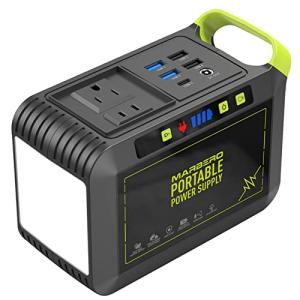
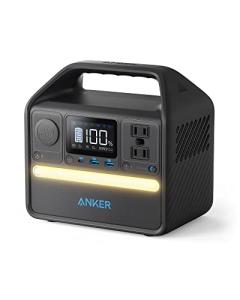
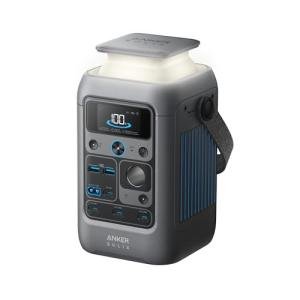
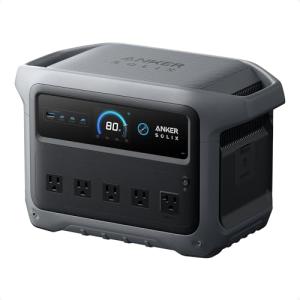
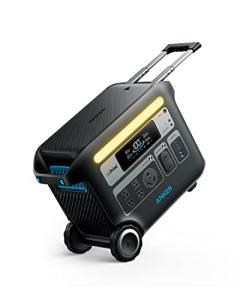
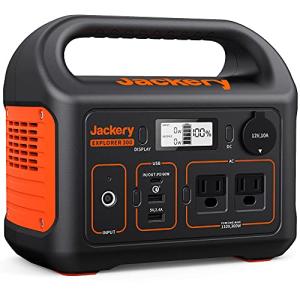
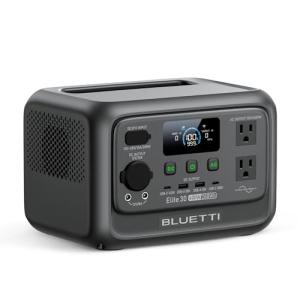
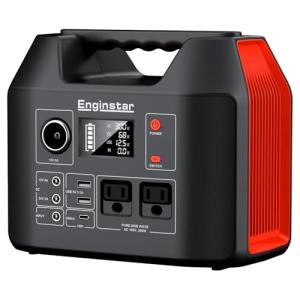
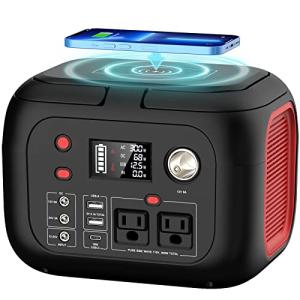
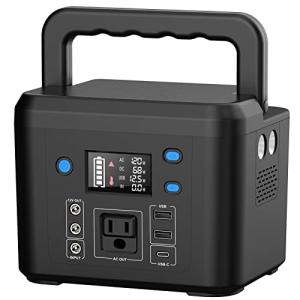
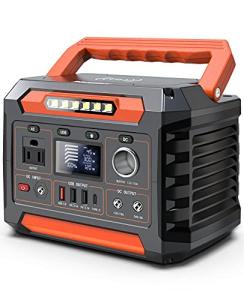
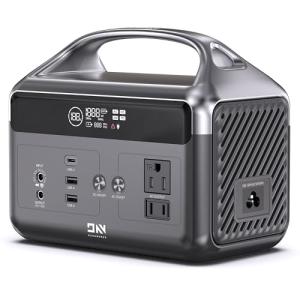
What Is a Portable Power Station?
A portable power station is essentially a large rechargeable battery in a rugged, carry-friendly enclosure that lets you plug in, charge up, and power real devices — not just phones, but laptops, mini-fridges, electric skillets, power tools, medical equipment, and even full-size appliances in some cases.
Unlike traditional gas generators, portable power stations produce no emissions, make almost no noise, and don't require fuel. Unlike simple power banks, they're equipped with AC outlets, USB-C ports, DC outputs, and sometimes car-style 12V sockets — giving you the kind of output flexibility you'd normally only get from a wall outlet.
They range from compact units you can slip into a backpack to large rolling stations capable of running a household's essential circuits for days on end. The right one for you depends almost entirely on what you need to power and for how long.
The Core Technology — What's Actually Inside
Understanding what makes one portable power station better than another starts with understanding what's inside.
Battery Chemistry
Most portable power stations use one of two battery types: lithium-ion (Li-ion) or lithium iron phosphate (LiFePO4, often called LFP).
Lithium-ion cells are energy-dense and relatively affordable, which is why they've dominated consumer electronics for decades. They're great for portable power stations that you'll use occasionally and store most of the time.
Lithium iron phosphate batteries are heavier and slightly bulkier for the same capacity, but they are dramatically more durable. An LFP battery can typically handle 2,000 to 3,500 charge cycles before degrading to 80% capacity, versus roughly 500 cycles for standard lithium-ion. If you're planning to use your power station regularly — or if you're building a long-term backup power system — LFP is worth the premium. Many people describe LFP stations as buying once and genuinely never needing to replace them.
The Inverter
Inside every portable power station is an inverter — the component that converts stored DC power into the AC electricity your standard appliances expect. The quality of the inverter matters enormously.
Pure sine wave inverters produce clean, smooth AC output identical to what comes from your wall outlet. This matters for sensitive electronics, motor-driven appliances, and medical devices. Modified sine wave inverters are cheaper to produce but can cause problems with certain devices — hums in audio equipment, reduced efficiency in motors, and outright incompatibility with some electronics.
In the current market, virtually all reputable portable power stations use pure sine wave inverters. If you see a budget unit that doesn't specify, that's worth investigating.
How to Choose the Right Capacity
Capacity is measured in watt-hours (Wh), and it's the single most important number when comparing portable power stations. Here's a practical way to think about it:
-
200–500 Wh — Ideal for day trips, keeping phones and laptops topped off, running a small fan or light string, or powering a camera rig. These fit easily in a backpack and can be airline-approved depending on configuration.
-
500–1,000 Wh — The sweet spot for weekend camping, overlanding, and short-term power outages. Enough to run a CPAP machine for multiple nights, keep a portable fridge cold for a day or two, or charge a drone repeatedly.
-
1,000–2,000 Wh — Serious backup power territory. This range handles extended camping trips, work-from-anywhere setups with multiple devices, and meaningful home backup use. You can run a small electric cooler continuously, power a coffee maker, or keep a work-from-home setup running for a full day or more.
-
2,000 Wh and above — Whole-home backup contenders. Units in this class — especially those that support expansion batteries — can keep refrigerators, window AC units, and essential circuits running for extended periods. Many in this category connect directly to solar panels for off-grid living applications.
A quick way to estimate what you need: look up the wattage of your devices (usually printed on the label or in the manual), multiply by the number of hours you'd need to run them, and add about 20% margin for inverter inefficiency and battery buffer.
Recharging Options — Getting Power Back In
One of the more underappreciated aspects of portable power stations is how flexible modern units have become in how they recharge.
Wall Outlet (AC Charging) — The fastest and most straightforward method for most people. A good 1,000 Wh station can typically go from empty to full in 1–2 hours on a standard outlet when using fast-charging AC input.
Solar Panels — Arguably the feature that has transformed portable power stations from a niche product into a serious tool. Most units include an MPPT (Maximum Power Point Tracking) solar charge controller, which significantly improves the efficiency of solar input. Pair a mid-size station with 200W of solar panels and you have a genuinely self-sufficient power system that works off-grid indefinitely under reasonable sun conditions.
Car 12V / Cigarette Lighter — Useful for slow top-ups on the road, though usually the slowest method. More practical for smaller units.
EV Charging (J1772) — A relatively new addition in premium units, allowing you to charge from electric vehicle charging stations. This unlocks access to fast charging infrastructure in locations where wall outlets aren't available.
Many current models support simultaneous input from multiple sources — solar panels and a wall outlet at the same time, for example — dramatically reducing total charge time.
Key Features Worth Comparing
Beyond capacity and battery chemistry, here are the features that separate good portable power stations from great ones:
App Connectivity
Modern portable power stations often include Bluetooth or Wi-Fi connectivity, allowing you to monitor battery level, track real-time power draw, configure charging schedules, and even control output remotely from your phone. For long-duration off-grid use, this visibility is genuinely valuable.
Expandable Battery Systems
Some manufacturers have moved toward an ecosystem model, where a base unit can accept additional external battery modules to increase total capacity. This approach lets you start with a reasonably sized unit and scale up only when you actually need the extra capacity — a much more sensible investment strategy than buying the largest unit upfront.
Pass-Through Charging
Pass-through charging means the station can deliver power to your devices while simultaneously being charged itself. Not all units support this efficiently — some get warm, others throttle output. It's worth checking user reviews for real-world experience if this is important to your use case.
Output Port Configuration
Count the ports — not just the number, but the types. If you're running a van build or an off-grid cabin, you may need multiple AC outlets at once. If you're a photographer or videographer, high-wattage USB-C PD (Power Delivery) ports are essential. For overlanders, regulated 12V DC outputs keep car-style accessories running without voltage fluctuation issues.
Portable Power Stations for Specific Use Cases
Emergency Home Backup
For power outages, a portable power station gives you targeted backup power without the noise, fumes, or fuel costs of a gas generator. Focus on units with 1,500+ Wh capacity, solar input capability, and enough outlets to run your refrigerator, some lights, a phone charging hub, and any medical devices in the home. Some units now support home integration, connecting directly to a transfer switch or backup panel.
Camping and Overlanding
Weight and form factor matter more here. Look for units with robust solar charging, durable enclosures, and a port configuration that matches your camp setup — particularly 12V outputs for compressor fridges and USB-C PD for devices. If you're base camping in one spot for a week, a larger wheeled unit is fine; if you're backpacking or motorcycle camping, compact 200–500 Wh units are more appropriate.
Remote Work and Van Life
Reliability and connectivity are paramount. Look for LFP batteries for long cycle life, app monitoring for energy management, and sufficient AC wattage to comfortably run a laptop, monitor, and other work peripherals simultaneously. Solar input capacity is crucial here — size your panels generously, because overcast days happen.
Job Sites and Professional Use
Tools have specific power requirements. Most circular saws and drills run on 1,200–1,800W at peak draw. Make sure your unit's AC output wattage (not just capacity) can handle surge loads. Units with 2,000W+ continuous AC output are best suited for power tool use. Ruggedness and dust resistance are worth factoring in as well.
What to Watch Out For?
A few things to keep in mind when shopping:
Rated vs. Surge Wattage — The continuous wattage is what you can draw steadily. Surge wattage is a brief peak the unit can handle for startup loads (like motors in refrigerators or power tools). Both numbers matter depending on what you're running.
Actual vs. Advertised Capacity — Real-world usable capacity is typically 80–90% of rated capacity due to voltage cutoffs and inverter losses. Some manufacturers are transparent about this; others aren't.
Weight and Portability — A 2,000 Wh station can weigh 40–60 pounds. That's manageable on wheels, but not as a carry. Be realistic about how you'll actually use the unit before prioritizing maximum capacity.
Warranty and Brand Support — Portable power stations are meaningful purchases. Look for manufacturers that offer at least a 2-year warranty and have a track record of honoring claims and providing firmware updates.
Portable power stations have quietly become one of the most practical categories in consumer electronics. The technology has matured rapidly — better batteries, smarter software, faster charging, and solar integration have turned what used to be a niche product into something that genuinely belongs in emergency preparedness kits, outdoor gear collections, and mobile workspaces.
Whether you need a compact unit to keep a weekend camping trip comfortable or a whole-home backup system that keeps your family safe through multi-day outages, there's a portable power station built exactly for that job.
The best investment is the one you actually understand before you buy it. Know your devices, know your use case, and match the station to the real-world demands you'll put on it — and you'll have a piece of equipment that serves you reliably for years to come.