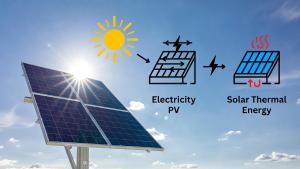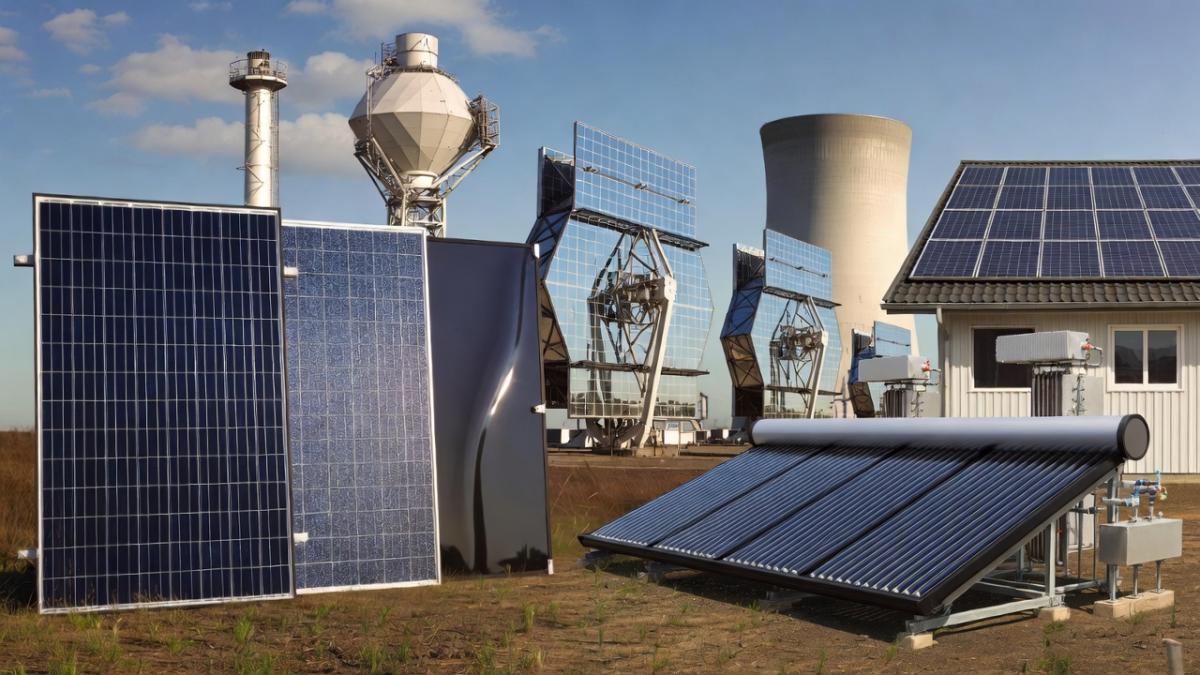
The sun has been burning for roughly 4.6 billion years. We've been seriously trying to harvest its energy for about 70 of them. And yet, in that sliver of cosmic time, we've invented not one, not two, but an entire family of technologies — each speaking a slightly different dialect of the same solar language. Some capture light and turn it directly into electrons. Others concentrate heat into steam. A few simply warm your water or cool your building. Together, they form the most diverse and rapidly evolving energy portfolio in human history.
This is not a story about one technology winning. It's a story about the right technology for the right context — and understanding why that distinction matters more than ever.
Silicon and Sunlight — The Birth of the Solar Panel
Before diving into the different panel types, it helps to understand what they all share: the photovoltaic (PV) effect. When photons from sunlight strike a semiconductor material — typically silicon — they knock electrons loose, generating an electric current. It's a phenomenon first observed by Edmond Becquerel in 1839, but it wasn't until 1954 that Bell Labs produced the first practical silicon solar cell with an efficiency of about 6%.
Today, commercial solar panels routinely exceed 22% efficiency. The best laboratory cells push past 29%. The question isn't whether silicon works — it clearly does. The question is which kind of silicon, processed which way, for which application.
That's where the three dominant panel technologies diverge.
Monocrystalline Solar Panels — The Premium Class
Walk up to a rooftop solar installation on a modern home or a high-end commercial building, and there's a reasonable chance you're looking at monocrystalline panels. They're identifiable by their uniform dark black or deep blue color and the rounded edges left over from the manufacturing process.
The name explains the core: monocrystalline panels are made from a single, continuous crystal of silicon. Manufacturers grow these crystals using the Czochralski process — a technique where a seed crystal is slowly pulled from a molten vat of silicon, rotating as it rises to form a large cylindrical ingot. That ingot is then sliced into wafers, each one a thin cross-section of a single crystal.
Why does a single crystal matter? Because electrons travel more efficiently through a uniform lattice structure. There are no grain boundaries, no irregularities to scatter or trap the flow of charge. The result is the highest efficiency ratings among mass-produced silicon panels — typically 20% to 24%, with premium manufacturers like SunPower and Maxeon nudging past that range.
The tradeoff is cost. Growing a perfect silicon crystal is energy-intensive and time-consuming. The cylindrical ingots also produce circular wafers, which must be cut into pseudo-square shapes to fit rectangular panel frames — a process that wastes roughly 20% of the silicon per ingot.
Despite the cost premium, monocrystalline panels dominate the residential and commercial rooftop market, particularly in situations where space is constrained. When you have a limited roof area and need to extract maximum power per square meter, the higher efficiency justifies the price. They also perform relatively better in low-light and high-temperature conditions, though all silicon panels lose some efficiency as temperatures rise.
The bottom line on monocrystalline: It's the athlete who performs consistently well across all conditions, worth the higher salary when performance per unit of space is the priority.
Polycrystalline Solar Panels — The Workhorses of the Industry
For most of the 2000s and early 2010s, polycrystalline panels were the global workhorse of utility-scale solar farms. Their distinctive speckled blue appearance — that almost metallic, fragmented look — comes directly from how they're made.
Instead of growing a single crystal, polycrystalline manufacturing melts silicon and pours it into square molds. As the silicon cools, multiple crystals form simultaneously, oriented in different directions. This produces the characteristic grain structure visible on the panel surface.
The manufacturing process is simpler, faster, and wastes less silicon — there's no need to cut corners off a circular ingot. These savings translate directly to lower panel costs. For the better part of a decade, polycrystalline's cost advantage made it the default choice for large-scale installations where ground space was abundant and the economics of installation were paramount.
The efficiency penalty is real but manageable. Polycrystalline panels typically convert 15% to 20% of incoming light into electricity. The grain boundaries between crystal fragments create resistance, scattering electrons and reducing output. At the same temperature and irradiance, a monocrystalline panel will consistently outperform its polycrystalline counterpart.
However, the gap has been narrowing, and the story has grown more complicated. Advances in manufacturing have raised polycrystalline efficiencies steadily, while simultaneous improvements in monocrystalline production have also driven those costs down. By the late 2010s, monocrystalline panels had become competitive enough on price that the cost advantage of polycrystalline began to erode.
Today, the market has shifted substantially toward monocrystalline for most applications. But polycrystalline remains relevant — especially in markets with strong cost sensitivity and in educational or institutional projects where the lower upfront cost matters more than peak performance.
The bottom line on polycrystalline: The reliable, cost-effective choice that built the modern solar industry. Less glamorous than its single-crystal sibling, but no less important to the story.
Thin-Film Solar Panels — The Rule-Breakers
If monocrystalline and polycrystalline are the establishment, thin-film is the disruptor — unconventional, flexible in every sense of the word, and deeply interesting to anyone thinking about solar's future applications.
Thin-film panels don't use thick silicon wafers at all. Instead, they deposit extremely thin layers of photovoltaic material — sometimes just a few micrometers thick — onto a substrate such as glass, metal, or plastic. The result is a panel that's lighter, more flexible, and potentially far cheaper to produce at scale.
There are three main thin-film technologies, each using a different semiconductor material:
Amorphous Silicon (a-Si) was the first commercially available thin-film technology, used in calculators and small electronics long before it appeared in building-integrated solar. It's the least efficient of the three — typically 6% to 8% — but its low production cost and ability to absorb diffuse light makes it useful in specific applications.
Cadmium Telluride (CdTe) is the dominant thin-film technology in the utility sector, largely thanks to First Solar, the American company that has spent decades perfecting CdTe manufacturing. CdTe panels offer efficiencies in the 18% to 19% range commercially, with low manufacturing costs that have made them competitive with crystalline silicon in utility-scale projects. The material uses cadmium — a toxic heavy metal — which raises legitimate end-of-life and supply chain questions, though First Solar runs robust recycling programs.
Copper Indium Gallium Selenide (CIGS) is the highest-performing thin-film technology, with commercial efficiencies reaching 15% to 23% in some configurations. CIGS cells have achieved laboratory records above 23%, narrowing the gap with crystalline silicon significantly. The material's absorption characteristics are excellent, and CIGS panels perform particularly well in diffuse light conditions.
What sets thin-film apart from crystalline silicon is the application range. Because thin-film can be deposited on flexible substrates, it opens doors that rigid glass panels cannot enter. Building-integrated photovoltaics (BIPV) — solar cells embedded in roofing tiles, glass facades, or even curtain walls — are almost entirely a thin-film story. So is solar on curved surfaces, portable solar for military or outdoor equipment, and emerging concepts like solar-powered vehicles.
The challenge for thin-film has been competing with the relentless cost reductions achieved by the crystalline silicon industry, which benefits from massive scale and decades of manufacturing optimization. In the utility sector, CdTe has held its ground. But thin-film's broader market share has remained limited compared to its technological promise.
The bottom line on thin-film: The technology with the most diverse application potential, still searching for its full moment in the mainstream, but quietly essential in the spaces crystalline silicon can't reach.
Concentrated Solar Power — When Scale Becomes Architecture
Everything discussed so far converts light into electricity through the photovoltaic effect. Concentrated Solar Power (CSP) takes a fundamentally different approach: it converts sunlight into heat, and heat into electricity.
CSP systems use mirrors or lenses to focus sunlight onto a receiver, heating a working fluid — often molten salt, steam, or a synthetic oil — to very high temperatures. That heat then drives a conventional turbine generator, producing electricity the same way a coal or gas plant does, just without the fuel.
There are four main CSP configurations:
Parabolic Trough Systems are the most commercially mature CSP technology. Long curved mirrors shaped like parabolas track the sun and focus light onto a pipe running along the focal point. The fluid inside the pipe heats to around 400°C and is used to generate steam. Spain and the American Southwest have extensive parabolic trough installations.
Solar Power Towers (Central Receiver Systems) use large arrays of flat mirrors — called heliostats — that individually track the sun and direct reflected light onto a central receiver at the top of a tall tower. The concentration ratios are much higher than parabolic troughs, allowing working temperatures above 600°C and potentially higher efficiency. The Ivanpah Solar Electric Generating System in California's Mojave Desert is one of the most visible examples.
Linear Fresnel Reflectors are a simplified, lower-cost variation of the parabolic trough concept, using flat mirror strips arranged to approximate a curved surface. They're less efficient but cheaper to build and maintain.
Dish Stirling Systems concentrate sunlight onto a receiver at the focal point of a parabolic dish, where it drives a Stirling engine. These are highly efficient and modular but have not yet achieved utility-scale commercial deployment.
The defining advantage of CSP over photovoltaics is thermal energy storage. Molten salt can store heat for six to ten hours, meaning a CSP plant can continue generating electricity after the sun goes down — something a standard solar panel cannot do without expensive batteries. In regions with high direct normal irradiance (DNI), such as the Middle East, North Africa, Chile's Atacama Desert, or the American Southwest, CSP with storage can function almost as a dispatchable power plant, ramping up during peak demand hours.
The challenges are significant: CSP requires high DNI (it doesn't work well with diffuse or cloudy skies), uses substantial amounts of water in cooling systems (a concern in desert regions), and has higher capital costs than utility-scale PV. The dramatic cost reductions achieved by solar PV in the 2010s changed the economic calculus considerably, and new CSP project development slowed in many markets.
But the storage advantage is keeping CSP alive and relevant. Projects in Morocco, Dubai, and Chile are demonstrating that CSP with thermal storage can serve roles that PV simply cannot fill without a massive battery infrastructure.
The bottom line on CSP: The thermal giant of the solar family — powerful, dispatchable, and irreplaceable in the right geography, but requiring specific conditions to justify its complexity and cost.
Solar Heating and Cooling — The Quiet Achiever
For all the attention paid to solar electricity, a quietly efficient branch of solar technology has been doing useful work in buildings and industry for decades: solar thermal systems designed not to generate electricity, but to directly heat or cool spaces and water.
Solar Water Heating is the simplest and oldest solar thermal technology. Flat plate collectors or evacuated tube collectors on a rooftop absorb sunlight and transfer that heat to water. The system connects to a storage tank, and the heated water is used for domestic hot water, space heating, or both. In countries like Israel, China, Germany, and Australia, solar water heaters are standard equipment in residential construction.
The economics are compelling in a way that often goes underappreciated. Water heating accounts for 14% to 18% of household energy use in many countries. A solar water heater operating in a sunny climate can displace 60% to 80% of that demand with no electricity generation or conversion losses, at a fraction of the cost of an equivalent solar PV installation. The system is direct, simple, and durable — well-designed flat plate collectors routinely last 25 to 30 years.
Solar Space Heating extends this principle to warming buildings. Passive solar design — orienting buildings to capture winter sun through south-facing glazing, using thermal mass to store heat, and controlling summer shading — is not a product but a design philosophy, and it costs nothing when incorporated from the outset of construction. Active solar space heating adds collectors and heat distribution systems, particularly relevant in colder climates with adequate winter sunshine.
Solar Cooling is the more technically complex and less mature side of this category. Solar-driven absorption chillers use heat — rather than electricity — to drive a refrigeration cycle. The appeal is obvious: solar energy peaks in summer, coinciding almost perfectly with peak cooling demand. Instead of converting solar to electricity to run an electric chiller, an absorption system runs the cooling cycle directly from solar heat. Commercial and industrial installations in warm climates have demonstrated the concept successfully.
Desiccant cooling offers another pathway: solar heat regenerates a moisture-absorbing material that can then dehumidify and cool incoming air. These systems are particularly relevant in humid climates where latent heat removal is the dominant cooling load.
The challenge for solar cooling is system complexity and cost versus conventional electric air conditioning, which has benefited from decades of optimization and scale. But as electricity prices rise and solar thermal collectors become cheaper, the economics are improving.
The bottom line on solar heating and cooling: The most thermally efficient use of solar energy, delivered with less technological complexity than most alternatives. Often overlooked in favor of PV, but arguably the most cost-effective solar investment available in many climates.
Side-by-Side — The Solar Technology Comparison
| Technology | Typical Efficiency | Best Application | Key Advantage | Key Limitation | Relative Cost |
|---|---|---|---|---|---|
| Monocrystalline PV | 20–24% | Rooftop, space-limited sites | Highest efficiency per m² | Higher cost per watt | $$$ |
| Polycrystalline PV | 15–20% | Large ground-mounted arrays | Lower manufacturing cost | Slightly lower efficiency | $$ |
| Thin-Film (CdTe/CIGS) | 15–23% | Utility scale, BIPV, flexible surfaces | Lightweight, versatile substrates | Lower efficiency (most types) | $–$$ |
| CSP (Parabolic/Tower) | 15–20% (system) | Utility-scale dispatchable power | Thermal storage capability | Needs high DNI, high water use | $$$$ |
| Solar Water Heating | 60–80% (thermal) | Domestic hot water, space heating | Extremely high thermal efficiency | Heat only, not electricity | $ |
| Solar Cooling | Variable | Commercial buildings in hot climates | Matches solar to cooling demand | High system complexity | $$–$$$ |
Choosing the Right Solar Technology — Context Is Everything
There's a persistent temptation to rank solar technologies and declare a winner. It misunderstands what these technologies actually are. They're tools, and the right tool depends entirely on the problem at hand.
A homeowner in Stockholm with a small south-facing roof and high electricity prices should almost certainly choose monocrystalline PV. A utility developer in Arizona with access to hundreds of acres of flat land might find that thin-film CdTe hits the most attractive cost-per-kilowatt-hour. A resort in Morocco, looking to power its facilities reliably through the evening, would be well served by a CSP plant with molten salt storage. A family in rural India building a new home can install a solar water heater for a fraction of what any electrical system would cost and displace most of their fuel expenditure immediately.
Each of these is a solar success story. None of them involves the same technology.
What is changing — and this matters — is the pace at which all these technologies are improving simultaneously. Monocrystalline efficiencies continue to climb as manufacturers introduce passivated emitter and rear contact (PERC) cells, heterojunction (HJT) cells, and tunnel oxide passivated contact (TOPCon) architectures. Thin-film CIGS is closing the gap with crystalline silicon in laboratory conditions. CSP projects are integrating longer-duration storage and combining with PV in hybrid plants. Solar thermal is being integrated with heat pumps to create systems of remarkable efficiency.
The solar story isn't about one technology crossing a finish line. It's about an entire family of approaches, each evolving in parallel, each finding its role in a world that urgently needs all of them.
The Road Ahead
The next decade will not be defined by the discovery of a revolutionary new solar technology — though breakthroughs in perovskite cells and tandem cell architectures could yet surprise us. It will be defined by the deployment and integration of the technologies already in hand: using them more intelligently, combining them more creatively, and matching them more precisely to their optimal contexts.
The energy transition is often discussed in abstractions — terawatts, gigatons of carbon, percentage points of the energy mix. But on the ground, it's a series of specific decisions: which panel for which roof, which system for which building, which technology for which grid. Getting those decisions right, at scale, is where the work actually happens.
The sun doesn't care which technology converts its light and heat into useful energy. It's been radiating roughly 173,000 terawatts onto the Earth's surface every second for billions of years. The only question has ever been whether we were paying attention — and now, with every tool in this solar family maturing simultaneously, we finally have the means to answer properly.
The technologies described in this article represent the current commercial landscape as of early 2026. Efficiency figures reflect typical commercial products; laboratory records exceed these in most cases.