Polycrystalline panels are a smart choice for anyone looking to harness solar energy without breaking the bank. These panels offer a great balance of affordability and efficiency, making them perfect for residential and commercial setups. With their distinctive blue hue and reliable performance, they’re a solid option to power your home sustainably.
Polycrystalline Panels
Discover affordable and efficient solar energy solutions with top-quality polycrystalline panels
Product List
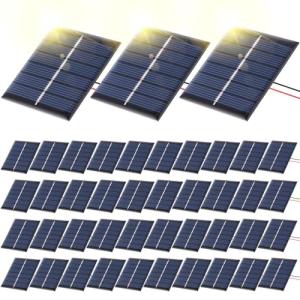
Kanayu 40 Pcs Small Solar Panels 3v 120ma Min...
Product Review Score
4.89 out of 5 stars
61 reviews$35.99
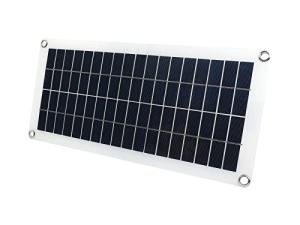
Waveshare Semi-Flexible Polycrystalline Silic...
Product Review Score
4.13 out of 5 stars
113 reviews$24.99
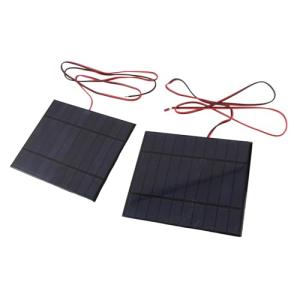
2pcs Polycrystalline Solar Panel Cell Power M...
Product Review Score
4.38 out of 5 stars
44 reviews$20.29
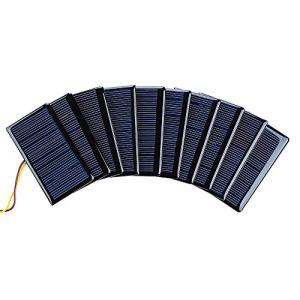
SUNYIMA 10Pcs 5V 60mA Mini Polycrystalline So...
Product Review Score
4.15 out of 5 stars
183 reviews$15.99 $15.19
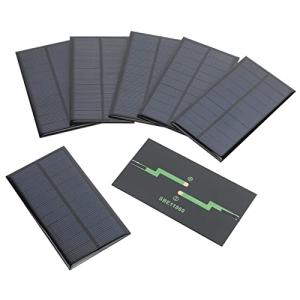
FellDen Micro Solar Panels Photovoltaic Solar...
Product Review Score
4.69 out of 5 stars
151 reviews$20.99
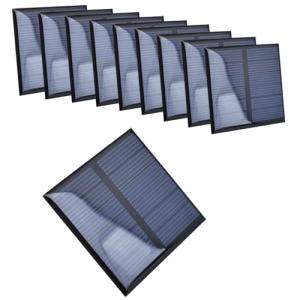
Ailejia 10pcs Mini High Efficiency Polycrysta...
Product Review Score
4.13 out of 5 stars
7 reviews$16.98
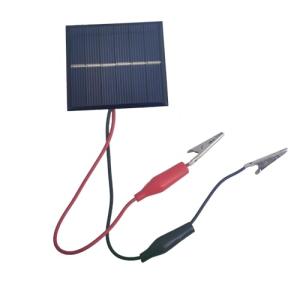
If you've ever looked at a rooftop covered in solar panels and noticed that bluish, shimmering, almost mosaic-like appearance — you were probably looking at polycrystalline panels. They're one of the most widely installed types of solar technology in the world, and for good reason. They strike a balance between real-world performance, long-term durability, and accessible pricing that very few other solar products can match. Whether you're powering a family home, a small business, or a large agricultural property, polycrystalline panels are worth understanding in depth before you make any decisions.
What Are Polycrystalline Solar Panels?
Polycrystalline solar panels — sometimes called multi-crystalline panels — are made from silicon, the same core material used in most solar technology. The difference lies in how that silicon is processed. During manufacturing, multiple silicon crystals are melted together and poured into a mold, where they cool and solidify as a single block. That block is then sliced into thin wafers, each of which contains dozens of crystal fragments fused together.
This multi-crystal structure gives polycrystalline panels their distinctive look: a granular, mosaic pattern with subtle blue tones that shift slightly in different lighting conditions. It's not just cosmetic — that fragmented crystal structure is a direct result of a manufacturing process that's significantly simpler and less wasteful than what's required for monocrystalline panels.
Because the silicon doesn't need to be grown into a single, perfectly aligned crystal ingot, less raw material is discarded during production. That efficiency in manufacturing is a big part of why polycrystalline panels typically cost less per watt than their monocrystalline counterparts.
How Do They Work?
Like all silicon-based solar panels, polycrystalline panels work through the photovoltaic effect. When photons from sunlight strike the silicon wafers, they knock electrons loose, creating an electric current. That current flows through metal conductors printed onto the surface of each cell, gets collected, and is converted from direct current (DC) into alternating current (AC) by an inverter, making it usable in your home or business.
The core physics is identical across all silicon panel types. What differs is how efficiently the silicon converts incoming light into electricity, and that comes down to the purity and alignment of the crystal structure. Single-crystal silicon allows electrons to move more freely, which is why monocrystalline panels tend to edge out polycrystalline ones in raw efficiency ratings.
That said, efficiency ratings measured in a lab under ideal conditions don't always tell the whole story when panels are sitting on your roof in the real world.
Efficiency: The Honest Picture
Polycrystalline panels typically achieve efficiency ratings between 15% and 20%, depending on the manufacturer, cell generation, and panel size. Premium polycrystalline products from established manufacturers sit closer to the upper end of that range, and technology continues to improve year over year.
Monocrystalline panels do tend to score higher — often reaching 22% or above — but the practical difference in energy output is smaller than those numbers suggest. Here's why: efficiency ratings describe how much of the available sunlight hitting the panel surface gets converted to electricity. On a large roof with plenty of space, the difference between a 17% and a 22% panel may simply mean using a few more panels to generate the same total output. For most residential and commercial installations where roof space isn't the bottleneck, that's a trade-off that makes strong financial sense.
Where efficiency really matters is in constrained installations — small rooftops, limited mounting areas, or situations where every square foot counts. In those cases, higher-efficiency monocrystalline panels might justify their premium price. But for the vast majority of installations, polycrystalline panels deliver excellent output per dollar spent.
Temperature Performance and Real-World Conditions
One practical consideration that often gets overlooked is temperature coefficient — how much a panel's output drops as it heats up. Solar panels don't love heat; ironically, they perform best on bright, cool days rather than scorching summer afternoons.
Polycrystalline panels have a temperature coefficient that's slightly higher than monocrystalline panels, meaning their output dips a bit more as temperatures rise. In very hot climates, this can marginally reduce annual energy production compared to premium alternatives. However, in moderate climates or installations with good airflow behind the panels, this effect is minimal.
It's also worth noting that polycrystalline panels perform reasonably well in diffuse light conditions — overcast skies and indirect sunlight. They're not dramatically better or worse than monocrystalline panels in low-light situations; both types continue generating electricity as long as light is reaching the cells.
Build Quality and Longevity
A common misconception is that lower-priced panels must be less durable. With polycrystalline panels from reputable manufacturers, that's simply not true. The physical construction — tempered glass front, aluminum frame, polymer backsheet, and EVA encapsulant — is virtually identical to monocrystalline products at the same price point.
Reputable polycrystalline panels carry standard product warranties of 10 to 12 years and performance warranties of 25 to 30 years. Those performance warranties typically guarantee that the panel will still produce at least 80% of its original rated output at the end of the warranty period. In practice, many well-maintained panels continue generating usable power well beyond their warranty terms.
The key to longevity is choosing panels that meet international quality standards — IEC 61215 and IEC 61730 certifications are the benchmarks to look for. These certifications confirm that panels have been tested for resistance to mechanical stress, UV degradation, moisture infiltration, thermal cycling, and hail impact.
Cost: Where Polycrystalline Panels Shine
Let's talk about the most compelling argument for polycrystalline technology: cost per watt. Polycrystalline panels have historically been the most cost-effective way to generate solar electricity at scale. While the gap between polycrystalline and monocrystalline pricing has narrowed in recent years — partly due to improvements in monocrystalline manufacturing — polycrystalline panels still represent excellent value, particularly in larger installations where sheer watt output per dollar is the priority.
For budget-conscious homeowners, agricultural operations, rural electrification projects, and developing market applications, polycrystalline panels make solar power accessible where it might otherwise be cost-prohibitive. The lower upfront cost also shortens the payback period — the time it takes for energy savings to offset the initial investment — which is a meaningful financial consideration for most buyers.
Ideal Applications
Polycrystalline panels aren't just a compromise option for people who can't afford better — they're genuinely the right tool for many applications.
Residential Rooftop Systems: For homes with adequate roof space, polycrystalline panels offer a solid, proven solution. A typical household can meet most or all of its electricity needs with a well-designed polycrystalline array, often at a lower total system cost than alternatives.
Agricultural and Rural Installations: Farms, irrigation systems, remote outbuildings, and off-grid rural properties often need substantial power generation on a tight budget. Polycrystalline panels are a natural fit here, offering robust performance over large surface areas where ground-mounting is practical.
Commercial Flat Rooftops: Large commercial buildings with flat rooftops can deploy polycrystalline arrays at scale. When you're covering tens of thousands of square feet, the cost advantage of polycrystalline panels translates into very significant savings on total project cost.
Solar Farms and Utility-Scale Projects: Many large-scale solar installations use polycrystalline technology. At utility scale, even a small reduction in cost per watt has enormous financial impact across hundreds of megawatts of capacity.
Educational and Community Projects: Schools, community centers, and nonprofit organizations working with limited budgets can maximize their solar capacity by choosing polycrystalline panels, stretching their investment further.
Choosing the Right Polycrystalline Panel
Not all polycrystalline panels are created equal. Here's what to look for when comparing options:
Wattage Output: Panel wattage ratings typically range from around 250W to 400W for standard residential-sized panels. Higher wattage means more output per panel, which can reduce installation costs by requiring fewer panels and less mounting hardware.
Efficiency Rating: Look for panels with efficiency ratings at or above 17% for good performance. Panels approaching 19–20% efficiency represent the upper tier of polycrystalline technology.
Temperature Coefficient: A lower temperature coefficient (expressed as a negative percentage per degree Celsius) means better performance in warm conditions. Look for values around -0.38% per °C or better.
Manufacturer Reputation: Stick with manufacturers who have an established track record, verifiable certifications, and a history of honoring warranty claims. The solar industry has seen many companies come and go; choosing a stable, established brand protects your investment.
Certifications: Confirm IEC 61215 and IEC 61730 certifications at minimum. Additional certifications like MCS, UL, or regional equivalents may be required for grid connection approvals in your area.
Warranty Terms: Evaluate both the product warranty (covering defects in materials and workmanship) and the performance warranty (guaranteeing minimum output over time). Longer and more comprehensive warranties signal manufacturer confidence in their product.
Environmental Considerations
Solar panels, including polycrystalline types, have a very favorable environmental profile over their operational lifetime. The energy payback period — the time it takes for a panel to generate as much energy as was used to manufacture it — is typically 1 to 3 years for polycrystalline panels. Given a 25+ year operational lifespan, they generate many times more clean energy than was consumed in their production.
The polycrystalline manufacturing process, while not as material-efficient as monocrystalline in terms of silicon usage per unit area, generates less kerf waste (silicon shavings from wafer cutting) per panel relative to early-generation monocrystalline production methods. Modern manufacturing across both types continues to improve in environmental efficiency.
At end of life, solar panels can be recycled, with glass, aluminum, and silicon all recoverable through established recycling programs. Several manufacturers and regional programs now offer take-back schemes for retired panels.
Polycrystalline vs. Other Technologies: A Quick Comparison
It helps to understand where polycrystalline panels sit relative to alternatives:
Versus Monocrystalline Panels: Monocrystalline panels offer higher efficiency and slightly better heat tolerance, but at a higher cost. For space-constrained installations, monocrystalline may be worth the premium. For most other applications, polycrystalline delivers excellent value.
Versus Thin-Film Panels: Thin-film technologies like CdTe and CIGS can be cheaper to produce and perform better in high-heat or low-light conditions, but they typically have lower efficiency ratings and shorter track records in residential applications. Polycrystalline panels are better suited for most rooftop and ground-mount installations.
Versus Bifacial Panels: Bifacial panels — which can capture reflected light from below — are a newer category that can deliver higher yields in the right installation conditions. They tend to cost more and require specific mounting setups. Polycrystalline remains the more practical and cost-effective choice for standard installations.
Polycrystalline solar panels have been at the heart of the global solar revolution for decades. They're not the newest or the flashiest technology on the market, but they're dependable, well-understood, and backed by an enormous body of real-world performance data.
For buyers who want proven technology at a sensible price, with solid warranties and a wide range of product options from reputable manufacturers, polycrystalline panels remain one of the smartest choices in solar today. They've powered millions of homes and businesses worldwide — and they're more than capable of powering yours.