Monocrystalline panels are a fantastic choice for anyone looking to get the most power out of their solar setup. They’re known for their high efficiency and sleek design, making them an attractive option for rooftops. If you're serious about saving on energy bills and maximizing space, these panels are a smart investment.
Monocrystalline Panels
Discover how monocrystalline panels offer top-notch efficiency and sleek design for your solar energy needs
Product List
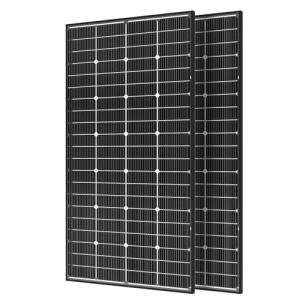
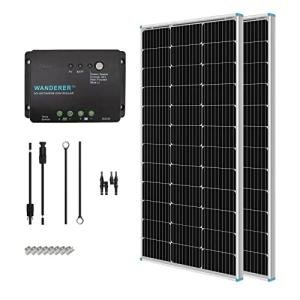
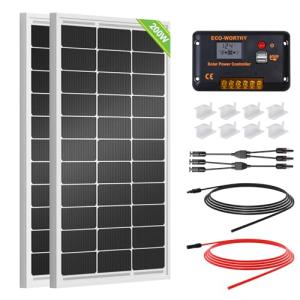
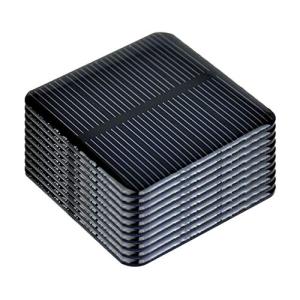
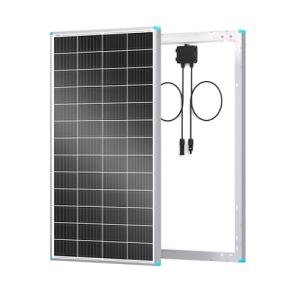
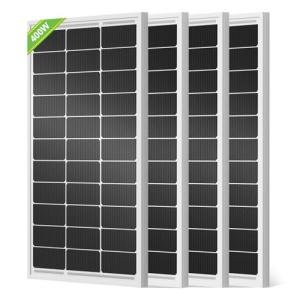
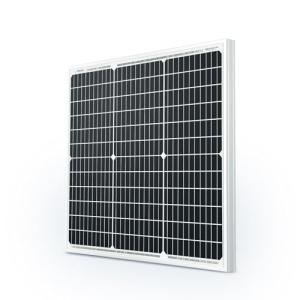
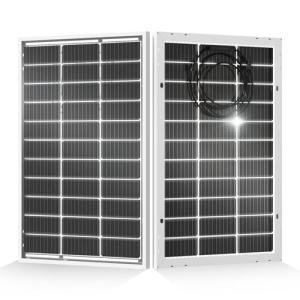
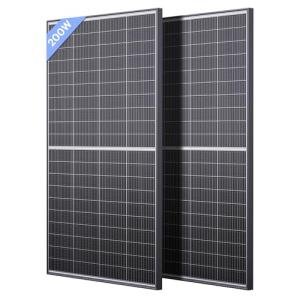
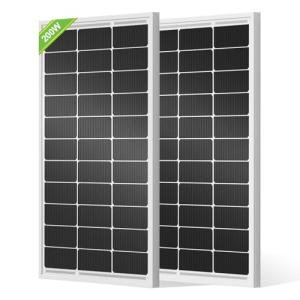
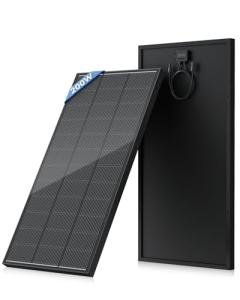
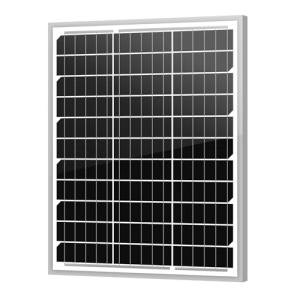
If you've spent any time researching solar panels, you've probably come across the term "monocrystalline" more times than you can count. And there's a very good reason for that. Monocrystalline solar panels have earned their reputation as the top tier of residential and commercial solar technology — not through marketing spin, but through decades of real-world performance, continued innovation, and the kind of results that speak for themselves.
Whether you're outfitting a rooftop, building a solar farm, or looking for the most efficient way to power your home off-grid, monocrystalline panels are almost always the answer serious solar buyers land on. This guide walks you through everything you need to know — what makes them different, why efficiency matters, how to choose the right panel, and what you can realistically expect when you invest in monocrystalline technology.
What Are Monocrystalline Solar Panels?
At the heart of every solar panel are photovoltaic cells — the components that actually convert sunlight into electricity. The difference between panel types comes down almost entirely to what those cells are made of and how they're manufactured.
Monocrystalline panels are built from a single, continuous crystal structure. To make them, manufacturers grow a large, pure silicon ingot using a process called the Czochralski method, where a seed crystal is slowly pulled from molten silicon and rotated as it rises, drawing up a uniform cylindrical ingot. That ingot is then sliced into thin wafers, shaped, treated, and assembled into the cells you see in the finished panel.
Because each cell comes from one uninterrupted crystal, electrons can flow through the material with very little resistance. There are no grain boundaries — the microscopic borders that form when different crystals meet — to slow things down or cause energy losses. The result is a solar cell that's remarkably efficient at turning photons into usable electricity.
This is fundamentally what separates monocrystalline panels from their polycrystalline (or multicrystalline) counterparts, which are made by melting together multiple silicon fragments. Polycrystalline cells are cheaper to produce, but those crystal boundaries come at a cost: lower efficiency and slightly reduced output in high-heat conditions.
Why Efficiency Is Everything in Solar
Efficiency is the metric that defines the solar panel world, and monocrystalline panels consistently lead the pack. Most standard monocrystalline panels on the market today operate between 19% and 23% efficiency. Premium options from top manufacturers push that ceiling even higher, with some laboratory-grade cells achieving over 26%.
But what does efficiency actually mean in practice?
A panel's efficiency rating tells you what percentage of the sunlight hitting the panel's surface gets converted into electricity. A 20% efficient panel, for example, converts one-fifth of incoming solar energy into power. The rest is lost as heat or reflected light.
Why does this matter so much? Two reasons: space and output.
If you have a small roof or limited installation area, efficiency determines how much power you can generate from the space you have. A high-efficiency monocrystalline panel produces significantly more electricity per square foot than a lower-efficiency alternative. For urban homeowners, commercial buildings with crowded rooftops, or any installation where real estate is tight, this difference can be enormous.
For larger installations, higher efficiency means you can achieve the same power target with fewer panels, fewer mounting components, and less labor — which often translates directly into cost savings over the system's lifetime, even if the panels themselves carry a higher upfront price tag.
The Monocrystalline Advantage: A Closer Look
Superior Performance in Real-World Conditions
One of the qualities that separates monocrystalline panels from the competition is how they behave when conditions aren't perfect — and in solar, conditions are almost never perfect.
Every solar panel loses some efficiency as its temperature rises. This is called the temperature coefficient, and it's a spec worth paying close attention to. Monocrystalline panels typically have a lower temperature coefficient than polycrystalline panels, meaning they lose less efficiency on hot days. In warm climates — exactly the places where solar makes the most financial sense — this advantage compounds over time.
Monocrystalline panels also tend to perform better in low-light conditions: early morning, late afternoon, overcast days. The purer crystal structure means the panels respond more efficiently even to diffuse or indirect light, which adds up to meaningful extra kilowatt-hours over the course of a year.
A Longer, More Productive Lifespan
Solar panels are a long-term investment, and monocrystalline panels are built accordingly. Most come with performance warranties guaranteeing at least 80% of their original output after 25 years, and many manufacturers have extended this to 30 years as manufacturing quality has improved.
The degradation rate — how quickly a panel loses output year over year — is typically very low for monocrystalline panels, often around 0.3% to 0.5% per year. Over a 25-year lifespan, that means a panel rated at 400 watts today will still be producing well over 300 watts a quarter-century from now.
This longevity matters enormously for return-on-investment calculations. A panel that performs well for 30 years generates far more value than a cheaper panel that degrades faster or requires replacement sooner.
Compact and Aesthetically Clean
Monocrystalline panels have a distinctive look: typically a uniform dark black or very deep blue color, with clean edges and a consistent appearance across the entire panel surface. For homeowners who care about curb appeal — and many do — this matters.
The dark, uniform cells are widely considered the most visually appealing option in residential solar. All-black monocrystalline panels, which use a black backsheet to eliminate any visible grid lines, have become particularly popular for premium home installations where aesthetics are as important as performance.
Types of Monocrystalline Solar Panels
The monocrystalline category has expanded significantly over the past decade, and today you'll find several distinct technologies within it.
PERC (Passivated Emitter and Rear Cell)
PERC technology adds a reflective layer to the back of the cell, bouncing light that would otherwise be wasted back through the silicon for a second pass. This can boost efficiency by 1% or more compared to standard monocrystalline cells — a meaningful gain in a technology where single percentage points represent real money over time.
PERC has become the mainstream standard in monocrystalline manufacturing. Most mid-to-high-range panels you'll encounter today incorporate PERC or a variation of it.
TOPCon (Tunnel Oxide Passivated Contact)
TOPCon is a newer generation of cell technology that adds an ultra-thin tunnel oxide layer and doped polysilicon layer to reduce recombination losses — one of the main ways energy is wasted in a solar cell. TOPCon panels regularly achieve efficiencies above 22%, and premium versions are pushing past 23%.
These panels are becoming increasingly available in the consumer market and represent an excellent choice for installations where maximum performance is the priority.
HJT (Heterojunction Technology)
Heterojunction panels combine monocrystalline silicon with thin-film amorphous silicon layers on both sides of the cell. This hybrid approach gives HJT panels some of the highest efficiencies available in commercial products, often exceeding 23%, along with an exceptionally low temperature coefficient — making them outstanding performers in hot climates.
HJT panels also tend to degrade more slowly than other types, making them particularly attractive for long-term investments.
IBC (Interdigitated Back Contact)
IBC panels move all the electrical contacts to the back of the cell, eliminating the metal gridlines that shade the front surface of conventional cells. This maximizes the active area exposed to sunlight and routinely produces efficiencies above 23%. IBC panels are typically found in premium product lines and are well-suited for space-constrained installations where maximum output per square foot is non-negotiable.
Choosing the Right Monocrystalline Panel
Wattage and Power Output
Panel wattage is the first spec most buyers look at, and it's important — but it needs to be understood in context. A 400-watt panel will produce more power than a 350-watt panel from the same surface area, but only if the efficiency rating supports it. Always compare efficiency alongside wattage to understand the true density of power output.
For most residential installations today, panels in the 380–430 watt range are common. Commercial and utility-scale projects often use higher-wattage panels (450 watts and above) to reduce installation complexity.
Temperature Coefficient
As mentioned earlier, this spec tells you how much output the panel loses for every degree Celsius rise in temperature above 25°C (the standard test condition). Look for a temperature coefficient of -0.30% per °C or lower. The closer to zero, the better the panel handles heat.
Manufacturer Warranty and Reliability
A 25-year performance guarantee is only as good as the company standing behind it. When evaluating monocrystalline panels, it's worth researching the manufacturer's history, financial stability, and reputation in the market. An established manufacturer with a track record of honoring warranties is worth paying a modest premium for.
Certifications
Look for panels that carry IEC 61215 and IEC 61730 certifications, the international benchmarks for performance and safety testing. UL certification is important for installations in North America. These certifications confirm that the panels have been independently tested and meet recognized quality standards.
The Economics of Going Monocrystalline
Monocrystalline panels cost more upfront than polycrystalline options. That's simply true, and there's no point pretending otherwise. But the economics over a system's full lifespan consistently favor monocrystalline for most buyers.
Higher efficiency means more electricity generated from the same number of panels. Better temperature performance means more output on hot days. Slower degradation means stronger performance in year 15 and year 25. When you calculate cost per kilowatt-hour generated over a 25-year period, monocrystalline panels frequently come out ahead — sometimes significantly so.
Add in the value of using less roof space (leaving room for potential system expansion), the aesthetic premium for all-black panels, and the availability of incentives that reward higher-output systems, and the case for monocrystalline becomes even more compelling.
Installation and Maintenance
One of the most practical advantages of monocrystalline panels is that they don't require exotic maintenance. A twice-yearly rinse to remove dust and debris, a periodic inspection of mounting hardware and connections, and monitoring system performance through your inverter app is generally all that's needed.
Most monocrystalline panels are designed to handle wind loads, snow loads, and hail impacts well within the conditions encountered in typical residential and commercial settings. The tempered glass surface is both highly transparent and durable, and the aluminum frame provides structural rigidity across decades of thermal expansion and contraction.
Who Should Buy Monocrystalline Solar Panels?
The straightforward answer is: almost anyone investing in solar.
Monocrystalline panels are the right choice for homeowners with limited roof space who want maximum output from every square foot. They're the right choice for anyone in a warm climate who needs strong performance on hot summer days. They're the right choice for buyers who plan to stay in their home for decades and want a system that will keep performing reliably. And they're the right choice for anyone who cares about the appearance of their installation.
If you're working with a very tight budget and have ample installation space, polycrystalline panels might still make financial sense. But for the vast majority of solar buyers today, monocrystalline technology offers the best combination of performance, longevity, aesthetics, and long-term value.
Monocrystalline solar panels represent the culmination of decades of research, manufacturing refinement, and real-world testing. They are not a premium product in the sense of being unnecessarily expensive — they're a premium product in the sense that they genuinely deliver more, perform better, and last longer than the alternatives.
When you choose monocrystalline, you're choosing a technology that has proven itself on rooftops, solar farms, and off-grid installations around the world. You're investing in a system that will generate clean, reliable electricity for 25 to 30 years. And you're making a decision that, for most buyers, holds up financially when you look at the full picture.
Explore our selection of monocrystalline solar panels from leading manufacturers and find the right fit for your energy goals, budget, and installation requirements.