Off-grid kits are your ticket to energy independence! Whether you’re setting up a cabin in the woods or just want to be prepared for emergencies, these kits have everything you need to harness the power of the sun. With solar panels, batteries, and all the accessories, you’ll be generating your own electricity in no time.
Off-grid Kits
Discover everything you need to power your adventures away from the grid
Product List
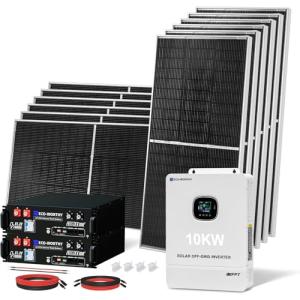
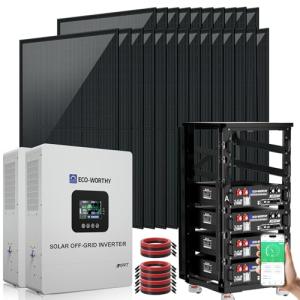
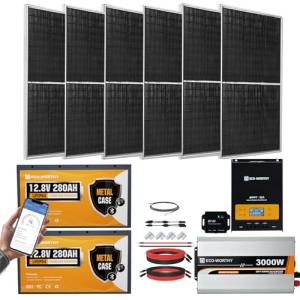
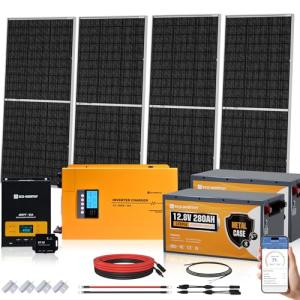
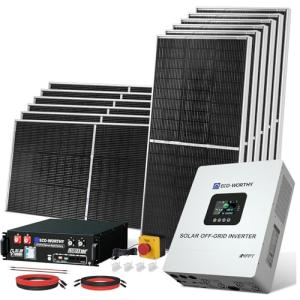
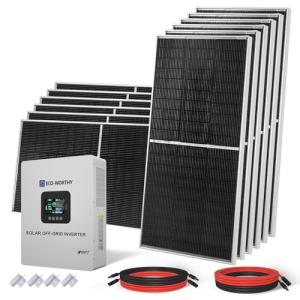
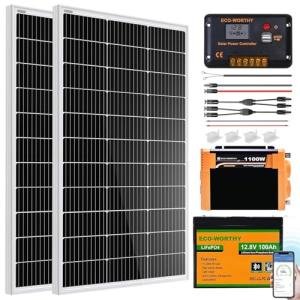
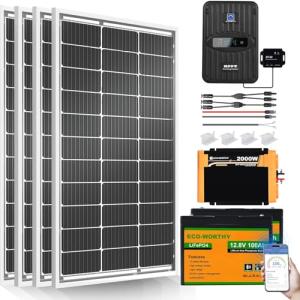
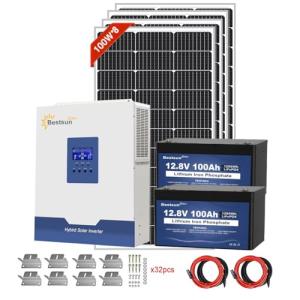
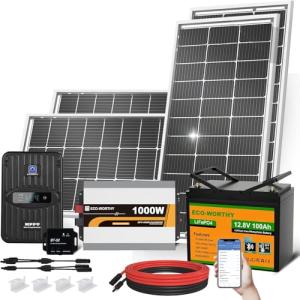
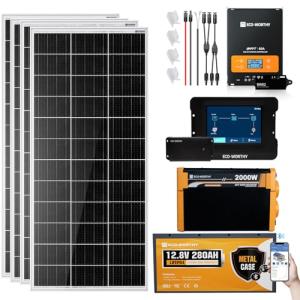
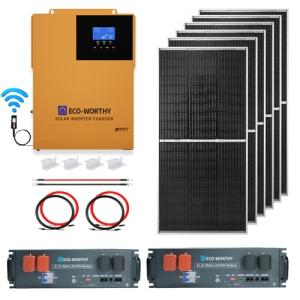
What Is a Solar Off-Grid Kit, Exactly?
An off-grid solar kit is a bundled system that generates electricity from sunlight, stores it in batteries, and delivers it to your appliances — all without any connection to the utility grid. Unlike grid-tied solar panels (which feed power back to the grid and rely on it as a backup), off-grid systems are entirely self-contained.
Most kits include the four core components you need to get up and running:
Solar panels capture sunlight and convert it into DC electricity. A charge controller manages the flow of that electricity into your batteries, preventing overcharging and extending battery life. A battery bank stores the energy so you can use it at night or on cloudy days. An inverter converts the DC power stored in your batteries into the AC power that most household appliances run on.
Some kits also include wiring, mounting hardware, fuses, and connectors — so you're not scrambling to source individual parts after the main components arrive. That bundling is one of the biggest reasons people choose kits over building a system piece by piece.
Who Actually Uses Off-Grid Solar Kits?
The honest answer is: a wider range of people than you'd expect.
The classic use case is the rural homesteader — someone who's bought land far from utility infrastructure and needs power without waiting (or paying) for a grid connection that might cost tens of thousands of dollars to run. For them, a well-sized off-grid system pays for itself in a matter of years.
But a growing share of customers are urban and suburban people who simply want energy independence. They're tired of power outages during storms. They're frustrated by rising utility costs. They want a backup system that actually runs their whole house, not just a few lights. A robust off-grid kit with good battery storage can handle all of that.
Then there are the mobile users — van lifers, overlanders, boat owners, and RV travellers who need reliable power wherever the road takes them. Compact, portable off-grid kits have become a staple of the overlanding community in particular, because they can power fridges, communication equipment, lighting, and charging stations without idling an engine.
And don't overlook agricultural and commercial applications. Farms use off-grid solar to power irrigation pumps, electric fencing, remote sensors, and outbuildings. Small businesses in areas with unreliable grid power use them to keep operations running. Remote construction sites use them to avoid the cost and noise of diesel generators.
Understanding System Sizes: Small, Medium, and Large
Kits are typically categorised by wattage — the size of the solar array — and by battery capacity, measured in kilowatt-hours (kWh). Here's a rough way to think about the tiers:
Small Systems (100W–400W)
These are entry-level kits designed for basic power needs: lighting, phone and device charging, a small fan, a 12V refrigerator, and modest electronics. They're ideal for weekend cabins, camping setups, boats, or as a first step into off-grid living. Battery storage at this level typically ranges from 100Ah to 200Ah.
If you're powering a small shed, keeping an emergency kit ready at home, or running the basics in a converted van, a small system gives you a lot of value for a modest investment. They're also the easiest to install yourself, with most setups taking a single afternoon.
Medium Systems (400W–2,000W)
This is where most residential off-grid buyers land. A 1,000W to 1,500W system with 200–400Ah of lithium storage can comfortably handle a small off-grid home's daily needs — refrigerator, lighting throughout the house, a laptop, TV, and phone charging, with enough reserve for a couple of cloudy days. Many homesteaders run a modest home exclusively on systems in this range.
The key here is load management. You're not powering a clothes dryer or an electric water heater from a 1,000W system, but you can run most of what makes daily life comfortable. Smart habits — running high-draw appliances during peak sun hours, using propane for cooking and water heating — stretch these systems a long way.
Large Systems (2,000W and Above)
Large off-grid systems start to resemble a full household energy solution. A 3,000W to 5,000W solar array paired with a high-capacity lithium battery bank — in the range of 10–20kWh — can power a modern, well-insulated home including a chest freezer, washing machine, and power tools without dramatic lifestyle compromises.
These systems often pair with hybrid inverters that can also accept input from a backup generator, giving you a truly resilient setup for extended cloudy periods in winter months. If you're building a permanent off-grid home in a region with moderate solar irradiance, this is the tier to be thinking about.
Battery Types: Why It Matters More Than You Think
One of the biggest decisions inside any off-grid kit purchase is the battery chemistry. You'll primarily encounter two types:
Lead-acid batteries (including AGM and gel variants) have been the industry standard for decades. They're cheaper upfront, widely available, and proven in the field. The tradeoffs are significant, though: they're heavy, they only allow you to use about 50% of their rated capacity before damaging them, they require more maintenance, and they have a shorter lifespan — typically 3–5 years with regular cycling.
Lithium iron phosphate (LiFePO4) batteries have become the preferred choice for most buyers who can absorb the higher initial cost. They're lighter, can be discharged to 80–90% of their capacity without harm, require essentially no maintenance, and last 10 years or more under normal use. The upfront premium often pays for itself through the combination of longer lifespan and usable capacity.
If you're buying a kit for occasional weekend use, lead-acid may make sense. If you're building a primary off-grid home or a full-time mobile setup, lithium is almost always the smarter long-term investment.
Charge Controllers: MPPT vs PWM
You'll see two acronyms on almost every kit spec sheet: MPPT and PWM. They describe two different types of charge controllers, and the difference matters.
PWM (Pulse Width Modulation) controllers are simpler, cheaper, and perfectly adequate for smaller systems and warmer climates. They work by directly connecting the solar array to the battery bank and pulsing the current to maintain charge — straightforward and reliable.
MPPT (Maximum Power Point Tracking) controllers are more sophisticated. They continuously adjust the electrical operating point of the solar panels to extract the maximum available power at any given moment — particularly valuable in cold weather or partial shading conditions. In real-world conditions, MPPT controllers typically deliver 15–30% more energy from the same solar array compared to PWM.
For any system above a few hundred watts, or any system that will be relied upon year-round, MPPT is worth the additional cost.
What to Think About Before You Buy
Getting the right kit starts with honest answers to a few practical questions.
How much power do you actually use? Add up the wattage of everything you need to run, multiply by the daily hours of use, and you've got your daily energy requirement in watt-hours. This number drives every other decision. People consistently underestimate this figure — double-check it.
How much sun do you reliably get? Solar output varies dramatically by location and season. A system sized for summer in Arizona will fall short in winter in Scotland. Look up the peak sun hours for your location and use that to size your array realistically. In low-sun regions, err generously on panel capacity and battery storage.
What are your non-negotiables? Running a refrigerator is different from running a microwave. Knowing which appliances are must-haves versus nice-to-haves helps you size appropriately without over-engineering.
Is this a permanent installation or portable? Permanent rooftop systems can use larger, more efficient panels and fixed racking. Portable systems need panels that are lightweight and foldable or frameless, and batteries that can handle movement.
DIY or professional installation? Most small and medium kits are designed for owner installation with basic electrical knowledge and a careful read of the manual. Larger systems, or any installation involving your home's main electrical panel, benefit from a licensed electrician — both for safety and to ensure your installation meets local code requirements.
Off-Grid Kits vs Generator Power: The Real Comparison
A lot of people still default to a diesel or petrol generator for remote power. Generators have their place — they're unbeatable for short-term, high-draw needs and they work regardless of weather. But the comparison shifts dramatically over time.
Generators need fuel, and fuel costs money every time you run them. They require regular maintenance: oil changes, carburettor cleaning, fresh fuel treatment. They make noise — significant noise — and they produce fumes that make them impractical indoors or in a closed vehicle.
A solar off-grid kit, once installed, produces power in near-silence with zero fuel costs and minimal maintenance. The panels typically carry 25-year performance warranties. Lithium batteries last a decade. The return on investment timeline for most off-grid solar systems, compared to equivalent generator use, is measured in months to a few years rather than decades.
The practical answer for most serious off-grid setups is both: a solar system that handles the vast majority of your energy needs day-to-day, with a small generator as a backup for extended cloudy periods or emergency top-ups. That hybrid approach gives you the economy and silence of solar with the unconditional reliability of a generator.
Expandability: Start Small, Grow With Your Needs
One of the smartest things about modern off-grid kits is that most of them are designed to grow. A good charge controller has headroom to accommodate additional panels. A quality battery bank can be expanded by adding more batteries in parallel. An inverter-charger can be paired with a second unit to double capacity.
This means you don't have to get everything right on day one. Many off-grid homesteaders start with a medium kit, live with it through a full seasonal cycle, understand exactly where their constraints are, and expand thoughtfully from there. That iterative approach often leads to better outcomes than trying to plan a perfect system in advance on paper.
Making the Right Choice
Solar off-grid kits aren't one-size-fits-all, and the best one for you depends entirely on your energy needs, location, budget, and how you plan to use it. The good news is that the market has matured enormously. Components have become more reliable, prices have dropped significantly, and the available information — including the detailed specs and buyer guides on this site — makes it genuinely possible to make a well-informed decision.
Browse by system size, battery type, or intended use below. If you're not sure where to start, our selection guides and sizing calculators are there to help you work through the numbers before you commit to anything.
The grid will always be there. Whether you need it is entirely up to you.