Lead-acid batteries are a solid choice for your solar energy setup. They’re known for being reliable, affordable, and pretty simple to maintain. Whether you need power storage for your home or an RV, these batteries can get the job done without breaking the bank.
Lead-Acid Batteries
Discover reliable power solutions with our selection of durable lead-acid batteries for all your solar energy needs
Product List
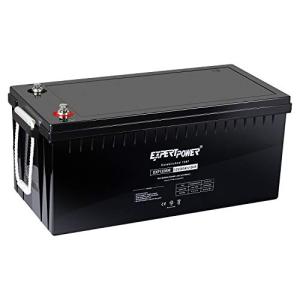
ExpertPower (12V 200Ah) Sealed Lead Acid AGM...
Product Review Score
4.37 out of 5 stars
176 reviews$399.00
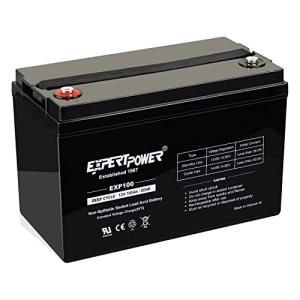
ExpertPower 12V 100Ah Deep Cycle Sealed Lead...
Product Review Score
4.64 out of 5 stars
208 reviews$229.00 $217.55
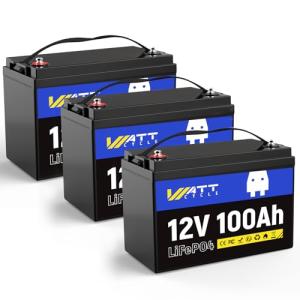
WattCycle 3-Pack 12V 100Ah LiFePO4 Battery, G...
Product Review Score
4.83 out of 5 stars
110 reviews$555.66
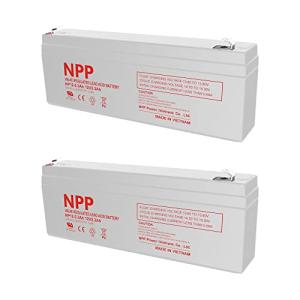
NPP NP12-2.3Ah (T1, 2Pcs) 12V 2.3Ah AGM Recha...
Product Review Score
4.51 out of 5 stars
49 reviews$39.99
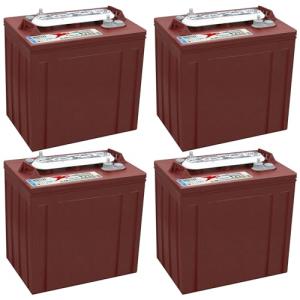
Banshee Trojan T-125 6V 240Ah Flooded Lead Ac...
Product Review Score
4.17 out of 5 stars
49 reviews$1,499.99
What Makes Lead-Acid Batteries a Solar Staple?
The appeal of lead-acid batteries in solar applications comes down to a few key factors: cost, availability, and a long track record of real-world performance.
In terms of upfront cost per kilowatt-hour of storage, lead-acid batteries are hard to beat. They're significantly cheaper than lithium alternatives, which makes them particularly attractive for budget-conscious off-grid setups or anyone who needs a large bank of storage capacity without breaking the bank. They're also widely available — you can source them from local suppliers almost anywhere in the world, which matters enormously for people in rural or remote locations.
There's also something to be said for the decades of real-world data behind these batteries. Solar installers, electricians, and DIY enthusiasts have been working with lead-acid technology for generations. Charging profiles, maintenance routines, failure modes, and lifespan expectations are all well understood. That institutional knowledge makes lead-acid batteries easier to work with for people who prefer tried-and-true technology over the latest innovation.
The Main Types of Solar Lead-Acid Batteries
Flooded Lead-Acid (FLA) Batteries
Flooded lead-acid batteries — sometimes called "wet cell" batteries — are the traditional, old-school option. Inside each cell, lead plates are submerged in a liquid electrolyte solution of sulfuric acid and water. During charging and discharging, this liquid is active, and over time some of it evaporates as hydrogen and oxygen gas.
That means flooded lead-acid batteries require regular maintenance. You'll need to top them up with distilled water every few months, keep them in a well-ventilated space to manage off-gassing, and check their specific gravity periodically to assess their state of charge and health.
In return for that extra attention, flooded batteries tend to offer the longest cycle life among lead-acid options (when properly maintained), the lowest purchase price, and excellent tolerance for occasional overcharging — which can actually help equalize the cells and extend battery life when done correctly.
For serious off-grid systems where someone is actively involved in managing their setup, FLA batteries are often the most cost-effective long-term choice. The key word there is "actively." If you're not prepared to check on them regularly, you'll shorten their lifespan significantly.
Sealed AGM (Absorbed Glass Mat) Batteries
AGM batteries represent a significant step forward in convenience. Instead of free liquid electrolyte, the acid is absorbed into fiberglass mat separators between the plates. The cells are sealed, so there's no topping up required, no liquid spillage risk, and the off-gassing during normal operation is minimal — making them safe to install in enclosed spaces or at unusual angles.
For solar applications, AGM batteries hit a sweet spot. They handle moderate cycling well, they're more resistant to vibration than flooded batteries (great for marine and RV use), and their sealed construction makes them low-maintenance enough for people who want reliable storage without constant babysitting.
They do cost more than flooded batteries, and they're somewhat less tolerant of being deeply discharged or overcharged — both of which can shorten their lifespan considerably. But with a properly configured solar charge controller and reasonable discharge habits, AGM batteries are a genuinely excellent choice for a wide range of applications.
Sealed Gel Batteries
Gel batteries take the sealed concept one step further. The electrolyte is mixed with silica to create a gel-like substance that's even more resistant to vibration and shock than AGM, and they perform particularly well in high-temperature environments.
One of the main advantages of gel batteries is their slower self-discharge rate, which makes them well-suited for solar systems that go unused for extended periods — like seasonal cabins or backup power setups. They're also very resistant to deep discharge damage compared to AGM.
The trade-off is that gel batteries are sensitive to fast charging. Charging them too quickly or with the wrong voltage profile can permanently damage them. They require a specific charging algorithm, so it's critical to ensure your solar charge controller supports gel battery settings. Done right, a gel battery bank can last many years with minimal attention.
Key Specifications to Understand Before You Buy
Amp-Hour (Ah) Capacity
Amp-hour rating tells you how much energy a battery can store. A 100Ah battery can theoretically deliver 10 amps for 10 hours — or 100 amps for one hour. In practice, the rate at which you discharge affects the actual usable capacity, and for lead-acid batteries in particular, faster discharge rates yield less total energy.
Always size your battery bank based on your actual daily energy consumption, with a safety margin to avoid regularly deep-discharging the batteries.
Depth of Discharge (DoD)
This is arguably the most important operational concept for lead-acid battery longevity. Lead-acid batteries don't like being fully discharged. Repeatedly running them down to empty dramatically reduces their cycle life. As a general rule, try to keep your depth of discharge to 50% or less — meaning you only use half of the battery's rated capacity before recharging.
If you regularly discharge to 80% or more, you'll see a noticeable drop in how many charge cycles the battery delivers before it needs replacing. This is one area where lithium batteries genuinely outperform lead-acid: lithium chemistries tolerate much deeper discharge without the same degradation penalty.
Reserve Capacity (RC)
Reserve capacity tells you how many minutes a fully charged battery can deliver a steady 25-amp draw before dropping below a usable voltage level. For solar backup applications, this gives you a practical sense of how long a battery will carry your loads during a cloudy stretch or at night.
Cold Cranking Amps (CCA) — Not Relevant for Solar
You'll see CCA ratings on many batteries in the market, especially those designed for automotive use. Cold cranking amps measure a battery's ability to deliver a burst of power in cold temperatures — useful for starting engines, but irrelevant for solar storage. If you're buying specifically for solar, don't let a high CCA rating influence your decision. Focus on cycle life, depth of discharge tolerance, and amp-hour capacity instead.
How Solar Lead-Acid Batteries Are Charged
A solar panel on its own doesn't charge a battery safely. You need a solar charge controller in between — a device that regulates the voltage and current coming from your panels and feeds it to the batteries in a controlled way.
Most quality charge controllers use a multi-stage charging process for lead-acid batteries:
Bulk charging is the first stage, where the controller pushes as much current as possible into the battery to bring it up to around 80% state of charge quickly.
Absorption charging then holds the voltage at a set level while the current gradually tapers off, allowing the battery to absorb the remaining charge more slowly and safely.
Float charging maintains the battery at full charge with a trickle of current, compensating for natural self-discharge without overcharging.
For flooded batteries, there's often a fourth stage called equalization — a controlled overcharge that helps balance individual cells and drive off sulfation buildup on the plates. This is an important maintenance tool for flooded battery systems.
Getting the charging parameters right matters enormously. Each battery type — flooded, AGM, gel — has its own recommended voltage thresholds. Always check the manufacturer's specifications and program your charge controller accordingly.
Lifespan and What Affects It
A quality solar lead-acid battery bank, properly maintained and operated, can last anywhere from 3 to 10 years depending on battery type, usage patterns, and environmental conditions.
Temperature is one of the biggest variables. Lead-acid batteries perform best in moderate temperatures, roughly 20–25°C. High heat accelerates internal corrosion and electrolyte loss, shortening lifespan. Cold temperatures reduce available capacity — a battery that delivers 100Ah at 25°C might only deliver 70–80Ah at 0°C. For installations in extreme climates, thermal management and appropriate sizing are worth careful attention.
Sulfation is the primary cause of premature lead-acid battery failure. When a battery sits in a partially discharged state for extended periods, lead sulfate crystals form on the plates and become increasingly difficult to reverse. The fix is simple in theory: keep your batteries fully charged whenever possible, and avoid leaving them in a partially discharged state for days at a time.
Cycling depth matters as discussed — regular deep discharges wear out lead-acid batteries much faster than shallow cycling.
Choosing the Right Battery for Your Solar System
The right lead-acid battery depends entirely on your specific situation.
If you're building a serious off-grid homestead and you're comfortable doing hands-on maintenance, flooded lead-acid batteries will give you the best value over time — provided you stay on top of watering and equalization. For a comparable budget, you'll get significantly more amp-hours of storage than with sealed alternatives.
If your solar system is in a location you visit occasionally, or if you want something genuinely low-maintenance, sealed AGM batteries are a smart choice. They won't penalize you as harshly for the occasional missed maintenance check, and they're flexible enough to install almost anywhere.
If your system will sit idle for months at a time — a seasonal cottage, a remote monitoring station, an emergency backup setup — gel batteries are worth considering for their slow self-discharge rate and resilience in that type of use pattern.
Still Worth It in 2026?
With lithium iron phosphate (LiFePO4) batteries becoming more affordable every year, it's fair to ask whether lead-acid still makes sense. The answer is: it depends on what you're optimizing for.
If upfront cost is your primary concern, lead-acid wins convincingly. If you need a large bank of storage on a tight budget, there's no substitute. If you're working in an application where weight doesn't matter and you're comfortable with the maintenance requirements, lead-acid is a sensible, time-tested choice.
Lithium batteries offer undeniable advantages in cycle life, depth of discharge tolerance, weight, and long-term cost of ownership. But they're not always the right tool for every job, and for a huge portion of the solar market — particularly in developing regions and rural off-grid applications — lead-acid batteries remain the practical backbone of energy storage.
Whatever you choose, understanding your batteries — how they work, what they need, and how to protect them — is the single most important factor in getting long, reliable service from your solar storage system.