What's Inside the Box
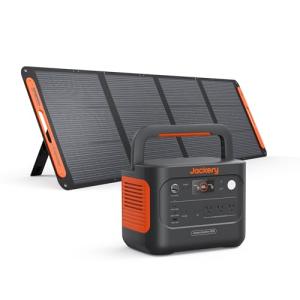
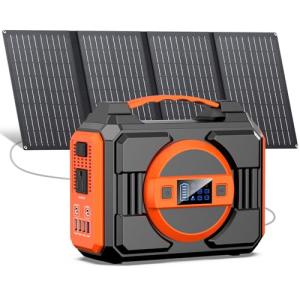
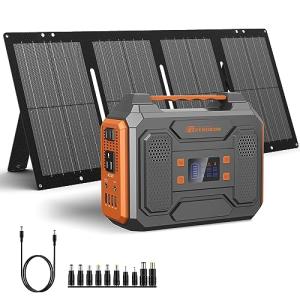
The package includes the 146Wh solar generator power station, the 40W solar panel, an AC power adapter, a car charging cable, a carport cable for output only, and a user manual. That's a fully functional solar power system right out of the box — no hunting for compatible panels, no figuring out which connectors you need. Everything works together from day one, and the whole bundle is covered by a 12-month customer support warranty.
The black-and-red color scheme is clean and purposeful without looking like a toy. The unit measures 7.3 × 6.3 × 3.7 inches, roughly the size of a large hardcover book, and weighs only 3.3 lbs / 1.5 kg, which is genuinely light for a system with this much functionality baked in.
The Power Station: 146Wh of Reliable, Quiet Energy
This portable power station carries a 146Wh / 39600mAh capacity, powerful enough to charge laptops, phones, tablets, cameras, drones, fans, and in-car appliances. That's a meaningful amount of stored energy for a unit this portable. To put it in practical terms: a fully charged Apowking station can bring a dead smartphone back to life roughly 10–12 times, keep a laptop running for around 2 to 2.5 hours, power an LED camping lantern for many hours overnight, or run a small portable fan across an afternoon.
The rated output is 100W continuous, with a 200W peak for handling startup surges from devices like fans or small appliances that need a brief burst of extra power to get going. The 7 outlets include 2 × 110V AC outlets to charge appliances up to 100W rated (200W peak), USB1 + USB2 at 5V/3.1A, USB3 + USBC quick charge 3.0 (5V/3A, 9V/2A), and 1 × DC 12V output (9–12.6V/10A Max) for car vacuums, car air fans, and similar accessories.
The AC outlets are the headline feature here. Being able to plug in a standard 3-prong device — a laptop, a small light, a phone charger, a mini fan — without any adapters is genuinely convenient and sets this unit apart from pure USB-based power banks. For anyone who's dealt with the frustration of hunting for a USB-C cable to charge a device that only came with a wall plug, the AC outlets alone justify serious consideration.
It's worth being clear about the limitations: this is not a whole-home backup system and won't run a refrigerator, air conditioner, microwave, or electric kettle. What it does exceptionally well is keep communication devices, personal electronics, lighting, and small comfort appliances running when other power sources aren't available.
Three Ways to Recharge: Flexibility That Actually Matters
One of the quietly impressive aspects of this system is how many ways you can refill it. The generator can be recharged via solar panels (recommended 40W–100W, required input voltage DC13V–23V/2A Max), a standard AC wall adapter, or a car charging cable.
That three-way flexibility is more useful than it sounds. At home before a camping trip, you plug it into the wall and it's fully charged by the time you're ready to leave. On the road, you keep it topped off via the car's 12V outlet. Once you're at camp or caught in an emergency, the solar panel takes over. You never have a situation where you're stuck waiting on one specific charging method.
The 40W Solar Panel: High Efficiency in a Compact Package
The included 40W solar panel achieves 20.5% high conversion efficiency using monocrystalline solar cells, performing reliably even in conditions of insufficient light. That efficiency number matters more than the raw wattage figure. Monocrystalline cells are the premium tier of consumer solar technology — they extract more usable energy from the same amount of sunlight compared to cheaper polycrystalline panels, and they hold up better under overcast skies or partial shade.
The solar panel kit includes 10 DC connectors, making it compatible with most portable solar-powered generators on the market — not just the Apowking station. If you already own a compatible generator, or if you upgrade to a larger Apowking unit down the road, the panel travels with you.
The panel is foldable and built for portability. At a campsite, you can prop it up facing south, leave it while you go for a hike, and come back to a measurably charged station. In a power outage at home, you can set it outside a window or on a balcony and pull in free energy while everything else in the neighborhood is dark.
Real-World Use Cases: Where This Kit Earns Its Keep
Weekend Camping: This is where the Apowking kit is most at home. It's light enough to bring on backpacking-adjacent trips, capable enough to keep everyone's devices charged, and quiet enough that it won't disrupt the point of being in nature. The AC outlet means a portable speaker, a CPAP machine, or a small camp light can all run off the same unit.
Power Outages and Emergency Preparedness: A 146Wh station won't keep the whole house running, but it will keep your phone charged to call for help, your router alive so you stay connected, your medical device powered, and your flashlights off. For the gap between "everything's fine" and "it's genuinely dangerous," this kit covers the essentials. The unit is well-suited for camping, hurricanes, and emergency home activities.
Remote Work and Van Life: The 12V DC output is particularly relevant for anyone running car-based appliances, while the USB-C quick charge means a MacBook or iPad stays powered through a long work session. The compact footprint doesn't eat up precious van space.
Outdoor Events and Photography: Drone pilots, photographers, and videographers working in the field need reliable charging for batteries, monitors, and accessories. At 3.3 lbs with a solar charging option, this kit keeps gear powered without requiring proximity to a vehicle or outlet.
How It Compares: Apowking vs. the Competition
The portable solar generator market is crowded, and context matters when evaluating any product in this price range. Here's how the Apowking 146Wh + 40W bundle stacks up against comparable options:
| Feature | Apowking 146Wh + 40W Panel | MARBERO 155Wh + 30W Panel | Powkey 146Wh + 40W Panel | Apowking 220Wh + 40W Panel |
|---|---|---|---|---|
| Battery Capacity | 146Wh | 155Wh | 146Wh | 220Wh |
| Rated AC Output | 100W | 100W | 200W (max) | 300W |
| Peak Output | 200W | 150W | 200W | 300W |
| Solar Panel Included | ✅ 40W | ✅ 30W | ✅ 40W | ✅ 40W |
| Solar Cell Type | Monocrystalline | Monocrystalline | Monocrystalline | Monocrystalline |
| Panel Efficiency | 20.5% | ~22% | ~20% | 20.5% |
| AC Outlets | 2 × 110V | 2 × 110V | 2 × 110V | 2 × 110V |
| USB-C Quick Charge | ✅ QC 3.0 | ✅ QC 3.0 | ✅ | ✅ QC 3.0 |
| DC Output | 12V/10A | 12V | 12V/10A | 12V/10A |
| Total Outlets | 7 | 7 | 7 | 7 |
| Weight (Station Only) | 3.3 lbs | ~3.5 lbs | ~3.5 lbs | ~4.2 lbs |
| Recharge Methods | Solar / AC / Car | Solar / AC / Car | Solar / AC / Car | Solar / AC / Car |
| Warranty | 12 months | 12 months | 12 months | 12 months |
The Apowking 146Wh bundle holds its own cleanly in this comparison. The MARBERO's slightly larger capacity is offset by a weaker 30W panel. The Powkey is a near-equivalent option. The step-up Apowking 220Wh model is the natural upgrade path if you find yourself wanting more capacity — and since the 40W panel is the same across both, the panel from this kit would carry forward if you ever upgraded just the station.
What the Numbers Actually Tell You
The 146Wh capacity translates into a practical runtime you can estimate before you buy. A 10W phone charger draws about 10Wh per hour, meaning a full charge delivers roughly 12–14 hours of phone charging with real-world efficiency losses factored in. A 45W laptop chews through the battery in around 2.5–3 hours of work. A small 20W LED lamp can run for 6–7 hours. A 50W portable fan gets you about 2.5 hours per charge.
The 40W solar panel, in ideal conditions (direct sunlight, proper angle), replenishes roughly 35–40 usable watts per hour. On a sunny day, a full recharge takes approximately 4–6 hours of good exposure. In cloudy or partial conditions, plan for longer — or supplement with the wall adapter.
The Honest Trade-Off
No product at this price point and size is without compromise. The 100W rated output means there's a firm ceiling on what you can run — a standard coffee maker, hair dryer, or electric kettle draws 800W to 1,500W and simply won't work here. The battery capacity, while good for its class, depletes quickly under sustained high-wattage loads. And the 40W panel, while efficient, is a slow charger by solar standards — faster panels exist, but they cost more and come separately.
None of these are flaws. They're boundaries that define the product's role. The Apowking kit is built for personal electronics, essential small appliances, and sustained low-draw devices — not for replacing whole-home power. Stay within that scope and it performs exceptionally well.
The Apowking Solar Powered Generator with 40W panel bundle does something the portable power market often fails to do: it delivers a complete, ready-to-use solar system without requiring the buyer to research compatible panels, hunt for adapters, or pay separately for components that should ship together. The 146Wh capacity is genuinely useful, the 20.5% efficient monocrystalline panel punches above its weight, and the 3.3-lb form factor makes portability more than a marketing claim.
For campers, emergency preparedness households, van lifers, drone operators, and anyone who has simply been caught without power at the wrong moment — this kit earns its place in the gear closet. It won't power your kitchen, but it will keep your world connected, lit, and running when nothing else can.
→ Check current price and availability on Amazon