The Star That's Been Waiting for Us
The sun has been burning for approximately 4.6 billion years. Every single day, it radiates more energy toward Earth in one hour than humanity consumes in an entire year. For most of human history, we watched it rise and set, used it to dry our clothes and grow our crops, and completely missed the staggering electrical potential hovering just above our heads.
That oversight is rapidly being corrected.
Solar energy has moved from a fringe curiosity — the technology of satellites and calculators — into one of the fastest-growing energy sources on the planet. In 2023 alone, the world added more solar capacity than any other energy source combined. Prices for solar panels have dropped more than 90% over the past decade. Nations that once considered solar a rich country's hobby are now building some of the world's largest solar installations.
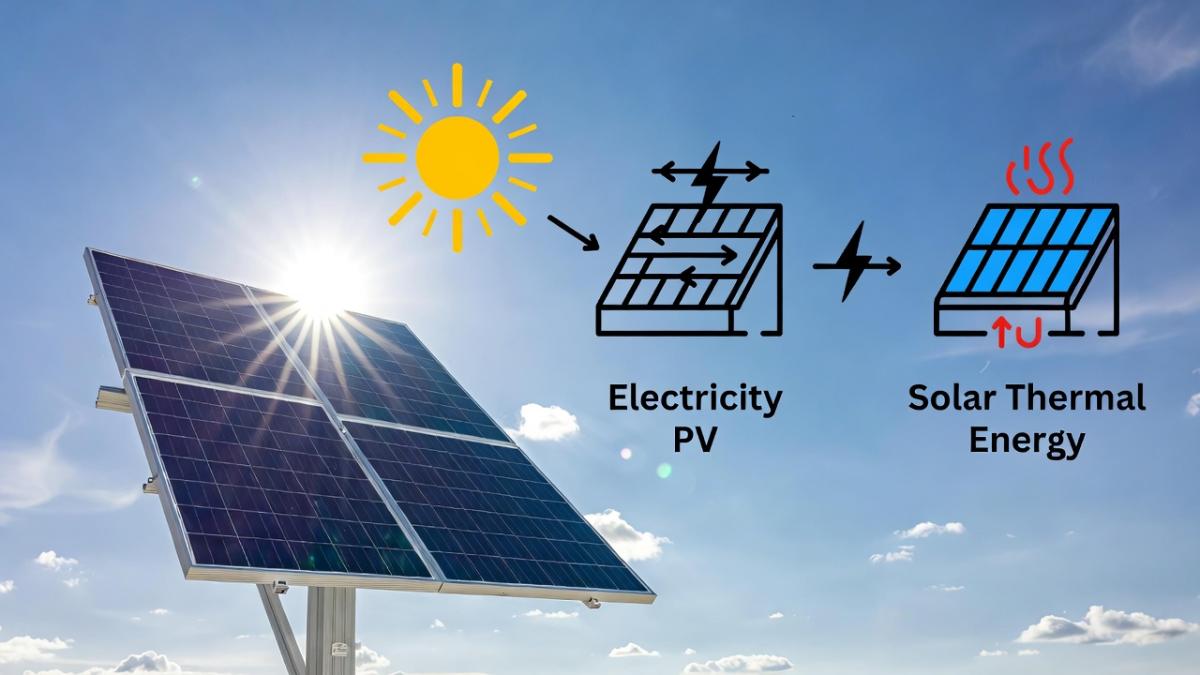
But how does it actually work? How do we go from sunlight — photons flying through 93 million miles of space — to electricity powering your refrigerator, your phone, and your city? The answer involves two fundamentally different technologies: photovoltaic (PV) systems and solar thermal systems. They both harvest the sun, but they do it in completely different ways, for completely different purposes.
Understanding the distinction between these two approaches is the foundation of understanding solar energy itself.
Part One: Light Into Electricity — The Magic of Photovoltaic Cells
What Is a Photovoltaic Cell, Exactly?
A photovoltaic cell — the basic unit of a solar panel — is a thin slice of semiconductor material, almost always silicon, that converts light directly into electricity. No moving parts. No combustion. No steam. Just light going in and electrons coming out.
The word "photovoltaic" comes from the Greek phos (light) and Alessandro Volta, the Italian physicist who gave his name to the volt. So literally: light-electricity. The phenomenon itself was discovered by Edmond Becquerel in 1839, though it took another century of scientific progress before anyone figured out how to make practical use of it.
The first commercially viable silicon solar cell was developed at Bell Laboratories in 1954. It was about 6% efficient and prohibitively expensive — early cells cost roughly $1,000 per watt of capacity. Today, standard commercial panels achieve 20–23% efficiency at a cost of well under $1 per watt. That trajectory of improvement is almost without precedent in the history of technology.
The Physics: How Sunlight Knocks Electrons Loose
To understand photovoltaic cells, you need to understand a small amount of semiconductor physics — though far less than you might fear.
Silicon atoms have four electrons in their outer shell and naturally form a rigid crystalline lattice by sharing those electrons with neighboring atoms. In this pure state, silicon is a poor conductor of electricity because all the electrons are locked up in bonds.
To make silicon useful for solar cells, manufacturers introduce tiny amounts of impurity atoms through a process called doping. There are two types:
N-type silicon is doped with phosphorus, which has five outer electrons. The extra electron has no bond to fill, so it wanders freely — this material has an abundance of free negative charges.
P-type silicon is doped with boron, which has only three outer electrons. This creates "holes" — spaces where an electron could be but isn't — which behave effectively as positive charges moving through the material.
When you press N-type and P-type silicon together, something extraordinary happens at the junction between them. Electrons from the N-side drift into the P-side, and holes from the P-side drift into the N-side, until an electric field builds up that halts further movement. This is the p-n junction — and it is the heart of every solar cell ever made.
Now the sun comes into play. When a photon of sunlight strikes the silicon and carries enough energy, it knocks an electron loose from its bond, creating a free electron and a hole. Under normal circumstances, the electron and hole would simply recombine — the electron would fall back into the hole and the energy would dissipate as heat. But the electric field at the p-n junction separates them before that can happen, pushing the electron toward the N-type side and the hole toward the P-type side.
Connect the two sides of the cell with a wire, and those displaced electrons will flow through it from N to P, returning to their starting point. That flow of electrons is electric current. The photon's energy has been converted into electricity.
This is the photovoltaic effect. It is elegant, robust, and entirely solid-state — no turbines, no generators, no fuel, no emissions.
From Cell to Panel to Array
A single silicon solar cell, roughly 6 inches square, produces about 0.5 volts and 3–4 watts under full sunlight — enough to power a small LED, but not much else. The real power comes from combining cells.
Multiple cells wired together in series — where the positive terminal of one connects to the negative terminal of the next — add their voltages together. Wire them in parallel, and the current adds instead. A standard residential solar panel typically contains 60 or 72 cells and produces somewhere between 300 and 400 watts under peak conditions.
Multiple panels connected together form an array. A typical residential installation might include 20–30 panels, producing 6–12 kilowatts. Utility-scale solar farms contain thousands or millions of panels spread across hundreds of acres, producing hundreds of megawatts.
The Inverter: The Unsung Hero
Solar cells produce direct current (DC) — electrons flowing in one direction. The electrical grid and most household appliances run on alternating current (AC) — electrons rapidly reversing direction 50 or 60 times per second.
This is where the inverter comes in. Inverters convert the DC output of solar panels into grid-compatible AC power. Modern string inverters handle an entire array, while microinverters attach to individual panels, allowing each one to operate independently — useful when shading affects part of the array.
Without the inverter, your solar panels couldn't power a single light switch in your home. It's the component that makes solar electricity actually useful, yet most people never think about it.
Types of Photovoltaic Technology
Not all solar panels are created equal. The industry has developed several distinct approaches, each with different efficiency levels, costs, and ideal applications.
Monocrystalline silicon panels are cut from a single, continuous crystal of silicon. That uniform crystal structure gives electrons an easier path to travel, resulting in the highest efficiency among mass-market panels — typically 20–23%. They're slightly more expensive to manufacture but use less space for a given output, making them ideal for rooftops where area is limited.
Polycrystalline (multicrystalline) silicon panels are made by melting down silicon fragments and casting them into blocks. The resulting material has many small crystals with grain boundaries between them, which creates some resistance to electron flow. Efficiency runs 15–17% — lower than monocrystalline, but the manufacturing process is simpler and cheaper. For several decades, polycrystalline dominated the market on price. That advantage has narrowed significantly as monocrystalline production has scaled.
Thin-film solar cells take an entirely different approach. Instead of cutting wafers from a silicon crystal, thin-film technologies deposit extremely thin layers of semiconductor material onto glass, metal, or plastic substrates. Materials used include cadmium telluride (CdTe), copper indium gallium selenide (CIGS), and amorphous silicon. Thin-film cells are cheaper to produce and can be made flexible — enabling solar panels on curved surfaces, building-integrated photovoltaics (BIPV), and even solar fabric. Their efficiency ranges from 10–13% for commercial products, though laboratory cells have achieved significantly higher.
Perovskite solar cells represent the most exciting frontier in PV research. These cells use a crystalline structure first studied in minerals but synthesized cheaply from organic and inorganic compounds. Laboratory perovskite cells have achieved efficiencies above 25%, and perovskite-silicon tandem cells have broken 33%. The challenge is stability — early perovskite cells degraded quickly when exposed to moisture and heat — but research is closing that gap rapidly.
Part Two: Light Into Heat — Solar Thermal Systems
A Different Kind of Solar
While photovoltaic technology converts sunlight directly into electricity, solar thermal systems take a more intuitive approach: they use sunlight to generate heat, and then use that heat for practical purposes. The sun has been used this way, in rudimentary forms, since ancient times — through glasshouses, solar stills, and south-facing architecture. Modern solar thermal systems are far more sophisticated, but the underlying logic is ancient.
Solar thermal divides into two broad categories based on temperature and purpose: low-temperature solar thermal for water and space heating, and concentrating solar power (CSP) for large-scale electricity generation.
Low-Temperature Solar Thermal: Heating Water and Homes
The simplest and most widely deployed solar thermal technology is the solar water heater. These systems are beautifully straightforward: panels on the roof absorb sunlight and transfer that heat to water (or a heat-transfer fluid), which is then stored in an insulated tank for domestic hot water use.
There are two main configurations:
Flat-plate collectors consist of a dark absorber plate inside an insulated, glass-covered box. Pipes running through the absorber carry water or fluid. Sunlight passes through the glass, strikes the dark plate, and heats the fluid within. Flat-plate systems work well in moderate climates and represent the majority of solar thermal installations globally.
Evacuated tube collectors use rows of glass tubes, each containing an absorber element surrounded by vacuum. The vacuum eliminates convective heat loss, making evacuated tubes significantly more efficient in cold weather and low-light conditions. They're more expensive but perform better in climates where flat-plate systems would struggle.
Solar water heaters can cover 50–80% of a household's hot water needs, with conventional gas or electric backup handling the rest. In sunny climates with high hot water demand — hotels, hospitals, apartment buildings — the economics are compelling. Israel and Cyprus have the world's highest penetration of solar water heaters per capita, with solar hot water essentially standard in Israeli households since the 1980s.
Solar thermal technology also extends to space heating through systems that circulate solar-heated fluid through underfloor radiant heating or air handlers, and solar air heating for drying agricultural products and heating commercial or industrial spaces.
Concentrating Solar Power: The Big Game
At the other end of the scale, Concentrating Solar Power (CSP) uses mirrors or lenses to focus sunlight onto a receiver, generating temperatures high enough to produce steam and drive a conventional turbine-generator. CSP is, in essence, a traditional power plant where the fuel source — and all the atmospheric pollution that comes with it — has been replaced by concentrated sunlight.
There are four main CSP configurations:
Parabolic Trough Systems are the most mature CSP technology. Curved, trough-shaped mirrors focus sunlight onto a receiver tube running along their focal line. A heat transfer fluid — typically synthetic oil — circulates through the tube, reaching temperatures around 400°C. That heated fluid then passes through a heat exchanger to generate steam, which drives a turbine. Parabolic trough plants like the SEGS complex in California's Mojave Desert have been generating grid electricity since 1984.
Solar Power Towers (Central Receiver Systems) use a large field of flat mirrors called heliostats, each individually tracked to reflect sunlight onto a central receiver at the top of a tower. The concentrated energy can heat working fluids to above 600°C, enabling higher thermodynamic efficiency than parabolic troughs. The Ivanpah Solar Electric Generating System in California is one of the world's largest power tower installations at 392 megawatts.
Linear Fresnel Reflectors use flat or nearly flat mirror strips arranged to focus sunlight onto a receiver tube above them. Less efficient than parabolic troughs but cheaper to build and maintain, Fresnel systems are gaining traction for industrial process heat applications.
Dish-Stirling Systems use a parabolic dish to concentrate sunlight onto a Stirling engine at the focal point. Stirling engines convert heat differentials into mechanical work with very high theoretical efficiency. These systems are modular and can achieve high efficiency but have struggled to compete economically at large scale.
One of CSP's most significant advantages over photovoltaic solar is thermal energy storage. Because CSP plants generate heat before generating electricity, they can store that heat in materials like molten salt, then draw on that stored heat to generate electricity for hours after the sun has set. The Gemasolar plant in Spain, for example, can generate electricity for up to 15 hours without sunlight using its molten salt storage system. This dispatchability — the ability to deliver power on demand — is enormously valuable to grid operators and represents a capability that standard PV cannot match without separate battery storage.
Comparison: Photovoltaic vs. Solar Thermal
These two technologies share a common fuel source but are fundamentally different in their mechanisms, outputs, and best applications. Here's how they stack up:
| Feature | Photovoltaic (PV) | Solar Thermal (Low-Temp) | Concentrating Solar Power (CSP) |
|---|---|---|---|
| Primary Output | Electricity | Heat | Electricity |
| Working Principle | Photoelectric effect at p-n junction | Absorption and conduction of heat | Concentrated heat → steam → turbine |
| Efficiency (solar to useful energy) | 15–23% (commercial) | 50–80% (water heating) | 15–20% (electricity) |
| Ideal Scale | Residential to utility | Residential to commercial | Utility-scale |
| Energy Storage | Requires batteries | Hot water tank | Molten salt (hours of storage) |
| Moving Parts | None (solid-state) | Minimal (pumps) | Yes (turbines, tracking) |
| Cost (per kWh) | Very low, declining rapidly | Low to moderate | Moderate to high |
| Grid Dispatchability | Limited without storage | Not applicable | High with thermal storage |
| Best Climate | Any sunny region | Moderate to warm | High-insolation, arid regions |
| Lifespan | 25–30+ years | 20–25 years | 25–30 years |
| Maintenance | Very low | Low | Moderate to high |
| Technology Maturity | Highly mature, still improving | Very mature | Mature but less deployed |
The conclusion drawn from this comparison is not that one technology is superior — it's that they serve different purposes and often work best together. A home might combine rooftop PV panels for electricity with a solar thermal water heater, covering the majority of its energy needs from sunlight using two complementary systems.
The Efficiency Question: Why Not 100%?
One of the most common questions about solar cells is: why aren't they more efficient? If light is hitting the cell, why isn't more of it becoming electricity?
The answers lie in fundamental physics, not engineering failure.
Solar radiation spans a wide spectrum of wavelengths — from ultraviolet through visible light to infrared. Each photon carries a specific amount of energy determined by its wavelength. Semiconductor materials like silicon have a characteristic bandgap — the minimum energy a photon must carry to knock an electron loose.
Photons with less energy than the bandgap pass right through the material without doing anything useful. Photons with more energy than the bandgap do knock electrons loose, but the excess energy is shed as heat rather than electricity. The mathematical limit for a single-junction silicon solar cell — established by William Shockley and Hans-Joachim Queisser in 1961 — is approximately 33.7%. This is the maximum theoretical efficiency, regardless of manufacturing quality.
Researchers are pursuing several strategies to push beyond this limit. Multi-junction cells stack different semiconductor materials with different bandgaps, each capturing a different slice of the solar spectrum. Space-grade triple-junction cells achieve efficiencies above 40%. The emerging perovskite-silicon tandem architecture is pushing toward 35%+ for commercial-scale cells.
Meanwhile, the practical goal for most applications isn't maximum efficiency — it's maximum value. A 20% efficient panel that costs half as much as a 25% efficient panel often makes more economic sense, which is why commercial solar development remains a careful balance of physics, materials science, manufacturing engineering, and economics.
Solar Energy's Place in the Energy Transition
The numbers today are genuinely astonishing when measured against where the industry stood even fifteen years ago. In 2010, solar provided less than 0.1% of global electricity. By 2023, it had crossed 5% — and that share is growing faster than any other energy source. The International Energy Agency projects solar will be the largest source of electricity capacity globally before 2030.
What drove this transformation? Three interlocking forces: manufacturing scale, technological improvement, and policy support. The decision by China to massively invest in solar manufacturing capacity drove panel prices down precipitously. Simultaneously, panel efficiency has continued to improve year on year. And government policies — from Germany's feed-in tariff to the US Investment Tax Credit to India's ambitious solar targets — created demand at a scale that enabled the manufacturing investment.
The remaining challenges are real but tractable. Solar is intermittent — it generates only when the sun shines. Integrating high levels of solar into electricity grids requires investment in storage (batteries, pumped hydro, CSP with thermal storage), transmission, and demand flexibility. The land area required for utility-scale solar is significant, though solar panels on existing rooftops, parking structures, reservoirs (floating solar), and degraded land can dramatically reduce the pressure on natural landscapes.
Solar's cost curve has surprised even optimistic experts. In 2010, the US Department of Energy set a goal of achieving $1 per watt of solar capacity by 2020 as an ambitious stretch target. The industry hit $0.20 per watt by 2020. The Sun Shot program's target was exceeded by 400%.
Starting From the Atom
Strip away the policy, the economics, and the geopolitics, and what you have is this: an atom of silicon, doped with a few phosphorus atoms, a p-n junction no wider than a human hair, and a photon that has traveled 93 million miles in eight minutes and twenty seconds to knock an electron out of its comfortable bond.
That electron travels through a wire, powers something useful, and returns to its starting point. The sun, unchanged, keeps shining.
Photovoltaic cells do this with no moving parts, no fuel, no combustion, no noise, and no emissions. Solar thermal systems do something equally elegant — letting sunlight do directly what fire has always done, but without the fire.
These are not complicated ideas. They're applications of physics that we've understood for decades, deployed at a scale we only recently made possible. The sun has been offering this deal for 4.6 billion years. We're finally taking it.
The transition to solar energy isn't a technological revolution — the science has been settled. It's an industrial and economic revolution, a matter of scaling what we already know how to do. And by every measure, that scaling is well underway.