Thin-film solar panels are a fantastic option if you're looking for lightweight and flexible solar solutions. They’re perfect for unique or limited spaces since they can be easily integrated into different surfaces. Plus, they’re often more affordable than traditional panels, making them a smart choice for budget-conscious homeowners.
Thin-Film Solar Panels
Discover lightweight and flexible solar panels that make clean energy easy and accessible for any space
Product List
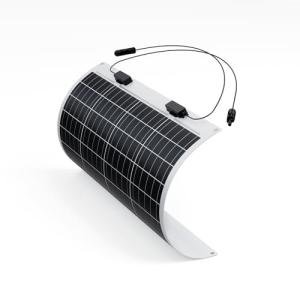
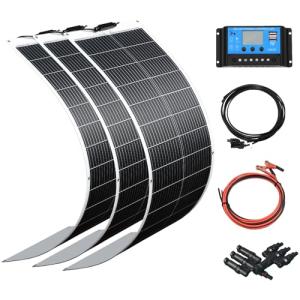
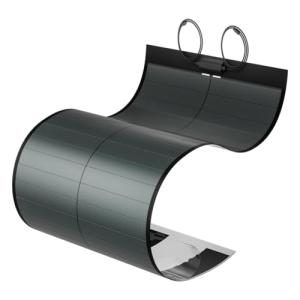
BougeRV Yuma 100W CIGS Thin-Film Flexible Sol...
Product Review Score
4.16 out of 5 stars
13 reviews$279.99 $229.99
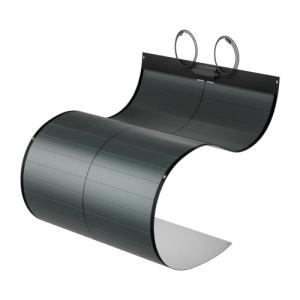
BougeRV Yuma 100W CIGS Thin-Film Flexible Sol...
Product Review Score
4.59 out of 5 stars
131 reviews$249.99 $209.99
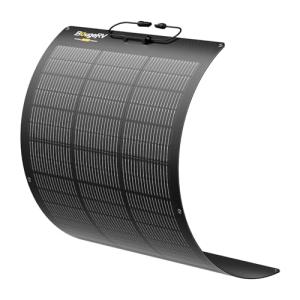
BougeRV Arch Pro 100 Watts Anti-Shading N-Typ...
Product Review Score
4.77 out of 5 stars
163 reviews$169.99 $135.99
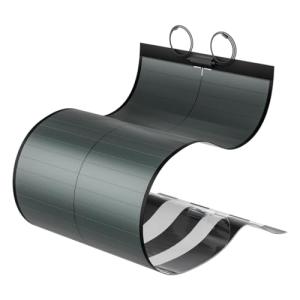
BougeRV Yuma 200W CIGS Thin-Film Flexible Sol...
Product Review Score
4.25 out of 5 stars
203 reviews$599.99 $429.98
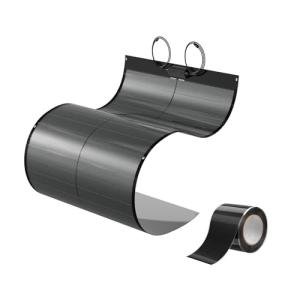
BougeRV Yuma 100W Compact CIGS Thin-Film Flex...
Product Review Score
4.7 out of 5 stars
192 reviews$229.99
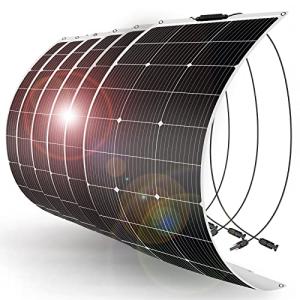
DOKIO 600W (6×100W) Flexible Solar Panels 18V...
Product Review Score
4.39 out of 5 stars
139 reviews$195.47
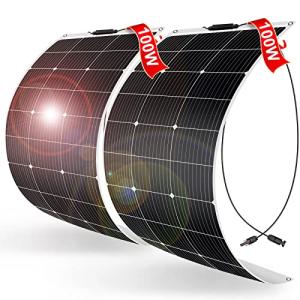
DOKIO 200W (2×100W) Flexible Solar Panels 18V...
Product Review Score
4.6 out of 5 stars
42 reviews$99.77 $77.47
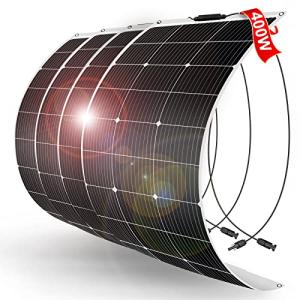
DOKIO 400W (4×100W) Flexible Solar Panels 18V...
Product Review Score
4.93 out of 5 stars
16 reviews$157.92 $139.52
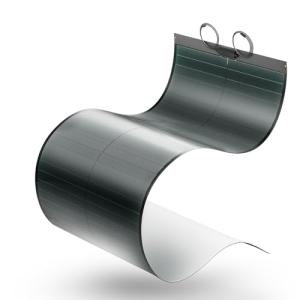
BougeRV 200W Flexible Solar Panel
Product Review Score
4.49 out of 5 stars
162 reviews$549.99 $419.99
What Are Thin-Film Solar Panels?
Thin-film solar panels are photovoltaic (PV) devices made by depositing one or more layers of light-absorbing material onto a substrate — typically glass, plastic, or metal foil. The result is a panel that's dramatically thinner and lighter than conventional crystalline silicon (c-Si) modules, often by a factor of 100 or more in terms of the active layer thickness.
Unlike standard solar panels that rely on thick wafers of silicon crystal, thin-film technology builds its electricity-generating layers atom by atom. The photovoltaic layers can be as thin as a few micrometers — compare that to a human hair, which is about 70 micrometers wide, and you get a sense of just how remarkably slender these devices are.
That thinness translates into real-world advantages: reduced material usage, lower manufacturing costs (in many cases), compatibility with flexible substrates, and the ability to integrate solar generation directly into building materials, vehicles, consumer electronics, and portable gear.
How Do Thin-Film Solar Panels Work?
All solar panels convert sunlight into electricity through the photovoltaic effect. When photons from the sun strike a semiconductor material, they knock electrons loose, creating an electric current. Thin-film panels do this just like their crystalline silicon cousins — the difference lies in the materials used and how they're assembled.
In a thin-film panel, the semiconductor absorber layer is deposited in an ultra-thin film over a backing substrate. Conductive layers sandwich the absorber to collect the generated current. A protective top layer (glass, polymer, or encapsulant) seals everything together.
The result is a complete solar module that can be rigid or bendable, opaque or semi-transparent, heavy or feather-light — all depending on the specific materials and manufacturing choices made.
Types of Thin-Film Solar Panels
Not all thin-film solar panels are created equal. There are several distinct technologies on the market, each with its own chemistry, strengths, and ideal applications.
Cadmium Telluride (CdTe)
Cadmium telluride is the most commercially successful thin-film solar technology in the world today. CdTe panels have a band gap that's almost perfectly matched to the solar spectrum, making them highly efficient at converting sunlight into electricity, even in diffuse or low-light conditions.
CdTe modules are manufactured at large scale and have proven themselves in utility-scale solar farms. They're typically rigid, glass-on-glass or glass-on-back-sheet constructions. One of their standout qualities is low carbon footprint per watt produced — CdTe manufacturing is energy-efficient, and the panels pay back their energy cost quickly over their operational lifetime.
A common question is about cadmium, which is a toxic heavy metal. The good news is that cadmium is securely encapsulated within the panel throughout its life, and end-of-life recycling programs have been developed to reclaim materials safely. When treated correctly, CdTe technology poses minimal environmental risk.
Copper Indium Gallium Selenide (CIGS)
CIGS panels use a quaternary semiconductor — copper, indium, gallium, and selenium — as the absorber layer. This compound has a tunable band gap, meaning manufacturers can adjust the gallium-to-indium ratio to optimize performance for different sunlight conditions.
CIGS technology achieves the highest efficiencies of any thin-film type, with some laboratory cells exceeding 23% efficiency — comparable to many commercial crystalline silicon cells. In real-world commercial modules, CIGS panels typically deliver 12–17% efficiency, still highly competitive for the thin-film category.
One of CIGS's most exciting features is its compatibility with flexible substrates. When deposited onto flexible metal foil or polymer films, CIGS creates truly bendable solar panels suitable for curved surfaces, portable applications, and building-integrated photovoltaics (BIPV). If you've ever imagined solar cells woven into a tent canopy or laminated onto the curved roof of a vehicle, CIGS is probably the technology making it possible.
Amorphous Silicon (a-Si)
Amorphous silicon was the first commercially deployed thin-film solar technology, and it remains in use today, particularly for low-power applications. Unlike crystalline silicon, amorphous silicon has no regular crystal structure — its atoms are arranged randomly, which changes its optical and electrical properties.
The main advantage of a-Si is extremely low material usage and compatibility with very large-area deposition on inexpensive substrates. The main limitation is efficiency: commercial a-Si panels typically achieve 6–9%, noticeably lower than CdTe or CIGS.
However, a-Si shines in niche roles. It performs exceptionally well under indoor lighting and diffuse light conditions, making it the technology of choice for solar-powered calculators, wearable devices, and indoor IoT sensors. For applications where the light is artificial and weak, a-Si can outperform higher-efficiency technologies that are optimized for outdoor sunlight.
Perovskite Solar Cells (Emerging)
Perovskite thin-film solar cells represent the most exciting frontier in photovoltaics today. Using a class of crystalline materials with a specific atomic structure (the perovskite structure), these cells have shown laboratory efficiencies climbing past 25% — an astonishing achievement for a technology that only emerged as a serious contender in the 2010s.
Perovskite cells are cheap to produce, can be tuned across a wide spectrum, and can be stacked with silicon cells (tandem cells) to achieve efficiencies that neither material could reach alone. The challenge right now is durability: perovskite cells can degrade under heat, humidity, and prolonged UV exposure faster than established technologies. Commercial deployment is progressing, and many expect perovskite-based products to reach the mainstream market within the next few years.
Key Advantages of Thin-Film Solar Panels
Lightweight and Low-Profile
Weight is one of the first things buyers notice about thin-film panels. A conventional crystalline silicon panel can weigh 18–25 kilograms. Flexible thin-film panels, by contrast, can weigh under 3 kilograms for equivalent area. That difference is transformative for applications where structural load is a concern — think older buildings, recreational vehicles, boats, and aircraft.
Flexibility and Form Factor
Flexible thin-film panels can conform to curved surfaces that rigid glass panels could never cover. This opens up an enormous range of applications: camper van roofs, marine vessels, backpacks and tents, stadium canopies, and architectural facades with complex geometry. If you're working with a surface that isn't flat, thin-film technology is probably your answer.
Better Low-Light and High-Temperature Performance
Crystalline silicon panels lose efficiency more sharply as temperature rises. Many thin-film technologies — particularly CdTe and CIGS — have a lower temperature coefficient, meaning their output drops less on hot days. This makes thin-film panels particularly well-suited to hot climates where panels regularly reach 70–80°C in summer.
Additionally, thin-film panels tend to outperform crystalline silicon under cloudy, overcast, or dawn/dusk conditions. If your installation site receives a lot of diffuse rather than direct sunlight, thin-film technology can deliver more energy over the course of a year than raw efficiency ratings might suggest.
Aesthetic Integration
For architects and designers, thin-film solar offers something standard panels can't match: visual discretion. Semi-transparent CIGS and CdTe modules can be used as glazing — windows, skylights, and facades that generate electricity while allowing light to pass through. Fully opaque thin-film panels are low-profile and can be produced in custom colors and form factors, blending into rooflines and building skins rather than sitting on top of them.
Building-integrated photovoltaics (BIPV) is one of the fastest-growing segments of the solar industry, and thin-film technology is at the center of it.
Limitations to Consider
No technology is perfect for every application. Thin-film panels come with trade-offs worth understanding before you commit.
Efficiency is the most cited limitation. Standard CdTe and a-Si commercial panels typically deliver lower efficiency than premium monocrystalline silicon modules. If you have a small, sunny roof and want maximum output from a limited area, crystalline silicon may still be the better choice.
Space requirements follow from efficiency: because thin-film panels generate less power per square meter, you may need more panel area to achieve the same total system output. For large ground-mounted installations or expansive commercial rooftops, this is rarely a problem. For tight residential rooftops, it can be a constraint.
Material availability is a concern for some technologies. Indium and tellurium — used in CIGS and CdTe respectively — are relatively rare elements. As global thin-film production scales up, supply chains and costs may be affected. Manufacturers are actively developing strategies to reduce material usage and explore alternative chemistries.
Where Thin-Film Solar Panels Excel
Utility-Scale Solar Farms
Large-scale power plants benefit enormously from thin-film economics. CdTe modules from major manufacturers have become a dominant technology in utility-scale projects, valued for their competitive cost per watt, strong real-world energy yield, and proven long-term performance.
Building-Integrated Photovoltaics (BIPV)
Replacing conventional building materials with photovoltaic equivalents — solar roof tiles, solar glass facades, solar awnings — is a rapidly growing market. Thin-film technologies enable products that look nothing like traditional solar panels while generating meaningful amounts of electricity.
Mobile and Portable Applications
From military field operations to adventure camping to humanitarian disaster response, portable power matters. Rollable and foldable thin-film solar panels are compact, lightweight, and rugged enough to be carried in a pack and deployed wherever the sun is shining.
Marine and Automotive
Boats and vehicles are natural candidates for flexible thin-film panels. The curved surfaces, weight sensitivity, and need for low-profile integration are all challenges where thin-film technology delivers solutions that rigid panels simply can't.
Off-Grid Rural Electrification
In regions where grid infrastructure is absent or unreliable, durable and lightweight thin-film panels are easy to transport, install without heavy equipment, and maintain without specialized tools. Their strong performance in diffuse light conditions suits tropical regions where haze and cloud cover are common.
Choosing the Right Thin-Film Panel for Your Needs
When selecting a thin-film solar panel, consider the following:
Your available surface area. If space is not a constraint, thin-film's slightly lower efficiency per square meter is irrelevant. If space is tight, weigh efficiency carefully.
Flexibility requirements. If you need to conform to a curved surface, only flexible thin-film products will work. Confirm the minimum bend radius specified by the manufacturer before installation.
Light conditions. For hot climates or frequently overcast skies, thin-film panels often outperform their rated efficiency compared to crystalline silicon alternatives.
Aesthetics and integration. If the panel needs to blend into architecture or function as part of the building envelope, explore BIPV-specific thin-film products.
Durability and warranty. Look for manufacturers offering 25-year linear power output warranties, which are now common across the major thin-film brands. Check certifications such as IEC 61646 (thin-film module performance) and IEC 61730 (safety).
The Road Ahead
Thin-film solar technology is advancing rapidly. Efficiency records fall regularly. New materials — particularly perovskites and their tandem combinations with silicon and CIGS — promise to push thin-film performance into territory that was unimaginable a decade ago. Manufacturing costs continue to fall. And the range of form factors and applications keeps expanding.
As the world accelerates its transition away from fossil fuels, thin-film solar panels are poised to play an increasingly vital role — not just as an alternative to conventional panels, but as an enabling technology for entirely new categories of solar-powered products and buildings that we're only beginning to imagine.
Whether you're powering a utility-scale solar farm, designing a net-zero building, equipping an expedition vehicle, or simply want the most discreet and lightweight solar solution available, thin-film solar panels deserve a serious look.
Browse our full range of thin-film solar panels above, or contact our technical team for help selecting the right product for your application.