Lithium-ion batteries are a game-changer for your solar energy setup. They store energy efficiently, making sure you have power even when the sun isn’t shining. Whether you’re powering your home or taking your solar system off-grid, these batteries are durable, lightweight, and perfect for keeping your energy flowing.
Lithium-Ion Batteries
Product List
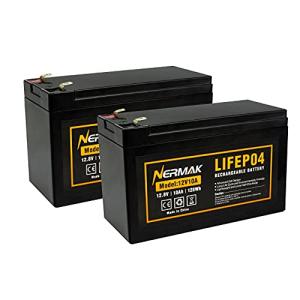
Nermak 2 Pack 12V 10Ah Lithium Ion LiFePO4 De...
Product Review Score
4.54 out of 5 stars
26 reviews$69.99 $62.99
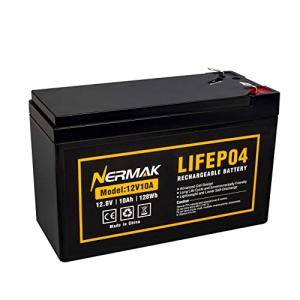
NERMAK 12V 10Ah Lithium LiFePO4 Deep Cycle Ba...
Product Review Score
4.57 out of 5 stars
196 reviews$39.99 $33.99
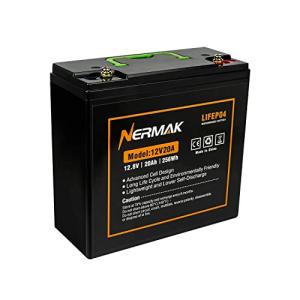
NERMAK 12V 20Ah Lithium LiFePO4 Deep Cycle Ba...
Product Review Score
4.62 out of 5 stars
208 reviews$59.99 $51.99
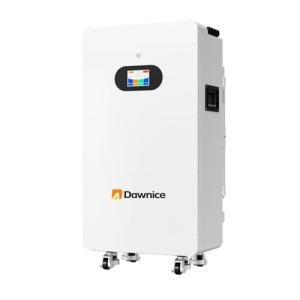
Dawnice 16kWh Solar Battery 48V 314Ah LifePO4...
Product Review Score
4.97 out of 5 stars
220 reviews$2,799.00
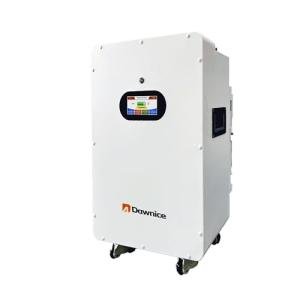
Dawnice 48V 314Ah LifePO4 Lithium Battery 16K...
Product Review Score
4.54 out of 5 stars
155 reviews$2,899.99
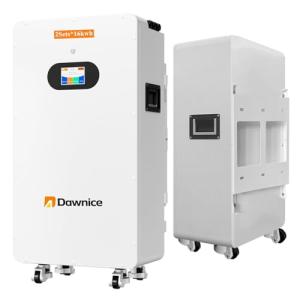
Dawnice 48V 32KWH Lithium Battery(2Sets*16kw...
Product Review Score
4.48 out of 5 stars
138 reviews$5,083.44
Dawnice 16kWh Solar Battery 48V 314Ah LifePO4...
Product Review Score
4.32 out of 5 stars
49 reviews$2,799.00
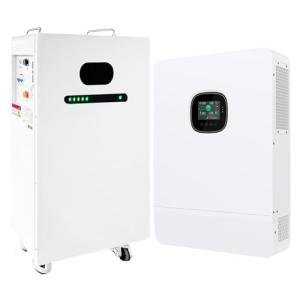
Dawnice 10KW 48V Lithium Battery LifePO4 Sola...
Product Review Score
4.58 out of 5 stars
15 reviews$5,150.00
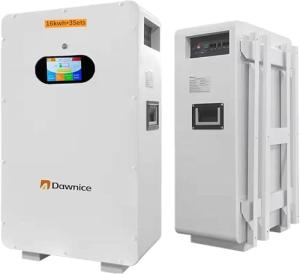
48kwh Solar Battery 51.2V 314Ah 16kwh LiFePO4...
Product Review Score
4.69 out of 5 stars
138 reviews$8,199.99
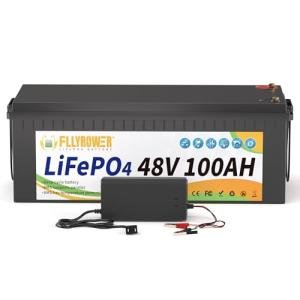
FLLYROWER 48V Lithium Battery 100AH With 150A...
Product Review Score
4.15 out of 5 stars
23 reviews$659.99
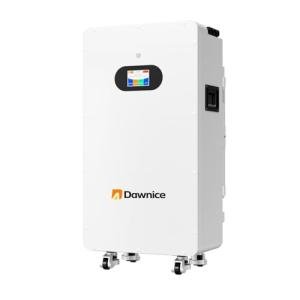
Dawnice 16kWh LiFePO4 Lithium Solar Battery 4...
Product Review Score
4.32 out of 5 stars
207 reviews$2,799.00
What Makes Lithium-Ion the Right Choice for Solar Storage?
Not all batteries are created equal, and the solar storage market has tried almost every chemistry out there — lead-acid, nickel-cadmium, saltwater, and more. Lithium-ion has emerged as the dominant choice, and it's not marketing hype. There are real, practical reasons why it's won out.
Energy density is the first big one. Lithium-ion batteries store significantly more energy per kilogram and per cubic foot than older technologies. That matters a lot when you're trying to fit a battery system into a garage, a utility closet, or an RV. You get more storage in less space.
Cycle life is the second reason. A cycle is one full charge and discharge. Lead-acid batteries typically manage somewhere between 300 and 700 cycles before they start degrading meaningfully. Quality lithium-ion batteries — particularly those using lithium iron phosphate (LFP) chemistry — routinely deliver 3,000 to 6,000 cycles or more. Some premium products are rated even higher. Over a 10-to-15-year system lifespan, that difference is enormous.
Depth of discharge rounds out the practical case. Most lead-acid batteries shouldn't be discharged below 50% of their capacity without accelerating wear. Lithium-ion batteries can be safely discharged to 80%, 90%, or even deeper without meaningful damage. That means you're actually using the capacity you paid for.
There's also the matter of efficiency. Lithium-ion batteries have a round-trip efficiency of around 95% — meaning that for every 100 watt-hours you put in, you get roughly 95 back out. Lead-acid sits closer to 80%. That 15% difference adds up every single day.
The Different Types of Solar Lithium-Ion Batteries
Within the broad category of lithium-ion, there are several distinct chemistries and form factors worth knowing about.
Lithium Iron Phosphate (LFP / LiFePO4)
This is the chemistry most commonly recommended for solar storage, and for good reason. LFP batteries have a strong safety profile — they don't suffer from the thermal runaway issues that have plagued other lithium chemistries. They're thermally stable even under stress, which matters when you're talking about a battery installed in your home.
LFP also holds up exceptionally well over time. The cycle life figures mentioned above apply most strongly here. If you're looking at a wall-mounted home battery system, a rack-mount setup, or a serious off-grid battery bank, there's a very good chance it's using LFP chemistry.
Lithium Nickel Manganese Cobalt (NMC)
NMC batteries offer higher energy density than LFP, which makes them attractive in applications where weight and space are at a premium — electric vehicles, for instance. In solar storage, they show up in some residential products where sleek form factor is a priority. The tradeoff is a somewhat shorter cycle life and slightly more sensitivity to high temperatures compared to LFP.
Modular vs. All-in-One Systems
Beyond chemistry, you'll encounter two main structural approaches to solar lithium-ion battery systems.
All-in-one systems integrate the battery, battery management system (BMS), and sometimes even the inverter into a single enclosure. These are popular for residential installations because they simplify setup and keep everything neatly packaged. The Tesla Powerwall and similar products fall into this category.
Modular systems let you stack or expand capacity over time. You might start with one or two battery modules and add more as your energy needs grow or as your budget allows. This approach is common in commercial and off-grid applications where scalability matters more than simplicity.
Key Specifications to Understand Before You Buy
Shopping for solar batteries without understanding the numbers is a bit like buying a car without knowing what the fuel tank size means. Here are the specs that actually matter.
Usable Capacity (kWh)
This is the headline number and it measures how much energy the battery can store and deliver in practice. Note the word usable — some manufacturers list total capacity, others list usable capacity, and they're not the same. A battery with 10 kWh total capacity might deliver only 9 kWh usably. Always compare usable figures when evaluating products side by side.
For reference, the average home in the United States uses somewhere around 30 kWh of electricity per day. A 10–13.5 kWh battery system provides partial backup — enough to cover essential loads overnight or through a short outage, but not whole-home power for multiple days. Off-grid systems typically require significantly more storage.
Power Output (kW)
Capacity tells you how much energy is stored. Power tells you how fast it can be delivered. A battery with 10 kWh of capacity and 5 kW of continuous power output can run a 5,000-watt load for two hours. But it can't simultaneously power appliances that demand more than 5 kW at once. This becomes relevant when you're thinking about what loads the battery needs to support during an outage — particularly anything with a compressor, like a central air conditioner or a well pump.
Pay attention to both continuous power and peak (surge) power ratings. Motors and compressors draw several times their running wattage for a brief moment at startup, and your battery system needs to handle that spike.
Round-Trip Efficiency
Already mentioned above, but worth flagging as a spec to check. Look for systems at 94% or above. Lower efficiency means more of your solar energy is lost to heat during charging and discharging.
Operating Temperature Range
Lithium-ion batteries are sensitive to extreme temperatures. Most residential systems are rated for somewhere between about 32°F and 113°F (0°C to 45°C) for charging, with a slightly wider range for discharge. If you're in a very cold climate and the battery will be installed in an unheated space, check the cold-weather specs carefully. Some systems include built-in thermal management or heating elements; others require you to manage installation location carefully.
Warranty
Quality solar lithium-ion batteries come with warranties of 10 years or more, often with a guaranteed end-of-warranty capacity — something like "will retain at least 70% of original capacity after 10 years or 4,000 cycles." That guarantee is meaningful. It tells you the manufacturer stands behind the product's longevity and gives you a benchmark for comparison.
How Solar Lithium-Ion Batteries Fit Into Your Overall System
A battery doesn't operate in isolation. It's one component in a system that includes your solar panels, an inverter or inverter-charger, and your home's electrical panel.
In a grid-tied system with battery backup, your solar panels generate power during the day. Excess energy that you're not immediately using charges the battery. At night, or when the grid goes down, the battery discharges to power your home. This setup is increasingly popular because it gives you both the financial benefits of solar (reduced electricity bills, net metering credits) and the resilience of backup power.
In a hybrid or off-grid system, the battery takes on a more central role. Without a grid connection to fall back on, the battery must store enough energy to carry you through cloudy days and overnight periods. System design gets more involved — you need to carefully size both your solar array and your battery bank to match your actual consumption patterns.
The battery management system (BMS) is built into every quality lithium-ion battery. It monitors cell voltage, temperature, and current, and it protects the battery from overcharging, over-discharging, and thermal extremes. A good BMS is what separates a reliable battery from a potential hazard — it's not a feature to cut corners on.
Installation, Safety, and Maintenance
One of the advantages of lithium-ion over older battery technologies is how little ongoing maintenance they require. There's no water to add, no corrosion to manage, no equalization charging to perform. A properly installed lithium-ion battery system largely takes care of itself.
That said, installation should always be done by a licensed electrician or certified solar installer. Battery systems involve high voltages and significant stored energy. Improper wiring can create fire hazards or damage expensive equipment. Most jurisdictions also require permits for battery storage installations, and your installer will handle that process.
In terms of safety, LFP chemistry specifically has a strong track record. The chemistry is inherently more stable than older lithium cobalt oxide (LCO) formulations. Still, batteries should be installed in ventilated spaces, away from flammable materials, and in accordance with the manufacturer's guidelines. Don't install them in direct sunlight or in spaces that regularly see extreme heat.
Choosing the Right Solar Lithium-Ion Battery for Your Needs
The right battery depends on what you're actually trying to accomplish.
If your primary goal is backup power during outages, focus on usable capacity relative to your critical loads and continuous power output relative to what those loads demand. You likely don't need to cover your entire home — a targeted backup approach covering lights, refrigerator, phones, and a few other essentials is both more affordable and entirely practical.
If your goal is maximizing self-consumption of solar energy — using more of what your panels generate rather than selling it back to the grid — focus on matching battery capacity to your typical overnight consumption. Most households with rooftop solar have the most to gain from a 10–20 kWh system.
If you're building or expanding an off-grid system, take a careful look at your consumption data (or estimated consumption) and design for 2–3 days of autonomy without solar input. This gives you a buffer during cloudy stretches without requiring an impractically large battery bank.
Price has come down substantially over the past decade and continues to fall. What cost $800–$1,000 per usable kWh a few years ago is now widely available in the $400–$600 range, with competitive products available even lower. Factor in available incentives — the federal Investment Tax Credit in the US, for example, currently covers battery storage — and the economics have never looked better.
The Bigger Picture: Why This Category Is Growing Fast
Solar lithium-ion batteries aren't just a product trend. They represent a fundamental shift in how homes and businesses relate to the electrical grid. The ability to store your own energy — to generate it when the sun shines and use it whenever you actually need it — changes the relationship between households and utilities in a meaningful way.
Grid resilience has become a genuine concern across many regions. Extreme weather events, aging infrastructure, and increased demand during heat waves have made outages more common and more disruptive. A battery system doesn't just save money; it keeps the freezer running, the medical equipment powered, and the lights on when neighbors are in the dark.
For anyone serious about solar energy, a lithium-ion battery system isn't an optional add-on anymore. It's increasingly the component that makes the whole investment make sense — the thing that turns panels on a roof into a real, reliable, independent energy source.