The promise of energy independence used to belong exclusively to those with deep pockets and the patience for a multi-month installation saga. Not anymore. The ECO-WORTHY 10KW Output 9.36KWH Off-Grid Solar System Complete Kit has entered the conversation as one of the most compelling all-in-one packages available to homeowners today — and it deserves a thorough, honest look.
This isn't a small rooftop experiment or a glorified camping setup. This is a serious power system engineered to carry the electrical load of a real household: air conditioning, refrigerators, microwaves, coffee makers, washing machines, and everything else that makes modern life function. Let's pull it apart piece by piece.
The Big Picture: What You're Actually Getting
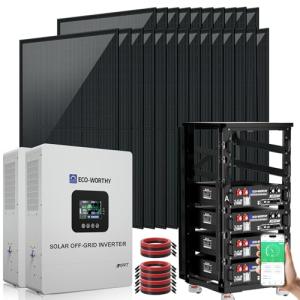
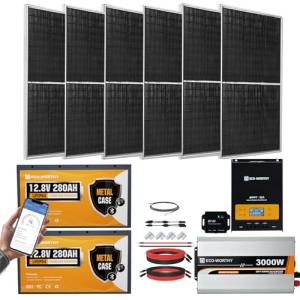
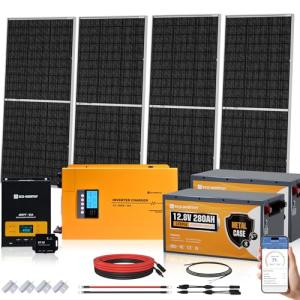
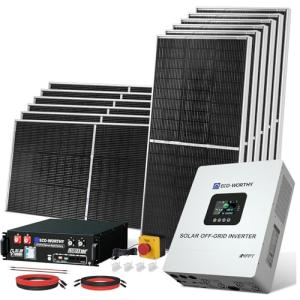
Before diving into the technical weeds, it helps to understand what "complete kit" actually means here. The package includes 12 pieces of 195W N-Type bifacial solar panels, 2 pieces of 48V 100AH Lithium Batteries, a 10000W off-grid inverter, Z-brackets, and all the accessories needed.
That's a meaningful distinction in a market flooded with "kits" that require you to source half the components yourself. ECO-WORTHY has packaged the full solar generation side, the storage side, and the conversion side under one order — which matters enormously for buyers who don't want to play compatibility roulette across three different suppliers.
The system is designed around a clear performance target: 9.36 kWh of power per day under 4 hours of full sunshine from the 2340W solar panel array, suitable for home, shed, cabin, farm or energy backup applications, providing enough power for portable AC units, air conditioning, TV, refrigerator, coffee maker, microwave, and other 240V split-phase devices.
For most American households consuming between 25–35 kWh per day, this system won't eliminate the grid entirely — but it will make a serious dent. And for off-grid cabins, rural properties, farms, or homes in areas with regular blackouts, it can be the difference between helplessness and full operational capacity.
Breaking Down the Components
The Solar Panels — 12 × 195W N-Type Bifacial
The heart of any solar system is its panels, and ECO-WORTHY hasn't cut corners here. The newly upgraded 195W N-Type solar panel measures 58.86 × 26.18 × 1.38 inches and achieves a high conversion efficiency of 25%. Its 18 busbar design enhances conductivity, while double-sided generation delivers up to 100Wh of additional energy daily. With an IP68 waterproof rating, tempered glass, and corrosion-resistant materials, it ensures a 30-year lifespan.
Let's unpack why these specs matter.
N-Type cells represent a newer generation of photovoltaic technology compared to the more common P-Type cells found in budget panels. They degrade more slowly over time, perform better in high temperatures, and carry less light-induced degradation — which is the technical term for what happens when solar cells lose efficiency after prolonged sun exposure. In practical terms, a 25% efficiency rating puts these panels in the same league as what premium brands were charging a fortune for just five years ago.
The bifacial design adds another layer of performance. Traditional panels only generate power from their front face. Bifacial panels capture reflected light from below — from rooftops, ground cover, snow, concrete — generating that additional 100Wh daily bonus. Over a year, that adds up to roughly 36.5 kWh of extra production at no additional cost.
18 busbars (18BB) is a significant upgrade over older 5BB or 9BB designs. More busbars mean shorter electron travel paths, lower internal resistance, and reduced power loss. It also improves shading tolerance — if one portion of a panel is shaded, the current can route through more alternative paths.
Twelve of these panels at 195W each gives you a combined array of 2,340W. Arranged properly with adequate sunlight access, this array will comfortably hit the 9.36 kWh daily production target under average 4-hour peak sun conditions.
The 10KW Inverter — The Brains of the Operation
If the solar panels are the muscles of this system, the inverter is its nervous system. The 10KW inverter delivers max continuous output with parallel support for up to 6 units for 60kW total output power, with 120V/240V AC output to meet the power needs of high-power home appliances, and comes with a WiFi module. The off-grid inverter has passed UL 1741 certification.
UL 1741 certification is not a minor footnote. It's the standard set by Underwriters Laboratories for inverters, converters, controllers, and interconnection system equipment — the same standard that utility companies and building inspectors look for when assessing solar installations. Having this certification means the inverter has been rigorously tested for electrical safety, and in many jurisdictions, it's a prerequisite for any solar installation that interfaces with home wiring.
The 120V/240V split-phase output capability is particularly important for American homeowners. Most heavy appliances — dryers, HVAC systems, well pumps, ranges — run on 240V. A system that only delivers 120V forces you to either skip those loads or buy a separate transformer. This inverter handles both natively.
The parallel capability (up to 6 units for 60kW combined) means this system is genuinely scalable. If your power needs grow — if you add an electric vehicle, a workshop, or additional living space — you don't have to scrap the whole system and start over. You add another inverter unit and they communicate to share the load.
The WiFi module rounds out the monitoring story. Real-time visibility into your system's performance — how much you're generating, how much you're consuming, battery state of charge — is no longer a luxury feature. It's standard here, accessible from any smartphone.
The Lithium Batteries — 2 × 48V 100AH (9.36 kWh Storage)
Energy storage is where off-grid systems live or die, and this is where the ECO-WORTHY kit earns genuine credibility. The ECO-WORTHY 48V (51.2V) Server Rack Battery supports CAN/RS485 for seamless communication, with easy monitoring through a mobile app that supports both Bluetooth and WiFi connections.
The certifications on these batteries deserve particular attention. Both UL 1973 and UL 9540A are significant:
- UL 1973 covers batteries for use in light electric rail applications and stationary applications — essentially certifying that the battery chemistry, construction, and management system meet rigorous safety standards for stationary energy storage.
- UL 9540A is specifically a test method for evaluating the thermal runaway fire propagation characteristics of battery energy storage systems. This is the certification that fire marshals, building inspectors, and insurance companies want to see.
Two 48V 100AH batteries in this configuration give you 9.6 kWh of storage capacity (48V × 100Ah × 2 = 9,600 Wh). With typical discharge efficiency of lithium iron phosphate chemistry at around 95%, you're looking at usable storage of approximately 9.12 kWh — almost exactly matching the daily solar production target. This balance is intentional: a well-designed off-grid system matches its generation capacity to its storage capacity so panels aren't wasting production and batteries aren't starved.
LiFePO4 (Lithium Iron Phosphate) chemistry, which is what these batteries use, is the safest and most thermally stable variant of lithium-ion technology. It doesn't carry the same thermal runaway risk as NMC (nickel manganese cobalt) chemistry found in laptop and EV batteries, and it delivers a much longer cycle life — typically 3,000–6,000 cycles versus 500–1,000 for older lead-acid alternatives.
Who Is This System Actually For?
Being honest about fit is more useful than generic enthusiasm. The ECO-WORTHY 10KW kit makes the most sense in the following situations:
Rural homeowners and farms. Grid power at the end of a long rural driveway is expensive to run and often unreliable. A system that delivers 9+ kWh daily and stores it for overnight or cloudy-day use changes the economics substantially. Farms with irrigation pumps, outbuildings, and variable loads are a natural match for the 10KW inverter's capacity.
Cabin and vacation property owners. Running grid power to a seasonal cabin is often cost-prohibitive. This kit offers a legitimate path to modern amenities — air conditioning, refrigeration, full kitchen appliances — without monthly utility bills or the vulnerability of a grid connection.
Homeowners in blackout-prone regions. Whether you're in hurricane country, wildfire territory, or an area with aging grid infrastructure, the combination of 9.36 kWh daily generation and 9.6 kWh of certified storage gives you a serious backup capability.
Energy-conscious homeowners in high-electricity-cost states. In states where electricity runs 20–30 cents per kWh, the math on solar payback accelerates meaningfully. 9.36 kWh per day is roughly 3,400 kWh annually — at $0.25/kWh, that's $850 in annual savings off a system in the ~$4,000 range.
The system is less ideal for energy-heavy households relying primarily on electric heat, multiple EV charging circuits, or high-consumption manufacturing loads. For those applications, you'd want to look at ECO-WORTHY's larger configurations or plan for parallel inverter expansion from the start.
Installation — Real Talk
The honest answer about installation is that this system requires either a licensed electrician for final connection or a buyer who genuinely understands DC wiring, code requirements, and safety protocols. The solar panel mounting using the included Z-brackets is manageable for a capable DIYer. The panel-to-panel wiring is straightforward. The inverter and battery connection, however, involves high-current DC wiring that can cause serious injury if handled carelessly.
The good news is that the system's architecture is logically organized. Four charging modes are available: Only Solar, Mains Priority, Solar Priority, and Mains & Solar hybrid charging. This flexibility means you don't have to go fully off-grid immediately — you can start in hybrid mode, keeping the grid as backup while you learn the system's behavior through different seasons and usage patterns.
The WiFi module and CAN/RS485 communication protocol between the batteries and inverter means the components talk to each other intelligently. The inverter knows the battery's state of charge and adjusts charging behavior accordingly — no manual balancing required.
The kit ships in 9 separate boxes from separate locations. This is worth knowing in advance so you're not panicking when packages arrive staggered over several days. The practical advice from previous buyers: inspect the panels carefully upon arrival, even if you're not installing immediately, since shipping damage is easier to claim immediately.
Comparison Table — ECO-WORTHY 10KW Kit vs. Comparable Systems
| Feature | ECO-WORTHY 10KW 9.36KWH Kit | ECO-WORTHY 5KW 4.68KWH Kit | ECO-WORTHY 10KW 15.36KWH Kit | Renogy 10KW System |
|---|---|---|---|---|
| Solar Panel Capacity | 2,340W (12×195W) | 1,170W (6×195W) | 4,920W (12×410W) | Varies by config |
| Daily Energy Output | ~9.36 kWh | ~4.68 kWh | ~21.32 kWh | ~8–12 kWh |
| Battery Storage | 9.6 kWh (2×48V 100Ah) | 2.56 kWh (1×48V 50Ah) | 15.36 kWh (3×48V 100Ah) | Depends on package |
| Inverter Output | 10KW continuous | 3,500W continuous | 10KW continuous | 3–10KW |
| AC Output | 120V/240V split-phase | 110/120V | 120V/240V split-phase | 120V/240V |
| Battery Certification | UL 1973 + UL 9540A | UL 1973 + UL 9540A | UL 1973 + UL 9540A | UL listed |
| Inverter Certification | UL 1741 | UL listed | UL 1741 | UL 1741 |
| Parallel Expandable | Yes (up to 6 units, 60KW) | Yes (up to 6 units) | Yes (up to 6 units) | Limited |
| WiFi Monitoring | Yes | Yes | Yes | Yes |
| Panel Technology | N-Type Bifacial 18BB | N-Type Bifacial 18BB | Monocrystalline 410W | Monocrystalline |
| Approximate Price | ~$3,999 | ~$1,800 | ~$5,500+ | ~$4,500–$6,000 |
| Best Use Case | Mid-size home/farm/cabin | Small cabin/backup | Whole home/high demand | Whole home |
The comparison makes clear where this kit sits: it's the sweet spot between entry-level and high-capacity. It delivers enough daily production and storage to handle meaningful real-world loads while remaining accessible in price. The step-up to the 15.36 kWh version makes sense if you have higher overnight loads or live in a lower-sun region; the step-down to the 4.68 kWh version makes sense for smaller properties or supplemental backup.
The Certifications Matter More Than You Think
In the off-grid solar market, there's a significant amount of equipment sold without meaningful safety certifications. This matters both for physical safety and for practical reasons — insurance companies, permitting authorities, and fire marshals increasingly require certified components.
The triple certification stack here — UL 1741 on the inverter, UL 1973 and UL 9540A on the batteries — is meaningful. UL 1741 ensures the inverter won't create hazardous conditions on AC wiring. UL 1973 validates the battery management system and cell chemistry meet established safety standards. UL 9540A is the most stringent of the three, specifically testing what happens during thermal runaway scenarios to ensure a single cell failure doesn't cascade into a whole-pack fire.
For anyone installing this system in an attached garage, basement, or interior utility space, UL 9540A certification on the batteries is particularly important. Many municipalities now require it for any battery energy storage system installed in occupied structures.
Performance Expectations — Setting Realistic Goals
The 9.36 kWh daily output figure requires 4 hours of peak sun exposure. In practice, "peak sun hours" vary significantly by geography:
- Arizona, Nevada, Southern California: 5–6 peak sun hours → ~12–14 kWh daily
- Texas, Florida, Southeast: 4.5–5.5 hours → ~10.5–13 kWh daily
- Pacific Northwest, Northeast, Midwest: 3–4 hours → ~7–9.4 kWh daily
- Alaska, Northern regions (winter): 1.5–2.5 hours → ~3.5–5.9 kWh daily
Buyers in high-sun regions will regularly exceed the rated output. Buyers in cloudy northern climates should apply a seasonal adjustment to their expectations. The bifacial panel design helps in lower-sun conditions since it captures diffuse reflected light more efficiently than monofacial alternatives.
The battery storage side provides a buffer for cloudy days and overnight loads. With 9.6 kWh of usable storage and a household that consumes, say, 3 kWh after sunset before the panels come back online, you have a meaningful cushion across multiple cloudy days before you'd need to draw from grid backup.
What Could Be Better
No product review is complete without honest critique.
Storage could be deeper. For a 10KW inverter with the capacity to run heavy loads, 9.6 kWh of storage is adequate but not generous. Running central air conditioning (2–3 kW), a refrigerator (150W continuously), and miscellaneous loads through the night can eat through that storage faster than expected. Buyers planning on heavy overnight consumption should budget for a third battery from the start.
Panel wattage feels conservative. In 2025–2026, 195W panels are at the lower end of modern panel output. The 18BB N-Type bifacial technology compensates somewhat, but similar roof space occupied by 400W+ panels would generate significantly more power. ECO-WORTHY does offer larger panel variants in their lineup, and the 12-panel array count here likely reflects manageable shipping and installation complexity.
Installation documentation. Complex systems benefit from extremely clear, step-by-step installation guides. User feedback in this category tends to be mixed for the broader off-grid kit market — more visual, regionally specific installation resources would strengthen the proposition for first-time buyers.
Is It Worth It?
At approximately $3,999 — and ECO-WORTHY periodically offers promotional discounts that bring this into the $3,499 range — the value proposition here is genuinely strong. The combination of N-Type bifacial panels, a 10KW split-phase UL 1741-certified inverter, and UL-certified LiFePO4 batteries in one coordinated kit eliminates the compatibility headaches and sourcing complexity that plague DIY solar builds.
The UL certifications aren't marketing copy — they're practical requirements for insurance coverage, permitting, and safe installation. Getting all three on a single competitively priced kit is notable.
For the homeowner, farmer, or property owner who's serious about energy independence — not tinkering with solar for the first time, but genuinely moving toward meaningful self-sufficiency — the ECO-WORTHY 10KW 9.36KWH kit represents a credible, well-specified starting point. It's scalable, well-certified, and comprehensive enough to avoid the parts-and-pieces frustration that derails most first-time off-grid builds.
The caveat, as always with serious energy infrastructure: budget for professional installation at the inverter and battery connection stages, at minimum. The savings on electricity over the coming years will more than cover it.
→ View the ECO-WORTHY 10KW 9.36KWH Off-Grid Solar System on Amazon
Specifications, pricing, and availability are subject to change. Always consult a licensed electrician before installing any electrical power system.