What Is the GRECELL 80W Foldable Solar Panel?
Before diving into the details, it helps to understand what category of product this is. The GRECELL 80W is not a rooftop panel. It is not a semi-flexible panel designed to mount permanently on a van ceiling. It is a foldable, portable, carry-anywhere solar charger aimed squarely at people who need to top up devices — phones, tablets, GPS units, power banks, and small power stations — while away from the grid.
It is a high-efficiency, portable solar charger built for outdoor enthusiasts, preppers, and off-grid travelers. Featuring USB-A and USB-C (QC3.0 18W) outputs, this panel can directly charge smartphones, tablets, GPS units, power banks, and small power stations. Its foldable, weatherproof IP67-rated design makes it a reliable power source for hiking, camping, and emergency backup.
That positioning matters because it sets appropriate expectations. This is not a panel you use to run an air conditioner. It is a panel you use to keep your critical electronics alive when you are far from an outlet.
→ Check the latest price on Amazon
Design and Build Quality: Compact Enough to Forget You're Carrying It
The first thing most people notice about the GRECELL 80W is how manageable it is when folded. Its folded dimensions come in at approximately 12.6 x 8.2 x 2.2 inches and it weighs around 4.6 lbs (2.1 kg). That is roughly the size of a hardcover novel — thick, but not bulky. It slides into the top of a daypack or can be lashed to the outside of a hiking bag without becoming the kind of nuisance that makes you question why you brought it.
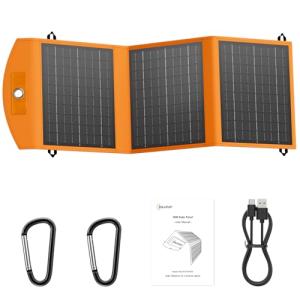
The compact solar panel charger folds down to the size of a small handbag with a handle and a built-in zipper accessory pouch, making it easy to squeeze into any backpack while offering portability and simplicity. That zipper pouch is a thoughtful touch — it gives you somewhere sensible to store the charging cables without losing them at the bottom of your bag.
When unfolded, the panel opens to approximately 35.6 x 22.6 inches, giving you a reasonable capture area to work with. The eight-fold design means the surface panels unfold gradually, which also makes it easy to angle just a portion of the panel toward the sun while the rest rests flat — useful in partial shade situations.
The 80W folding solar panel features a durable premium Oxford cloth cover with IP67 waterproofing and dustproofing. The ETFE lamination is extremely durable and resistant to environmental elements, offering corrosion resistance and fire retardancy, with a claimed double lifespan compared to other PET solar panels.
That IP67 rating is worth dwelling on for a moment. IP67 means the panel can be submerged in up to one meter of water for up to 30 minutes. In practice, what this means for campers is that a sudden rainstorm, a splash from a river crossing, or condensation in a tent is not going to destroy your investment. It is one of the more weather-tolerant panels in its price bracket.
Metal hanging holes allow users to hang the panel on a tent, RV, backpack, or tree to capture solar energy during camping, off-grid trips, hiking, and climbing. The hanging holes are reinforced and feel sturdy in practice — you can clip this to the back of a pack while you hike and let it generate charge passively.
Solar Efficiency: The 24% Conversion Rate Explained
Efficiency is the metric that separates genuinely useful solar panels from marketing-heavy disappointments. The GRECELL 80W claims a 24% high conversion rate, and while any manufacturer number should be taken with healthy skepticism, third-party reviewers have found the performance credible.
The panel is made with premium monocrystalline UV-resistant EVA and efficient solar cells with high-light-transmission ETFE material, generating energy from sunlight with 24% higher conversion efficiency. Smart charging technology with a built-in smart chip intelligently identifies the connected device and provides the best charging speed for each one.
Monocrystalline cells are the current standard for high-efficiency portable panels. They use a single continuous crystal structure, which allows electrons to flow more freely than in polycrystalline alternatives — the practical result is more electricity from the same amount of sunlight. Combined with ETFE (ethylene tetrafluoroethylene) lamination, which has a higher light transmittance than traditional PET coatings, the GRECELL's cells are doing as much work as the physics will allow at this price point.
Independent reviewers describe the GRECELL 80W as delivering 24% efficiency with wide compatibility — useful for charging USB devices, 12V car batteries (with a controller), and power stations. Safety features like short-circuit and surge protection keep connected gear safe.
Real-world output will always fall short of rated wattage. A panel rated at 80W will typically deliver 60–70W in good conditions, depending on angle, temperature, and atmospheric clarity. But that is still enough to meaningfully charge a power bank in a few hours on a sunny day, or keep phones topped up continuously while you camp.
Charging Ports and Connectivity: Three Devices, Zero Drama
One of the GRECELL 80W's most practical features is its port selection. The panel is designed with three output ports: two USB QC3.0 ports (5V/3A, 9V/2A, 12V/1.5A max) and one powerful DC charging port. The USB ports can quickly charge almost all 5V devices, including smartphones, iPads, GPS units, USB fans, cameras, tablets, and speakers.
Quick Charge 3.0 (QC3.0) is a meaningful spec here, not just marketing. Standard USB charging typically tops out at 5W or 10W. QC3.0 can deliver up to 18W, which means an iPhone or Android phone that would take two hours on a standard charger can reach a meaningful charge in under an hour. The USB-C port supports the same QC3.0 protocol at 18W maximum output.
The 2-in-1 connector cable is compatible with most solar generators and portable power stations on the market. The Anderson connector works with Jackery Explorer 1000, ROCKPALS 300W, EcoFlow, and other solar generators, while the DC 5.5×2.1mm connector covers Rockpals 250W/350W/500W, FlashFish 200W/300W, PAXCESS ROCKMAN models, and PRYMAX 300W among others.
The smart chip that manages output is not merely a passive safety feature — it actively adjusts voltage and amperage to match what each connected device can actually accept. Plug in an older phone that cannot handle QC3.0 and the panel will step down to a safe standard charge rate automatically. This kind of intelligent load management protects your devices and extends the panel's useful life.
Real-World Use Cases: Who Is This For?
Weekend Campers and Festival-Goers
The GRECELL 80W hits a sweet spot for people who spend one to three nights outdoors at a time. It is light enough to add to a car camping kit without becoming the conversation at every trip, and powerful enough to keep two phones and a GPS charged across a weekend. Hang it on the outside of your tent in the morning, run charging cables inside, and your devices are sorted by afternoon.
Overlanders and Van Lifers
For vehicle-based travelers, the DC output and wide compatibility with portable power stations makes the GRECELL a sensible supplemental charging source. Reviewers frequently compare GRECELL products to more expensive solar generators, noting they can match the performance of higher-priced models at a fraction of the cost. Pair this panel with a 300W power station and you have a functional off-grid power setup for a long weekend.
Emergency Preparedness
The IP67 rating and foldable form factor make this a logical addition to an emergency kit. Floods, storms, grid outages — having a panel that can charge a phone or radio without any infrastructure dependency is a genuine safety asset. The panel is described as ideal for unexpected power outages in addition to camping, hiking, and picnic use.
Hikers and Backpackers
At 4.6 lbs, this is not an ultralight choice for multi-day thru-hiking where every gram matters. But for backpackers willing to trade a few ounces of comfort gear for reliable power, it is workable. The hanging holes allow it to face the sun while attached to the back of a pack, generating passive charge as you move.
What's in the Box
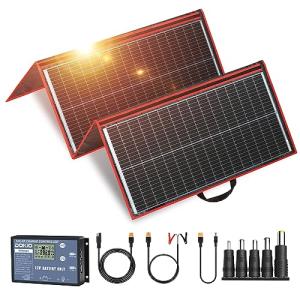
GRECELL packages this panel with a thoughtful but not overwhelming set of accessories. You get:
- 1x 80W Portable Foldable Solar Panel
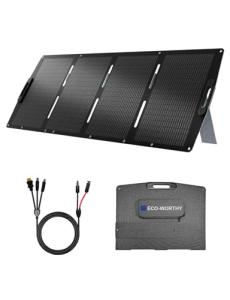
- 1x MC-4 to 2-in-1 Cable (Anderson / DC 5.5×2.1mm Connector)
- 2x Telescopic Kickstand Brackets
- 1x User Manual
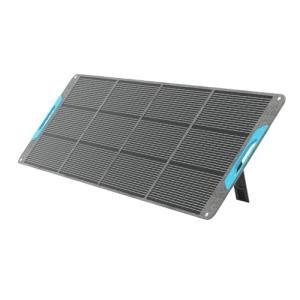
The telescopic brackets deserve mention — they allow you to prop the panel at an adjustable angle on flat ground, which meaningfully improves output compared to laying it flat. The ability to track the sun by adjusting the angle throughout the day can add 15–20% more total energy harvest over the course of an afternoon.
Comparison Table: GRECELL 80W vs. Competing Portable Solar Panels
| Feature | GRECELL 80W | Jackery SolarSaga 100W | FlexSolar 100W | Renogy 100W Foldable |
|---|---|---|---|---|
| Rated Wattage | 80W | 100W | 100W | 100W |
| Efficiency | 24% | ~23.7% | ~23% | ~23% |
| USB-A Output | QC3.0 (18W) | USB-A (12W) | QC3.0 (18W) | USB-A (5V/2.4A) |
| USB-C Output | QC3.0 (18W) | USB-C (18W) | PD3.0 (18W) | None |
| DC Output | Yes (2-in-1) | Yes (8mm) | Yes (DC5521 8mm) | Yes (MC4) |
| Waterproof Rating | IP67 | IP67 | IP67 | IP65 |
| Folded Size | 12.6×8.2×2.2 in | 24×21 in | Similar | ~24×11 in |
| Weight | 4.6 lbs | 10.33 lbs | ~6.6 lbs | ~9.5 lbs |
| Kickstand | Yes (telescopic) | Yes | Yes | No |
| Hanging Holes | Yes | Yes | Yes | Yes |
| Simultaneous Devices | 3 | 2 | 3 | 2 |
| Compatible Power Stations | Most brands (2-in-1) | Jackery-optimized | Most brands | Most brands |
| Target User | Budget-savvy outdoorsmen | Premium brand buyers | Value buyers | RV/heavy use |
The table above makes clear that the GRECELL 80W is not the most powerful panel in its competitive set — the 100W competitors have an inherent wattage advantage. But the weight savings are dramatic. At 4.6 lbs against the Jackery SolarSaga's 10.33 lbs, the GRECELL is less than half the weight, which is a significant consideration for anyone carrying it on foot. The folded footprint is also substantially smaller, making it easier to store in a pack rather than strapped awkwardly to the outside.
The IP67 vs IP65 distinction is also worth noting for Renogy buyers — IP67 withstands submersion while IP65 only covers water jets. In rainy conditions, that is a meaningful practical difference.
Performance in Partial Sun and Clouds
One of the harder truths about portable solar panels is that they lose substantial output under cloud cover. A 2025 independent testing round on portable camping solar panels found that on overcast days, output from comparable panels in this class dropped to 20–30W, extending solar charging times significantly.
GRECELL's ETFE surface does help recover some of that loss compared to PET panels, because ETFE has higher light transmittance across a wider spectrum — it captures more of the diffuse, scattered light that remains on overcast days. But no portable panel defies physics, and users in consistently cloudy climates should factor in realistic expectations.
What the GRECELL does do better than many competitors in overcast conditions is its smart chip load management. Rather than simply providing inconsistent power that can frustrate or damage devices, the built-in chip regulates the output, giving your phone or power bank a clean, stable feed even when the panel is only producing 25W instead of its rated 80W.
A Few Things to Know Before You Buy
No product review is complete without honest caveats.
It is not ultralight. At 4.6 lbs, the GRECELL 80W is significantly lighter than comparable wattage competitors, but it is not a gram-counting backpacker's tool. If you are doing a multi-week thru-hike where base weight is sacred, a 20W–40W panel in the sub-2 lb range is a more sensible choice.
USB port moisture caution. GRECELL advises keeping the USB port dry when charging — the IP67 rating applies to the panel body, but the port covers should be in place when not in active use in wet weather. This is standard practice for all panels at this rating and not a design flaw, but it is worth knowing.
Output is real-world, not lab-world. Rated 80W is a peak figure under ideal STC (Standard Test Conditions) — 25°C cell temperature, 1000 W/m² irradiance, AM1.5 spectrum. In practice, expect 60–70W on a clear summer day with the panel optimally angled.
No built-in charge controller. For connecting directly to a 12V lead-acid battery, you will need an external MPPT or PWM charge controller. The USB and DC ports for power stations are protected by the onboard chip, but direct battery connections require additional hardware.
Why GRECELL Has Been Gaining Ground
GRECELL is not a household name the way Jackery or EcoFlow are. But that is slowly changing. The brand is almost always rated at least four out of five stars wherever customer reviews are aggregated, and many customers compare it favorably to more expensive solar generators, saying it performs comparably at half the price.
The company's customer service has also drawn positive attention — when customers lose a cord, GRECELL reportedly sends replacements for minimal cost, something that rarely happens in this industry. For a product category where accessory cables are proprietary and expensive, that approach builds genuine loyalty.
GRECELL backs its products with a 24-month warranty, a 30-day full refund or exchange guarantee, and promises email responses within one business day. That is a stronger after-sales commitment than several more expensive competitors offer.
How to Get the Most from the GRECELL 80W
Getting maximum output from any portable solar panel comes down to a few consistent practices:
Angle matters enormously. Use the telescopic kickstands and aim for a perpendicular angle to the sun. Move the panel every hour or two as the sun tracks across the sky — this alone can increase daily harvest by 20–25% compared to setting it and forgetting it.
Keep the surface clean. Dust and smudges noticeably reduce output. A quick wipe with a soft cloth before deploying improves transmission.
Avoid heat buildup. Counterintuitively, solar panels lose efficiency when they get too hot. Keep airflow under the panel by propping it on the kickstands rather than laying it flat on hot ground.
Use the zipper pouch smartly. Store your most-used cables in the built-in pouch so you are not hunting for them when you need to plug in.
Pair it with a power bank for overnight charging. The panel charges devices during daylight hours; a power bank holds that energy for use at night.
A Sensible Buy for the Majority of Outdoor Enthusiasts
The GRECELL 80W Foldable Solar Panel occupies a genuinely useful position in the portable solar market. It is not trying to compete with premium brands on aesthetics or brand cachet. What it offers instead is solid engineering — monocrystalline ETFE cells, QC3.0 on both USB ports, IP67 protection, a thoughtful foldable design, and wide compatibility with the power stations most outdoor users already own — at a price point that makes it accessible without requiring justification.
Independent camping gear sites describe it as a smart pick that delivers fast charging via USB and DC ports and supports multiple devices at once, calling it one of the best solar panels for camping, RVs, and emergencies.
For the weekend camper who needs to keep two phones and a headlamp battery alive, this panel does the job cleanly. For the van-lifer who wants a supplemental charging source to feed a small power station, it handles that too. For the emergency prepper who wants something that folds flat, weighs under five pounds, and works in the rain, the IP67 rating makes the argument for itself.
It is not the lightest panel on the market. It is not the highest-wattage in its class. But it hits the right combination of portability, efficiency, weather resistance, and versatility to earn a recommendation for most people in most outdoor situations.
If you are done with flat batteries and ready to let the sun handle it, the GRECELL 80W is a logical place to start.
→ Check the current price and availability on Amazon
Quick Specs Reference
| Spec | Detail |
|---|---|
| Rated Power | 80W |
| Cell Type | Monocrystalline |
| Surface Material | ETFE |
| Conversion Efficiency | 24% |
| USB-A Output | QC3.0 — 5V/3A, 9V/2A, 12V/1.5A (18W max) |
| USB-C Output | QC3.0 — 18W max |
| DC Output | MC4 / 2-in-1 (Anderson + DC 5.5×2.1mm) |
| Simultaneous Devices | 3 |
| Waterproof Rating | IP67 |
| Unfolded Dimensions | ~35.6 × 22.6 in |
| Folded Dimensions | ~12.6 × 8.2 × 2.2 in |
| Weight | ~4.6 lbs (2.1 kg) |
| Included Accessories | MC4 2-in-1 cable, 2x telescopic brackets, manual |
| Warranty | 24 months |