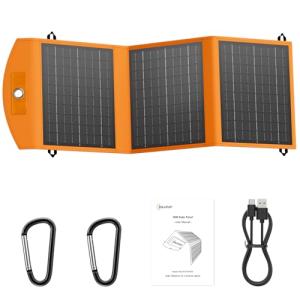
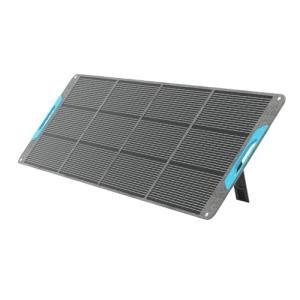
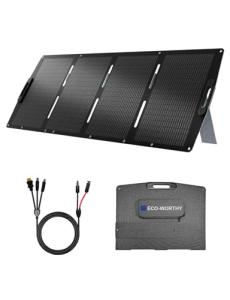
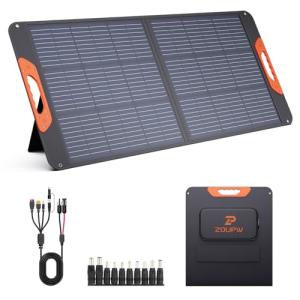
DOKIO has been building solar solutions for outdoor enthusiasts for over 17 years, and the 300W foldable kit reflects that institutional knowledge. It's not a product designed by a marketing team trying to check feature boxes. It's a kit that emerged from years of understanding what people in the field actually need: portability, sufficient output, and protection from their own mistakes (and from the weather's).
Design and Portability: The Numbers That Actually Matter
At first glance, 300 watts of solar capacity sounds like it should come with a dolly and a strong friend. It doesn't. The panel measures just 1.1 inches thick (2.8 cm) and weighs 17 lbs (7.5 kg), making it easy to transport, mount, and remove. The folded dimensions of 19.3 x 37.4 inches mean it slides behind a truck seat, into an RV storage bay, or alongside gear in the back of an SUV without demanding a dedicated cargo arrangement.
The foldable format is the real design innovation here. Traditional rigid panels of comparable wattage require mounting hardware, drilling, and a commitment to one vehicle or one location. The DOKIO folds flat when not in use — it can be used temporarily on rooftops or the ground, intended for flexible outdoor use rather than permanent fixed installation. For travelers who rotate between camping setups, or who don't want to permanently modify their vehicle, this flexibility is genuinely valuable.
The canvas carry bag included in the kit completes the portability picture, protecting the panel in transit and giving you a single item to grab when you're loading up and heading out.
Power Output and Cell Technology: Why Monocrystalline Matters
Not all solar cells are created equal, and the difference matters when you're relying on a panel to actually charge something useful before sunset. The DOKIO 300W uses monocrystalline solar cells, the gold standard for portable panel efficiency.
The kit features high conversion efficiency through its monocrystalline solar cell, which reduces mismatch loss and maximizes system output — allowing the panel to deliver exceptional power even in a compact form factor. In practical terms, this means the panel wrings more usable energy out of a given patch of sunlight than polycrystalline alternatives of the same physical size.
The kit is compatible with all 12V batteries and operates at an optimum power voltage of 18V, ensuring efficient charging for power stations, AGM, LiFePO4, and deep-cycle batteries. That voltage-wattage combination is deliberate. In good sunlight conditions, a 300W panel can recharge a typical 100Ah 12V battery much faster than smaller panels, making it a practical choice for people running refrigerators, CPAP machines, or other higher-demand devices in the field.
The panel still generates electricity under cloudy conditions, although output will be lower compared with direct sunlight. Positioning the panel toward the brightest part of the sky will improve performance. This is honest engineering — partial output in overcast conditions is the realistic expectation with any solar panel, and DOKIO doesn't oversell it.
The Included Controller: A Complete Kit, Not a Starting Point
One of the persistent frustrations with budget solar panels is discovering that "kit" is a generous interpretation of what's in the box. The DOKIO 300W ships with a standalone 20A charge controller included, and that distinction carries real weight.
With the included 20A controller, the 300W solar panel is designed to safely charge most 12V deep-cycle batteries such as AGM, LiFePO4, and GEL. The controller handles the intelligence work: it manages charging cycles, prevents overcharging, and monitors the health of the connection between panel and battery. The inclusion of a controller provides protection against overcharging, overload, and short-circuits, preventing damage to your batteries.
This matters more than it might seem. Without a proper charge controller, a 300W panel connected directly to a battery in peak sun conditions could cause serious damage. The controller is the gatekeeper, and having it included in the box means you're not buying a panel and then scrambling to source compatible components before your camping trip.
The kit also includes USB output ports — a small but meaningful addition for anyone who needs to keep phones, GPS units, or small devices charged directly from the panel without routing through a battery bank.
Real-World Use Cases: Where This Panel Actually Earns Its Keep
RV and Boondocking
This is the DOKIO 300W's home turf. Real users report setting the panels up in the morning and simultaneously charging camper batteries and portable batteries via the included charge controller. For boondockers running a 12V refrigerator and a CPAP machine — two of the most common high-drain devices in mobile living — 300W of daily solar input represents meaningful energy independence.
The foldable format is particularly suited to RV use because it doesn't require permanent roof mounting. You can reposition the panel throughout the day to track optimal sun angle, something fixed rooftop panels simply cannot do.
Emergency Preparedness
Power outages don't come with scheduling notices, and a 300W solar kit stored in a garage or vehicle represents serious emergency infrastructure. The panel is built to withstand various weather conditions, including rain, snow, and wind, providing reliable power generation even in challenging environments. When the grid goes down, the ability to charge a 12V battery bank — which can then run lights, communication devices, small appliances, and medical equipment — is the difference between inconvenience and crisis.
Overlanding and Remote Camping
The 15.2 lb weight and fold-flat design make the DOKIO 300W genuinely viable for overlanding rigs. Mounted to a roof rack or laid on the hood when parked, it provides serious daily energy generation for extended backcountry trips where resupply isn't an option.
Power Station Charging
This product has garnered positive endorsements from popular power station brands like Jackery, Goal Zero, EcoFlow, and Paxcess, confirming compatibility with the most widely used portable power stations on the market. For users who already own a power station and want to add solar charging capability without purchasing a proprietary panel, the DOKIO 300W provides a well-matched, high-output option.
Honest Assessment: What to Know Before You Buy
Every product has limitations, and the DOKIO 300W is no exception. Some users in real-world testing have noted that actual output under non-ideal conditions — partial shade, sub-optimal angle, diffuse cloud cover — can fall below the rated 300W figure. This is consistent with the broader behavior of foldable panels; real-world output in less-than-ideal conditions may be meaningfully lower than rated output. This is not unique to DOKIO and reflects the physics of solar conversion rather than a product defect, but it's worth setting expectations realistically.
For users connecting to power stations that require specific connector types (such as XT60i-equipped devices), verifying connector compatibility before purchase is worth the two-minute research investment. Most connections are straightforward, but some power stations have proprietary charging trigger requirements that may need a simple adapter.
How the DOKIO 300W Stacks Up: Comparison Table
| Feature | DOKIO 300W | Renogy 200W Foldable | Goal Zero Boulder 200 | Jackery SolarSaga 200W |
|---|---|---|---|---|
| Rated Power | 300W | 200W | 200W | 200W |
| Cell Type | Monocrystalline | Monocrystalline | Monocrystalline | Monocrystalline |
| Weight | ~15.2 lbs | ~18 lbs | ~32.2 lbs | ~10.8 lbs |
| Folded Size | 19.3 x 37.4 in | ~24 x 21 in | ~25 x 12 in | ~24 x 21 in |
| Controller Included | ✅ Yes (20A) | ✅ Yes | ❌ No | ❌ No |
| USB Output | ✅ Yes | ❌ No | ❌ No | ✅ Yes |
| Battery Compatibility | 12V AGM, LiFePO4, GEL | 12V AGM, LiFePO4 | 12V | Power station only |
| Waterproofing | Weather-resistant | IP67 | Weather-resistant | IP67 |
| Warranty | 1-year + 5-year material | 2-year | 1-year | 2-year |
| Approx. Price Range | $$ | $$$ | $$$$ | $$$ |
The numbers tell a useful story. On raw wattage per dollar, the DOKIO 300W holds a clear advantage over its major competitors. The inclusion of a charge controller and USB output — which competing panels at similar price points often omit — means the out-of-box cost of a complete charging system is lower than it appears on the panel price alone.
Where the competition holds an edge is in waterproofing ratings and warranty length. Renogy and Jackery both offer IP67-rated panels, while the DOKIO is weather-resistant but not fully submersible. For most camping and RV use cases, this distinction is academic — panels don't typically get submerged. But for marine environments or extremely wet climates, it's worth noting.
The Verdict: A Serious Tool for Serious Off-Grid Needs
The DOKIO 300W Portable Foldable Solar Panel Kit occupies a specific and valuable niche: maximum usable wattage in a genuinely portable format, with everything needed to start charging included in the box.
It's not the lightest option on the market. It's not the most waterproof. But for someone running meaningful power loads — a refrigerator, medical equipment, multiple device charging — in a mobile or emergency context, 300W of monocrystalline solar capacity with an integrated controller represents a compelling combination of capability and practicality.
The kit is made of high-quality materials and comes with a 5-year limited warranty on material and workmanship, which provides meaningful long-term assurance for a product that will spend its life outdoors. The 17-year track record DOKIO brings to the design process is evident in the details — the complete kit format, the appropriately-sized controller, the carry bag — that make the product work in the field rather than just on a spec sheet.
For RV owners, overlanders, emergency preppers, and anyone who spends time beyond the reach of reliable power infrastructure, the DOKIO 300W earns a serious look.
→ View the DOKIO 300W Portable Foldable Solar Panel Kit on Amazon