What Makes This Panel Different: The 10-Busbar Advantage
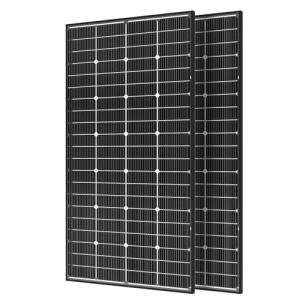
Most budget-tier solar panels on the market today still rely on 5-busbar (5BB) cell architecture — a design that dates back over a decade. The Traver Force 100W steps past that entirely with 10-busbar (10BB) technology, and the difference is more than just a number.
Busbars are the thin metallic strips that collect electrical current from the solar cell surface and channel it into usable output. More busbars means shorter electrical paths across the cell, which translates directly into lower internal resistance and higher electron collection efficiency. But the benefits don't stop there.
The 10-busbar design also meaningfully reduces crack risks and lowers operating temperatures, both of which are critical for long-term panel health. Solar cells crack — it happens — but with 10 busbars distributing stress more evenly across the cell surface, micro-fractures are far less likely to propagate into performance-killing faults.
The result? Grade A+ mono solar cells that pass EL (electroluminescence) testing without any cracks and deliver up to 25% cell conversion efficiency, outperforming conventional options. That's a significant benchmark. Standard polycrystalline panels typically top out around 15-17%, and older monocrystalline designs hover in the 18-20% range. At 25%, the Traver Force belongs in a different conversation entirely.
Core Specifications at a Glance
Before getting into applications and real-world performance, here's what you need to know about the hardware:
- Power Output: 100 Watts
- Cell Technology: Grade A+ Monocrystalline Silicon, 182mm cells
- Busbar Count: 10BB (10 busbars)
- Cell Efficiency: Up to 25%
- System Voltage: 12V (optimum operating voltage: 20.4V)
- Connector Type: MC4
- Junction Box Rating: IP65
- Connector Rating: IP68
- Frame: Anti-corrosion aluminum alloy
- Daily Output (5 hours sunlight): 400–500 Watt-hours (0.4–0.5 kWh)
- Warranty: 5-year product assurance
- Long-term Power Retention: 80% output after 25 years
Built for the Real World: Weather Resistance and Durability
A solar panel doesn't get to live in a climate-controlled environment. It gets rain, wind, salt spray, UV bombardment, bird droppings, and temperature swings that would destroy lesser hardware. Traver Force clearly engineered this panel with that reality in mind.
The panel ships with IP68-rated solar connectors and an IP65-rated junction box, ensuring robust protection against heavy water splashes and rain. Its anti-corrosion aluminum alloy frame is designed for decades of reliable outdoor performance.
To put those ratings in plain terms: IP68 is the highest commonly used water resistance rating in consumer electronics — it means the connectors can be briefly submerged and come out working. The IP65 junction box shrugs off direct water jets. For boat installations, lakeside cabins, or rooftop setups in rainy climates, this level of protection isn't a luxury — it's essential.
The aluminum alloy frame also deserves mention. Cheap panels often use frames that oxidize and weaken over time when exposed to moisture or salt air. An anti-corrosion alloy frame holds its structural integrity year after year, keeping the glass and cell sandwich sealed against the elements.
How Much Power Will You Actually Get?
This is the question that matters most when you're planning a system. Specs are specs — real-world output is what keeps your refrigerator running.
With five hours of direct sunlight per day, the Traver Force 100W can deliver an average of 400–500 Watt-hours of electricity daily, depending on geographic location, panel angle, and atmospheric conditions. That's enough to:
- Charge a 100Ah 12V battery roughly halfway from empty in a single good sun day
- Power a 12V compressor refrigerator for 8–10 hours
- Run LED lighting, phone charging, and a laptop throughout the day
- Keep navigation electronics, radios, and safety equipment powered on a mid-size sailboat
For larger energy demands, the 12V architecture allows panels to be wired in series for 24V or 48V systems. For a 48V lithium battery system, you'd connect at least three panels in series, paired with a charge controller supporting that voltage.
Installation: Designed for the DIY Builder
One of the quiet selling points of this panel is how approachable it is to install. The Traver Force solar panel features four pre-drilled holes for easy and secure mounting, making it an ideal choice for RVs, vans, motorhomes, rooftops, cabins, yachts, boats, and more.
The MC4 connectors are industry standard — compatible with virtually every charge controller on the market and with extension cables from any reputable supplier. You won't need proprietary adapters or special tools.
For optimal performance, the general guidance applies: position panels to face direct sunlight without obstructions or shadows, install at an optimal angle of 30–45 degrees for maximum absorption, and clean regularly to remove dust, leaves, or debris for consistent energy output.
One practical note: like any solar panel, covering even a single cell will significantly reduce output. This is true of all panels that don't include module-level power electronics. Keep your installation site clear of tree shadows, antenna brackets, and vent pipes to maintain peak production.
Who Is This Panel For? Real-World Use Cases
RV and Van Life
The 100W rating is a sweet spot for van conversions and Class B/C RVs. A pair of these panels can provide meaningful daily energy to run a compressor fridge, charge devices, and handle lighting — the core demands of full-time or weekend van life. The compact form factor fits most rooftop configurations, and the pre-drilled mounting holes work with standard Z-bracket and tilt mount hardware.
Marine and Boat Applications
Salt air is murder on poorly built solar hardware. The IP68 connectors and anti-corrosion frame make the Traver Force a legitimate choice for sailboats, motorboats, and coastal powerboats. Mounted on a bimini top, davit arch, or deck surface, it can keep house batteries topped up during passages or at anchor without running the engine or a generator.
Cabins and Remote Properties
For seasonal cabins where grid connection isn't practical or cost-effective, a small array of these panels paired with a battery bank and inverter can power lights, a water pump, a small refrigerator, and entertainment systems. The 25-year power retention guarantee means this is a genuine long-term infrastructure investment.
Emergency and Backup Power
A single 100W panel, a modest battery bank, and a basic charge controller form a surprisingly capable emergency power system — enough to keep communications equipment, lighting, and medical devices running during grid outages.
Comparison Table: Traver Force 100W vs. Competing Panels
| Feature | Traver Force 100W 10BB | Renogy 100W 16BB (N-Type) | HQST Bifacial 100W 9BB | Newpowa 150W 10BB |
|---|---|---|---|---|
| Power Output | 100W | 100W | 100W | 150W |
| Cell Type | Monocrystalline | N-Type Mono | Bifacial Mono | Monocrystalline |
| Busbar Count | 10BB | 16BB | 9BB | 10BB |
| Cell Efficiency | Up to 25% | Up to 25% | Up to 25% | High Efficiency |
| System Voltage | 12V | 12V | 12V | 12V |
| Connector Rating | IP68 | Standard MC4 | Standard | Standard MC4 |
| Junction Box | IP65 | IP65 | IP65 | IP65 |
| Frame | Anti-corrosion alloy | Aluminum alloy | Aluminum alloy | Aluminum alloy |
| Warranty | 5 years product | 5 years product | 5 years product | 5 years product |
| 25-Year Power Retention | 80% | 80% | 80% | 80% |
| Pre-Drilled Mounting | ✅ Yes | ✅ Yes | ✅ Yes | ✅ Yes |
| Best For | RV, Marine, Cabin, Off-Grid | Rooftop, RV, Marine | RV, Caravan, Boat | Higher output needs |
The Traver Force holds its own firmly in this tier. While Renogy's newer N-Type 16BB panel inches ahead on busbar count (more busbars generally means marginally better shade tolerance), the Traver Force's IP68 connector rating is a genuine differentiator for wet-environment applications like marine use. The HQST Bifacial captures reflected light from rear-facing surfaces, which can add 5–15% output in certain installations — but comes at a higher price point and requires elevated mounting to be effective.
Long-Term Value: The 25-Year Promise
With a 5-year product assurance and a remarkable 80% output power retention even after 25 years of use, the Traver Force solar panel stands as a serious long-term investment for building or upgrading a solar power solution.
That 80% figure is worth dwelling on. A panel that produces 100W today will still be producing 80W in 2051. Solar panels don't suddenly fail — they degrade slowly and predictably. That gradual, linear decline over decades is precisely what makes solar such a compelling economic proposition compared to fuel-dependent alternatives.
Real-world buyers have confirmed the panels output their rated power, and appreciate the quality of the RTV sealant applied to each corner — a small detail that speaks to care in manufacturing.
What Buyers Are Saying
One verified buyer who purchased nine of these panels noted they produce their rated output consistently, describing them as well-built 10-busbar panels that deliver full rated power. Another noted the panel was well put together, weather resistant, and offered strong output — calling the price point right for a long-term stationary installation.
The consensus from the field matches the spec sheet: this is a panel that delivers what it promises.
The Traver Force Solar Panel 100 Watt 10BB Monocrystalline isn't trying to be the flashiest product on the market. It's trying to be the right one — reliable, well-built, technically current, and priced for real people building real solar systems.
The 10BB cell architecture puts it firmly in the modern tier of solar technology. The IP68 connector rating makes it stand out for marine and exposed-outdoor use. The 25-year performance guarantee backs it up for the long haul. And the simple, pre-drilled mounting system means you spend less time wrestling with installation and more time using the power it generates.
Whether you're buying one panel to dip your toe into off-grid living, or stacking a dozen across a cabin roof, the Traver Force 100W is a panel worth building around.
→ View on Amazon and check current pricing