What's Inside the Box — A Full Kit Breakdown
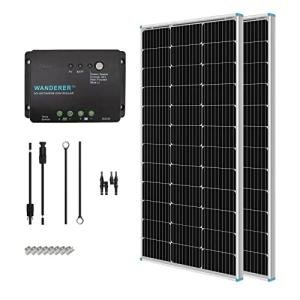
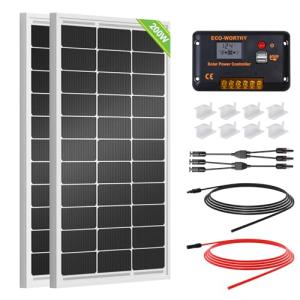
One of the most compelling things about this kit is that Renogy has done the sourcing work for you. The kit includes four 100W 12V Monocrystalline Solar Panels, one Adventurer 30A PWM Charge Controller, one 30ft 10AWG Solar Adaptor Kit, one 16ft 10AWG Tray Cable, three pairs of Branch Connectors, a BT-1 Bluetooth Module, and one Renogy Cable Entry Housing.
Here's what each component actually does in the real world:
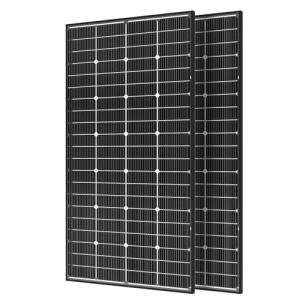
The Solar Panels (4 × 100W): Four individual 100-watt monocrystalline panels form the heart of the system. Connected in parallel, they deliver up to 400 watts of raw solar input to the charge controller. Each panel is compact enough to fit on most RV roofs without major reconfiguration.
The Adventurer 30A PWM Charge Controller: This is the brain of the operation — the device that sits between your panels and your battery bank, regulating the flow of electricity to prevent overcharging and damage.
Mounting Z-Brackets: Four sets of Z-brackets provide a secure, roof-ready mounting solution compatible with most RV roof profiles.
Solar Cables (10AWG, 30ft and 16ft): Pre-cut and appropriately gauged cables eliminate one of the biggest friction points in DIY solar installs: guessing at wire sizing.
Male and Female MC4 Connectors + Y-Branch Connectors: Three pairs of branch connectors allow panels to be wired in parallel cleanly and reliably, with weatherproof MC4 connections throughout.
Cable Entry Housing: A weatherproof gland that routes your cables from the roof panels into the RV interior without creating a leak point — a detail that lesser kits often overlook entirely.
BT-1 Bluetooth Module: The BT-1 Bluetooth Module enables users to pair the charge controller with the DC Home smartphone app, allowing them to view system performance in real time and make parameter changes directly from a smartphone.
The Solar Panels — Monocrystalline Efficiency That Earns Its Roof Space
Solar panels are not created equal, and the choice of monocrystalline silicon over polycrystalline is one Renogy made deliberately for this kit.
The Renogy 100W Monocrystalline Solar Panel delivers an optimum operating voltage of 17.9V, an optimum operating current of 5.72A, an open-circuit voltage of 21.6V, and a short-circuit current of 6.24A, with each panel measuring 42.2 × 19.6 × 1.38 inches and weighing 16.5 lbs.
Monocrystalline silicon cell conversion efficiency sits at 21%, and bypass diodes are incorporated to minimize power drop caused by shade and ensure excellent performance in low-light environments. This matters enormously for RV use, where partial shading from roof vents, AC units, or antennas is almost guaranteed.
Built for the Outdoors, Not Just the Outdoors on a Good Day
The panels feature a corrosion-resistant aluminum frame for extended outdoor use, a TPT back sheet that dissipates excess heat to ensure smooth output performance, and an IP65-rated junction box that provides complete protection against environmental particles and low-pressure water jets.
Structurally, each panel uses 3.2mm tempered glass with excellent mechanical loading performance, capable of resisting 5400Pa snow loads and 2400Pa wind loads. For RV owners who travel in shoulder seasons or park in exposed mountain locations, these aren't just marketing numbers — they're the difference between panels that survive winter storage and ones that don't.
The panels carry a 25-year power output warranty structured in three tiers: 95% output efficiency at 5 years, 90% at 10 years, and 80% at 25 years, alongside a 10-year material and workmanship warranty. That warranty structure tells you something about Renogy's confidence in the product's long-term durability.
The Adventurer 30A PWM Charge Controller — Smart Charging in a Compact Package
The Adventurer is where this kit earns its stripes as an RV-specific product rather than a generic off-grid bundle.
The Adventurer 30A PWM Charge Controller is specifically designed for RV applications, allowing for aesthetically clean flush mounting on walls. It is negative-grounded for battery compatibility and features an LCD screen for displaying system operation information and data with full control of parameter settings.
Key specifications include a nominal voltage of 12/24 VDC, a rated charge current of 30A, a maximum PV input voltage of 25 VDC, and a maximum PV input power of 400W at 12V.
Four-Stage Charging — Why It Matters for Battery Life
A charge controller isn't just a safety device. A good one actively extends the lifespan of your battery bank through intelligent charging management. The Adventurer supports Sealed, Gel, Flooded, and Lithium battery types with a four-stage charging process designed for rapid, efficient, and safe battery charging.
The four stages — bulk, absorption, float, and equalization — work in concert to push your batteries to full capacity quickly when solar is abundant, then taper current to maintain charge without cooking the cells. Over a battery bank's lifetime, this kind of smart management translates directly into more charge cycles and longer service life.
Protection Systems That Actually Protect
The Adventurer 30A PWM Charge Controller can prevent the battery from overcharge, over voltage, discharge, and short circuit, and includes reversed polarity protection. These are not optional features — they're the difference between a system that runs safely for years and one that becomes a fire hazard after a wiring mistake during installation.
The controller is embedded with self-diagnostics and electronic protection functions that prevent damage from installation mistakes or system faults. For first-time solar installers, this self-diagnostic capability is a genuine safety net.
Installation — Designed to Be Done Without an Electrician
One of the most common barriers to RV solar adoption is the perceived complexity of installation. Renogy has invested significant design effort in removing that friction.
Pre-drilled holes and Plug & Play cables on the back of the charge controller allow for fast mounting, and three pairs of Y branch connectors are included to meet parallel wiring requirements.
The cable entry housing is a detail that separates thoughtfully designed kits from afterthought bundles. Routing cables from rooftop panels through the RV wall is one of the trickiest parts of any install — get it wrong, and you have a water infiltration point that will cause serious damage over time. The included housing provides a weatherproof, purpose-built solution.
The 30ft adaptor cable gives installers the flexibility to route wiring around roof obstacles without being forced into awkward connections, and the 16ft tray cable handles the interior run from roof entry to charge controller with appropriate gauge wire for the current loads involved.
For most RV owners comfortable with basic electrical work, this is a one or two-day weekend project. For those who prefer professional installation, having a complete, matched kit simplifies the electrician's work considerably — and keeps the parts cost contained.
Bluetooth Monitoring — Your Solar System in Your Pocket
The inclusion of the BT-1 Bluetooth module elevates this kit beyond basic plug-and-charge functionality.
Remote monitoring and control is available via Bluetooth through the DC Home smartphone app, allowing users to view system performance in real time. This means you can check your current charge rate, battery state of charge, and system status without climbing on the roof or squinting at the charge controller display — something particularly useful when parked and relaxing.
Real-time monitoring also has a diagnostic value that's easy to underestimate until you actually need it. When production drops unexpectedly, the app gives you immediate data to work with — whether it's a shading issue, a connection fault, or a battery that's approaching end-of-life.
What Can 400 Watts Actually Power?
This is the question every prospective buyer should ask before committing to any solar kit, and the answer depends heavily on your specific usage patterns and battery bank size.
The kit is capable of producing an average of approximately 2 kilowatt-hours of electricity per day under typical conditions. That's a meaningful daily budget.
To put that in practical terms, 2 kWh per day can comfortably support:
- LED lighting throughout the RV (typically 10–30W total)
- A 12V refrigerator running continuously (typically 30–60W average)
- Phone and laptop charging (20–60W)
- A fan or two for ventilation (15–50W each)
- A small TV or media system (30–80W)
What 400W will not reliably support without a significant battery bank and careful usage: air conditioning, electric kettles, microwave ovens, or resistance heating elements. Those loads require either a generator, shore power, or a much larger solar array.
The 400W kit lands in a practical sweet spot for what's sometimes called "partial off-grid" living — comfortable, self-sufficient power for most creature comforts, with the understanding that high-draw appliances need to be managed or supplemented.
Renogy 400W Kit vs. Competing Systems
Choosing the right solar kit means understanding where this system sits relative to alternatives. Here's a comprehensive look:
| Feature | Renogy 400W RV Kit (B015DFS7X8) | ECO-WORTHY 400W 12V Kit | Renogy 200W RV Kit | Newpowa 400W Kit |
|---|---|---|---|---|
| Total Wattage | 400W (4 × 100W) | 400W (4 × 100W) | 200W (2 × 100W) | 400W (4 × 100W) |
| Cell Type | Monocrystalline | Monocrystalline | Monocrystalline | Monocrystalline |
| Cell Efficiency | 21% | ~20% | 21% | ~20% |
| Charge Controller | Adventurer 30A PWM | 40A MPPT | Adventurer 30A PWM | 30A PWM |
| Controller Type | PWM | MPPT | PWM | PWM |
| LCD Display | Yes | Yes | Yes | Basic LED |
| Bluetooth Monitoring | Yes (BT-1 module included) | Yes (separate module) | Yes (BT-1 module) | No |
| Battery Compatibility | Sealed, Gel, Flooded, Lithium | Sealed, Gel, Flooded, Lithium | Sealed, Gel, Flooded, Lithium | Sealed, Gel, Flooded |
| Cable Entry Housing | Included | Not always included | Included | Not included |
| Branch Connectors | 3 pairs included | 2 pairs | 3 pairs | 2 pairs |
| Mounting Hardware | Z-brackets included | Yes | Z-brackets included | Z-brackets included |
| Panel Warranty | 25-year output, 10-year materials | 25-year output | 25-year output, 10-year materials | 25-year output |
| Controller Warranty | 10 years | 1 year | 10 years | 1 year |
| Wind Load Resistance | 2400Pa | 2400Pa | 2400Pa | 2000Pa |
| Snow Load Resistance | 5400Pa | 5400Pa | 5400Pa | 4000Pa |
| IP Rating (Junction Box) | IP65 | IP65 | IP65 | IP65 |
| Flush Mount Controller | Yes (RV wall flush-mount design) | No | Yes | No |
| Best For | RV, marine, off-grid beginners to intermediate | Off-grid with battery & inverter needs | Smaller rigs, budget entry | Basic off-grid, non-RV |
Key Takeaway from the Table: The most significant competitive differentiator here is the PWM vs. MPPT controller question. MPPT controllers are more efficient — typically 10–30% more so in non-ideal conditions. However, the Adventurer 30A PWM Charge Controller is specifically designed for RV applications, featuring the aesthetically clean flush mounting on walls that MPPT controllers rarely offer in this form factor. For RV-specific use where the flush-mount design, the comprehensive kit completeness, and the 10-year controller warranty matter, the Renogy package holds its own clearly.
Who Should Buy This Kit?
This kit is an excellent match for:
- RV and camper van owners transitioning away from generator dependence who want a reliable, all-in-one starting point
- Boondockers and dry campers who regularly park without hookups for multiple nights
- Full-time RV travelers who need consistent, manageable power for lighting, refrigeration, and electronics
- First-time solar buyers who want a reputable brand, comprehensive warranty, and good technical support
- Anyone whose electrical loads sit comfortably in the "lights, fridge, fans, devices" category
You may want to look elsewhere if:
- You need to run air conditioning or high-draw appliances regularly — that calls for a larger array and an MPPT controller
- You have a 24V system — this kit is configured for 12V operation
- You want maximum charging efficiency from every available hour of sunlight — an MPPT-based system will outperform PWM in suboptimal conditions
- Your roof space can only accommodate one or two panels — the 200W version of this kit may be a more realistic starting point
Expandability — Planning for More Power Later
One smart aspect of this kit's design is that it doesn't trap you at 400W forever.
The Renogy Adventurer 30A Charge Controller can expand system power up to a maximum of 400W, and the Renogy 100W Expansion Kit is available for adding more solar panels when additional capacity is needed.
That said, reaching the controller's 400W ceiling with four panels means the Adventurer is at capacity. If your energy needs grow beyond what 400W can deliver, the next step is upgrading to a larger MPPT controller — which Renogy also sells — rather than simply adding more panels to the existing controller.
The practical takeaway: buy this kit, run it for a season, track your actual usage through the Bluetooth app, and let real data guide your next upgrade rather than speculating upfront. The app makes this kind of evidence-based planning genuinely accessible.
Warranty and Support — A Long-Term Relationship
Solar is a long-term investment, and the warranty structure matters more than many buyers initially realize.
The panels carry a 25-year power output warranty with three tiers — 95% efficiency at 5 years, 90% at 10 years, and 80% at 25 years — alongside a 10-year material and workmanship warranty.
The kit also comes with a 10-year warranty and access to a 24/7 technical support team. Having a knowledgeable technical support line available around the clock matters in practice. Solar questions have a habit of arising at inconvenient times — when you're parked in a remote location, working through an installation, or troubleshooting unexpected behavior.
Renogy has built a substantial user community over the years, and between official support and community resources, most installation and operational questions have well-documented answers.
Real-World Performance Considerations
A few practical notes that don't always make it into the marketing copy:
Peak vs. Average Output: The 400W rating is a peak figure measured under Standard Test Conditions — 25°C cell temperature, 1000W/m² irradiance, specific air mass. Real-world output will be lower due to heat, angle, dust, and atmospheric variation. Planning around 70–80% of rated peak output as your practical baseline is a reasonable approach for most locations.
Battery Bank Sizing: The kit doesn't include batteries. For a 400W system producing roughly 2 kWh daily, a battery bank of at least 100–200Ah at 12V gives you meaningful storage. Going lithium (LiFePO4) allows you to use more of that storage capacity without damage, while lead-acid batteries should generally not be discharged below 50% to preserve their lifespan.
Shading Sensitivity: Bypass diodes are incorporated into each panel to minimize power drop caused by shade and ensure excellent performance in low-light environments. However, severe or sustained shading on a large portion of any panel will affect overall system output meaningfully. Panel placement on the roof should account for the most common shading obstacles in your specific rig.
Parallel Wiring: The included Y-branch connectors are designed for parallel wiring of the four panels. Parallel wiring keeps the system voltage at 12V while combining the current from all four panels — the correct configuration for this 12V-rated controller.
Is the Renogy 400W RV Kit Worth It?
After covering every component, every specification, and every real-world consideration, the verdict is clear: for the RV owner looking for a reliable, complete, well-supported solar solution at 12 volts, this kit earns its recommendation.
It isn't the cheapest option on the market. It isn't the most technically advanced — MPPT controllers will extract more power per panel in challenging conditions. But it is one of the most cohesive, best-warranted, and most user-friendly complete kits available for the RV market. The inclusion of the Bluetooth module, cable entry housing, branch connectors, and flush-mount charge controller — all from a single manufacturer with a decade-long controller warranty — gives buyers a level of confidence that piecemeal component sourcing rarely delivers.
The RV lifestyle is about freedom, simplicity, and connection with the places you travel through. A solar system that works quietly in the background, that you can check on your phone, and that you don't have to wrestle with is worth paying for. The Renogy 400W kit is exactly that.
→ View the Renogy 400W 12V Monocrystalline Solar RV Kit on Amazon