A New Kind of Solar Panel Has Entered the Chat
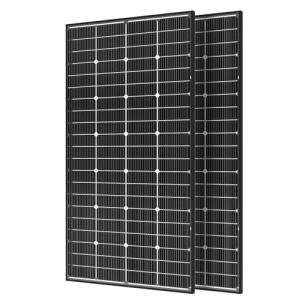
There's a quiet revolution happening on rooftops, RV decks, and marina docks across the country. While most people still associate solar panels with the clunky, opaque black rectangles of the early 2000s, a new generation of bifacial technology is turning conventional assumptions upside down — sometimes quite literally. The JJN Bifacial 200 Watt Solar Panel is one of the most compelling examples of this shift, packaging cutting-edge N-type cell technology into a lightweight, weather-hardened module that punches well above its weight class.
Whether you're building out a full off-grid homestead, powering your weekend camper, or finally cutting the shore power umbilical on your sailboat, this panel deserves serious consideration. Let's dig into what makes it genuinely different.
The Bifacial Difference: Harvesting Light From Both Sides
Most solar panels are essentially one-trick ponies. They collect sunlight from the front, convert it, and that's that. Whatever light bounces off the ground, a white RV roof, sand, or snow behind the panel is simply wasted.
The JJN 200W panel changes that equation entirely with a transparent backsheet design that allows the panel to produce electricity from both the front and the back — something conventional panels simply cannot do. In practical terms, this means that reflected and diffuse light hitting the rear of the panel actually contributes to your power output. Under ideal conditions, bifacial panels can produce 5% to 20% more energy than their single-sided counterparts.
For RV owners parked on a white gravel lot, boaters on the water's reflective surface, or anyone mounting panels above a light-colored roof membrane, that rear-side harvest adds up meaningfully over the course of a day — and dramatically over a season.
16BB N-Type Cells: The Technology Inside
The cell technology powering this panel is where JJN's engineering choices start to get interesting. Most budget solar panels still rely on P-type silicon cells with 9 or 10 busbars. JJN went in a different direction.
The 16BB design uses 16 busbars to collect and conduct electricity, resulting in higher efficiency, better performance, and reduced power loss. The increased number of busbars minimizes resistance, enhances the panel's durability, and boosts energy output compared to panels with fewer busbars.
More busbars mean shorter current pathways, which in turn means less resistance and less heat generation. Less heat is a bigger deal than it sounds. Heat is the enemy of solar efficiency — the hotter a panel runs, the less efficiently it converts light. By distributing current collection across 16 pathways instead of 9 or 10, JJN keeps operating temperatures lower and efficiency higher, especially during peak summer hours when other panels are throttling themselves from thermal stress.
Then there's the N-type silicon substrate itself. N-type solar panels use a thin tunnel oxide layer and passivated contacts on N-type silicon wafers to reduce electron recombination, leading to higher efficiency and better performance in low-light conditions. This design enhances energy conversion and durability compared to traditional panels.
In plain language: N-type cells don't degrade as fast. They resist a phenomenon called light-induced degradation (LID) that causes conventional P-type panels to lose a chunk of their rated output within the first few months of use. The JJN 200W posts less than 1% attenuation in the first year — an impressive number that reflects the inherent stability of N-type chemistry.
The combined result of 16BB architecture and N-type cells is a panel rated at 25%+ conversion efficiency, placing it comfortably in the top tier of consumer-grade solar modules available today.
Built for the Real World, Not a Lab
Rated power figures and efficiency percentages are measured under Standard Test Conditions — 1,000 W/m² of irradiance, 25°C cell temperature, perfectly clean glass. Real life looks nothing like that. Real life looks like hailstorms in Colorado, salt spray off the Gulf Coast, and a tree branch casting a shadow across one corner of your array for three hours every afternoon.
JJN clearly understood this when engineering the 200W panel's physical construction.
The panel features a black corrosion-resistant aluminum frame capable of withstanding wind loads of 2,400 Pa and snow loads of 5,400 Pa. Both the IP67 solar connectors and the IP65 junction box provide outstanding waterproof capabilities, protecting the panel against environmental particles and low-pressure water jets.
IP67 on the connectors means they can be submerged briefly without issue — a genuine asset on marine installations where spray and splash are daily realities. The IP65 junction box (where all the wiring exits the panel) is similarly protected against dust ingress and direct water jets from any angle.
The 5,400 Pa snow load rating deserves special mention for anyone in northern climates. That's roughly 55 kg per square meter — enough to handle a significant accumulation of wet, heavy snow without the frame or glass giving way. Combined with the black aluminum framing, the panel also sheds snow faster than silver-framed alternatives, since the darker surface absorbs heat more readily.
Weighing just 24.3 lbs, these 200W solar panels are easy to transport and mount, making them ideal for a wide range of applications from residential rooftops to off-grid systems for RVs, boats, and more. At under 25 pounds, a single person can safely handle installation without a second set of hands — no small consideration when you're balancing on a camper roof at a campground in the middle of nowhere.
Pre-drilled holes on the back of the panels simplify the installation process further. The hardware preparation is done; you just need a mounting system and some basic tools.
Performance in the Field: What Real Users Report
Spec sheets tell one story. Thousands of hours of real-world installation data tell another. The JJN 200W has accumulated a notable track record among the RV and off-grid communities.
One particularly telling account comes from a full-time camper in southeast Texas running 10 JJN panels on a 48V/300Ah LiFePO4 system. On a partly cloudy day in late spring, the array produced 980 watts instantaneously — 92% of the theoretical 1,000-watt rated output — with the panels lying mostly flat on the camper roof. Achieving 92% of rated power while flat-mounted (rather than optimally angled) is a testament to how well the panel performs under real conditions.
Another reviewer who tested the panel in cold December conditions reported pulling 60 watts from a single 200W panel late in the afternoon on an overcast day. For context, that's 30% of rated output under conditions that would cause many budget panels to produce almost nothing meaningful.
The pattern across reviews is consistent: charging speed is highlighted by customers who report the panels charging batteries quickly, with 80–90% charge efficiency, helping recharge solar generators and batteries rapidly.
Ideal Applications: Who This Panel Is Actually For
RV and Camper Van Builds
The 200W JJN hits a sweet spot for RV rooftop installations. It's large enough to meaningfully contribute to a house battery bank but light enough to avoid creating structural concerns on most vehicle roofs. A pair of these panels can realistically keep a 200Ah lithium battery topped off through a typical travel day, powering a 12V refrigerator, lighting, phone charging, and a small inverter for occasional laptop use.
Marine Off-Grid Systems
Saltwater environments are brutal on electronics. The IP67 connector rating and corrosion-resistant frame make the JJN 200W one of the more credible choices for sailboat and powerboat auxiliary charging. The bifacial advantage is also pronounced on the water, where light reflection off the surface provides meaningful rear-side contribution.
Residential Off-Grid and Backup Systems
For homesteaders, off-grid cabins, or hybrid grid-tie backup systems, the JJN 200W scales well. Its compatibility with standard MPPT charge controllers and conventional wiring practices means it integrates cleanly into existing system designs. The panel's open-circuit voltage of 28.1V makes it compatible with both 12V and 24V battery systems, giving system designers flexibility in how they configure their arrays.
Farm and Agricultural Use
Remote water pumps, livestock monitoring equipment, electric fence energizers, and irrigation controls all benefit from reliable off-grid solar. The panel's robust weather resistance and long warranty make it a practical choice for agricultural settings where maintenance access is limited.
Warranty: JJN Backs Its Technology Seriously
JJN Solar offers a 10-year workmanship warranty and an over 80% output warranty at 30 years for its bifacial solar panels. The 25-year performance guarantee is transferable, which matters if you ever sell your RV, boat, or property — the warranty travels with the panel, not just the original purchaser.
Thirty-year performance guarantees were once the exclusive territory of premium tier-one manufacturers. Seeing them on a panel in this price range reflects the industry-wide confidence in N-type cell longevity.
Comparison Table: JJN 200W vs. Key Competitors
| Feature | JJN 200W 16BB N-Type | HQST 200W N-Type 16BB | Callsun 200W N-Type 16BB | Rvpozwer 200W 18BB N-Type |
|---|---|---|---|---|
| Cell Type | N-Type Mono | N-Type Mono | N-Type Mono | N-Type Mono |
| Busbar Count | 16BB | 16BB | 16BB | 18BB |
| Efficiency | 25%+ | 25% | 25% | 25% |
| Bifacial | ✅ Yes | ✅ Yes | ✅ Yes | ✅ Yes |
| Weight | 24.3 lbs | ~26 lbs | 23.8 lbs | ~25 lbs |
| Wind Load | 2,400 Pa | 2,400 Pa | 2,400 Pa | 2,400 Pa |
| Snow Load | 5,400 Pa | 5,400 Pa | 5,400 Pa | 5,400 Pa |
| Connector IP Rating | IP67 | IP65 | IP68 | IP65 |
| Junction Box IP | IP65 | IP65 | IP68 | IP65 |
| Workmanship Warranty | 10 years | 10 years | 10 years | 10 years |
| Power Warranty | 80%+ at 30 yrs | 80%+ at 25 yrs | 84.5%+ at 25 yrs | 80%+ at 25 yrs |
| System Compatibility | 12V / 24V | 12V / 24V | 12V / 24V | 12V / 24V |
| Transparent Backsheet | ✅ Yes | ✅ Yes | ✅ Yes | ✅ Yes |
| Pre-drilled Mount Holes | ✅ Yes | ✅ Yes | ✅ Yes | ✅ Yes |
The JJN distinguishes itself primarily through its IP67 connector rating (a step above the IP65 found on most competitors), its 30-year performance warranty (5 years longer than the industry-standard 25), and its proven real-world track record among the RV and off-grid communities.
What Charge Controller Do You Need?
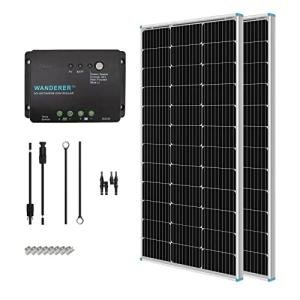
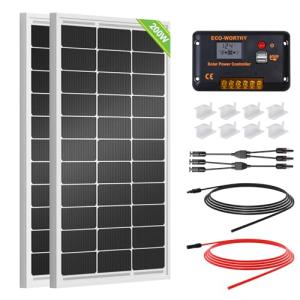
JJN strongly recommends using an MPPT charge controller for the best performance. MPPT controllers are more efficient and make full use of the panel's voltage even under weak or changing sunlight. Some third-party PWM controllers may not work properly with this panel, making MPPT the safer choice.
For most 12V systems, a 20–30A MPPT controller will handle a single 200W panel comfortably. If you're planning to run two or more panels, size up accordingly and ensure your controller's maximum input voltage exceeds the combined open-circuit voltage of your string.
The JJN Bifacial 200W 16BB N-Type Solar Panel is a mature, well-engineered product from a brand that has clearly invested in cell quality rather than cutting corners to hit a price point. The bifacial design captures energy that monofacial panels simply leave on the table. The 16BB N-type cells deliver efficiency and longevity that traditional P-type panels can't match. The weatherproofing is legitimate. And the 30-year performance warranty puts skin in the game in a way that separates serious manufacturers from disposable ones.
At 24.3 pounds and with pre-drilled mounting holes, this is also genuinely easy to live with in the field — no specialized tools, no second installer required. For anyone building or upgrading an off-grid power system, whether on a rooftop, a rolling home, or open water, this panel makes a compelling case for itself.