Solar power banks are a game changer for anyone who’s always on the go. These handy gadgets let you charge your devices using the sun’s energy, so you never have to worry about running out of battery while you’re out adventuring. They’re perfect for camping trips, beach days, or even just those long commutes when you need a little extra power.
Solar Power Banks
Stay charged on the go with reliable solar power banks that keep your devices powered anywhere
Product List
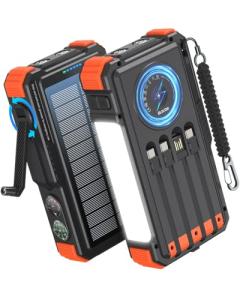
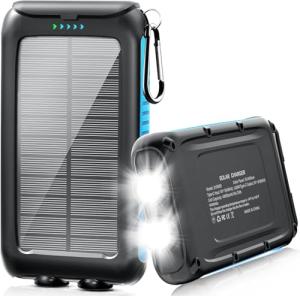
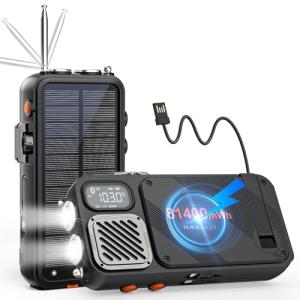
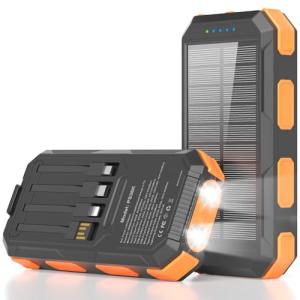
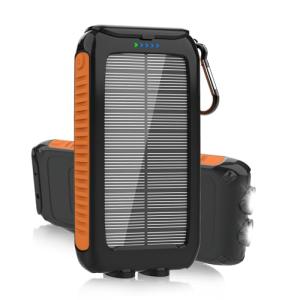
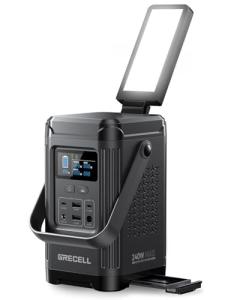
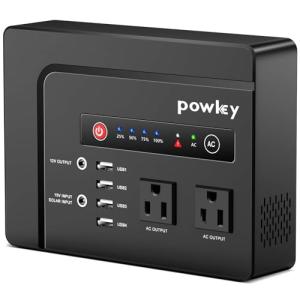
powkey 200W Portable Power Bank with AC Outle...
Product Review Score
4.6 out of 5 stars
43 reviews$129.99 $79.99
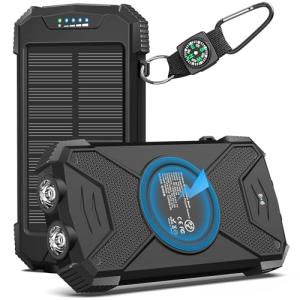
BLAVOR Solar Power Bank 10,000mAh, Portable W...
Product Review Score
4.66 out of 5 stars
163 reviews$39.99 $26.99
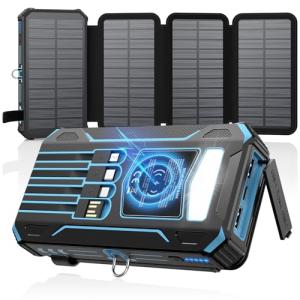
SOARAISE Solar Charger Power Bank - 48000mAh...
Product Review Score
4.57 out of 5 stars
15 reviews$49.99
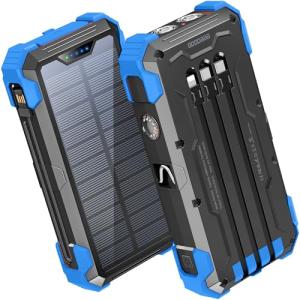
GOODaaa Portable Charger 42800mAh Built in 4...
Product Review Score
4.2 out of 5 stars
21 reviews$46.99 $39.99
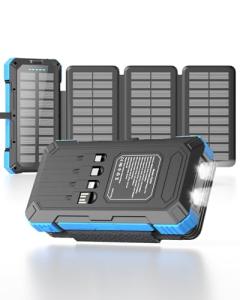
Kepswin Solar Charger Power Bank 49800mAh wit...
Product Review Score
4.89 out of 5 stars
91 reviews$92.99 $65.99
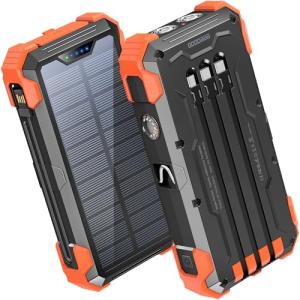
GOODaaa Portable Charger 42800mAh Built in 4...
Product Review Score
4.67 out of 5 stars
175 reviews$39.99 $35.99
A solar power bank is a portable battery pack with one or more built-in solar panels. During the day, those panels convert sunlight into electricity and store it inside a rechargeable battery cell. You can then use that stored energy to charge your phone, tablet, earbuds, smartwatch, GPS device, camera, or virtually any USB-powered gadget.
The core idea is simple: the sun charges the bank, and the bank charges your devices. No cables required for the input. No wall outlets. No generators. Just clean, free energy from above.
Most solar power banks can also be charged the traditional way – via a USB-C or micro-USB port – so you're never completely dependent on the weather. Think of solar as your free, renewable top-up and the USB port as your backup plan.
How Solar Charging Actually Works
The solar panels on a power bank are made from photovoltaic (PV) cells – typically monocrystalline silicon, which is the most efficient type available for small-format panels. When photons from sunlight hit those cells, they knock electrons loose and generate a small electrical current. That current flows into a charge controller inside the bank, which regulates the voltage and safely fills the internal battery cells.
Here's the honest part most product listings gloss over: solar panels on portable devices are small, and small panels produce limited power. A single panel on a typical solar power bank might generate anywhere from 0.5W to 3W under ideal conditions – that's full, direct midday sun with no cloud cover and the panel angled correctly.
To put that in perspective: a 10,000mAh battery holds roughly 37Wh of energy. At 1W of solar output, you'd need over 37 hours of perfect sunlight to fully charge it from zero. That's not how you'll use it in the real world – you'll top it up over several days of outdoor activity, arrive home and plug it in, or use solar as a maintenance charge to slow the drain rather than the primary charging method.
That's not a flaw. That's just physics. Understanding this helps you buy the right product for the right reasons.
Who Should Buy a Solar Power Bank?
Hikers and Backpackers
If you're on a multi-day trail, you can clip a solar power bank to your pack and let it absorb sun throughout the day. By the time you set up camp, you've got a meaningful charge ready to top up your phone or GPS. Lightweight models under 300g are purpose-built for this use case.
Campers
Weekend campers don't need to sacrifice their modern comforts just because they're in a field. A solar power bank keeps phones charged for photos, music, and navigation. Higher-capacity models can even keep a small Bluetooth speaker running.
Travelers and Digital Nomads
Long-haul flights, unpredictable power sockets, international voltage differences – travel is hard on devices. A solar power bank gives you a universal, adapter-free charging option. Even when you can't find a socket in the airport lounge, you can charge on the terrace.
Emergency Preparedness
Power outages, natural disasters, and grid failures are real. A solar power bank stored in a go-bag or emergency kit can keep communication devices alive when the power is out for days. This is one of the strongest use cases – and one of the most underrated.
Everyday Users
Some people just want a reliable backup charger that never runs out as long as the sun is shining. Leave it on the windowsill, toss it in your bag, and never stress about low battery again.
Key Specs to Look For
Not all solar power banks are created equal. Here are the numbers and features that actually matter.
Battery Capacity (mAh)
This tells you how much energy the bank can store. As a rough guide:
- 5,000–10,000mAh – One to two full charges for a smartphone. Good for day trips and light use.
- 10,000–20,000mAh – Two to four charges. The sweet spot for most users.
- 20,000mAh and above – Serious capacity for longer expeditions, tablets, or charging multiple devices.
Solar Panel Efficiency
Look for monocrystalline panels and a stated efficiency rating. Better panels convert 20–24% of incoming sunlight into usable power. Cheap polycrystalline panels may only manage 12–16%, meaning slower charging in the same conditions.
Output Wattage
This determines how fast the bank can charge your devices. Look for at least 18W output for fast charging compatibility with modern smartphones. Some models support 20W or even 30W PD (Power Delivery) output, which can charge a phone from 0–50% in around 30 minutes.
Number of Ports
A good solar power bank should offer at least one USB-A port and one USB-C port. The USB-C port is increasingly important, as it's the standard for most modern phones, tablets, and laptops. Dual USB-A ports are handy when charging two devices at once.
Waterproofing and Durability
If you're buying a solar power bank for outdoor use, IP rating matters. IP65 means protected against water jets. IP67 means it can be submerged in up to 1 metre of water for 30 minutes. IPX4 means splash-resistant only. Match the rating to your actual use – don't buy a splash-proof bank for kayaking.
Weight and Size
Lighter is better for backpacking. Larger panels charge faster. These two goals are in tension. Most quality hiking-focused banks hit a sweet spot around 250–350g with a panel area large enough to generate useful solar power.
Built-In LED Flashlight
Many solar power banks include a built-in LED torch. This sounds like a gimmick but is genuinely useful in the field – especially at camp or during a power outage.
Solar Power Banks vs Regular Power Banks – Which Should You Choose?
If you never leave the city and always have access to USB ports or wall sockets, a regular power bank is lighter, cheaper, and simpler. Full stop.
But if you spend time outdoors, travel frequently, live somewhere with unreliable electricity, or simply want the peace of mind that comes from having a self-sustaining power source, a solar power bank is worth every extra gram and dollar.
The beauty of a solar power bank is resilience. It doesn't depend on infrastructure. As long as there's daylight, there's the possibility of power. That independence has real value – both practical and psychological.
Tips for Getting the Most Out of Your Solar Power Bank
Face the panel toward the sun. This sounds obvious, but the angle matters a lot. Panels pointing directly at the sun at 90 degrees can produce two to three times more power than panels lying flat on the ground.
Clip it to your pack. Attaching the bank to the outside of your backpack while you hike means you're harvesting solar energy the whole time without carrying extra weight in your hands.
Start with a full charge. Before a big trip, charge your bank via USB the night before. Use solar as a top-up on the trail, not as your only charging method.
Avoid extreme temperatures. Lithium batteries lose capacity in very cold conditions and can be damaged by excessive heat. Don't leave your power bank baking on a dashboard or freezing overnight in a tent.
Clean the solar panels. Dust, fingerprints, and condensation reduce panel efficiency. Wipe the panels with a soft cloth periodically.
Check the charge level indicator. Most solar power banks have LED indicators showing the current charge. Check this when you set up camp so you know how much reserve you have.
Understanding the Limitations (Honestly)
We want to be upfront: solar power banks aren't magic. They work best when used as part of a broader charging strategy rather than as a standalone solution for power-hungry devices.
On a cloudy day, solar input can drop by 70–90%. In winter, shorter days and lower sun angles reduce output further. If you're in dense forest canopy or hiking in a narrow mountain valley, direct sunlight may be limited.
This doesn't make them useless – it just means setting realistic expectations. Think of solar as a slow trickle charge that helps extend your energy reserves over a multi-day trip, not as a substitute for a wall charger.
Browse Our Solar Power Bank Range
Our collection includes models from trusted brands with real-world testing behind them. Whether you need a compact 10,000mAh bank for weekend hikes or a rugged 26,800mAh monster for two-week expeditions, we've got options across every price point.
Every product in our solar power bank category has been selected with the following criteria in mind: reliable battery capacity, efficient solar panels, durable construction, sensible port selection, and honest value for money. We don't stock products we wouldn't use ourselves.
Use the filters to sort by capacity, weight, waterproof rating, or price. If you're not sure where to start, our 10,000–20,000mAh range is where most customers find their perfect match.
Frequently Asked Questions
Can a solar power bank charge a laptop?
Some high-capacity models with USB-C PD output (65W or above) can charge certain laptops. Check the wattage requirements of your laptop and the output specs of the bank before purchasing.
How long does it take to charge via solar?
This depends entirely on panel size and sunlight conditions. Under ideal conditions, a 10,000mAh bank with a 3W panel might take 12–15 hours of direct sun. Most users rely on a combination of solar and USB charging.
Are solar power banks allowed on planes?
Yes, most solar power banks under 100Wh (roughly 27,000mAh) are allowed in carry-on luggage. Always check with your airline for specific policies. Remove the bank from your bag during security screening.
What's the best solar power bank for hiking?
The best hiking bank is lightweight, has at least IP65 waterproofing, includes a carabiner or clip for attaching to a pack, and has a capacity of at least 10,000mAh. Monocrystalline panels are a must for useful solar gain on the trail.
Stay charged, stay free. Shop our full solar power bank collection above.