Looking to harness the power of the sun? Our selection of solar panels gives you everything you need to start saving on energy bills and help the planet. These panels are easy to install, packed with efficient technology, and perfect for both homes and businesses.
Solar Panels
Discover high-quality solar panels that make harnessing the sun’s energy simple and affordable
Product List
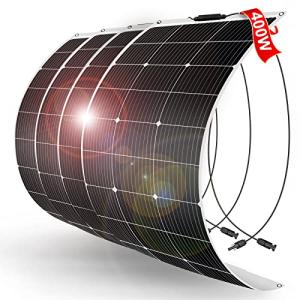
DOKIO 400W (4×100W) Flexible Solar Panels 18V...
Product Review Score
4.93 out of 5 stars
16 reviews$157.92 $139.52
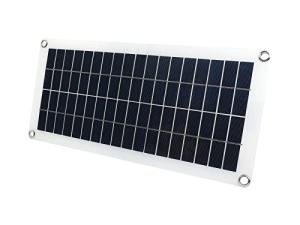
Waveshare Semi-Flexible Polycrystalline Silic...
Product Review Score
4.13 out of 5 stars
113 reviews$24.99
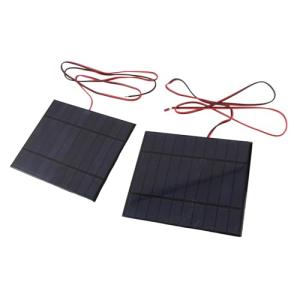
2pcs Polycrystalline Solar Panel Cell Power M...
Product Review Score
4.38 out of 5 stars
44 reviews$20.29
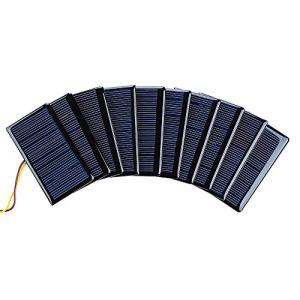
SUNYIMA 10Pcs 5V 60mA Mini Polycrystalline So...
Product Review Score
4.15 out of 5 stars
183 reviews$15.99 $15.19
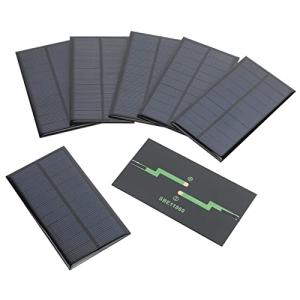
FellDen Micro Solar Panels Photovoltaic Solar...
Product Review Score
4.69 out of 5 stars
151 reviews$20.99
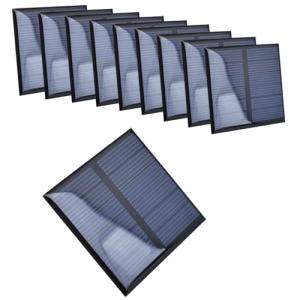
Ailejia 10pcs Mini High Efficiency Polycrysta...
Product Review Score
4.13 out of 5 stars
7 reviews$16.98
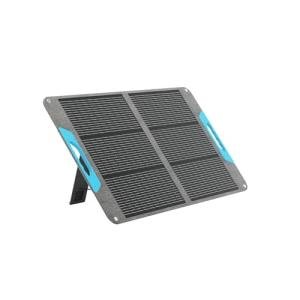
RENOGY REGO 100W Portable Solar Panel, Renogy...
Product Review Score
4.94 out of 5 stars
36 reviews$149.99 $140.99
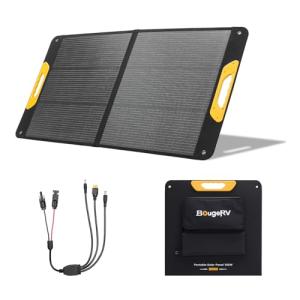
BougeRV 100W Portable Solar Panel with IP65 W...
Product Review Score
4.15 out of 5 stars
184 reviews$149.99
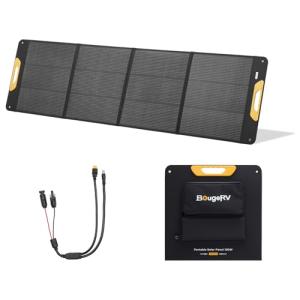
BougeRV 200W Portable Solar Panel with IP65 W...
Product Review Score
4.12 out of 5 stars
59 reviews$229.99
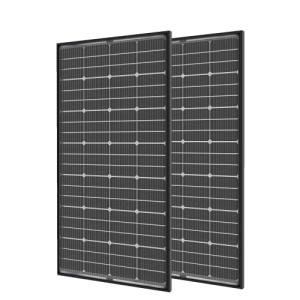
JJN Bifacial 400 Watt Solar Panels 12V 10BB M...
Product Review Score
4.28 out of 5 stars
155 reviews$229.99
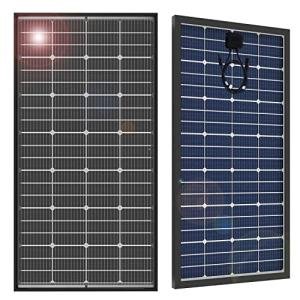
JJN Bifacial 200 Watt Solar Panel 12V 10BB Mo...
Product Review Score
4.25 out of 5 stars
28 reviews$129.99 $119.99
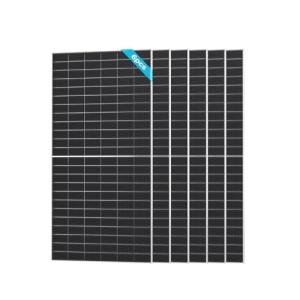
Renogy Solar Panels Bifacial 6Pcs 590 Watt N-...
Product Review Score
4.92 out of 5 stars
187 reviews$3,099.99
There's something deeply satisfying about generating your own electricity. Every time the sun rises and your panels start producing power, you're drawing from an energy source that's been burning for 4.6 billion years and shows absolutely no signs of stopping. Solar panels have moved well beyond being a niche environmental statement — they're now one of the smartest financial decisions a homeowner, farmer, or business owner can make.
What Are Solar Panels, Really?
At their core, solar panels are devices that convert sunlight into electricity using a process called the photovoltaic (PV) effect. Each panel is made up of dozens of smaller units called solar cells — typically crafted from silicon — that get excited by incoming photons of light and release electrons. Those electrons flow as direct current (DC) electricity, which an inverter then converts into the alternating current (AC) power your home or business actually uses.
It sounds complex, but in practice, there are no moving parts, no combustion, no noise, and very little maintenance involved. Once a system is installed on your roof or in a field, it quietly goes about its business for 25 to 30 years, often with little more than an occasional rinse to keep dust from accumulating.
The Main Types of Solar Panels
Not all solar panels are built the same, and the differences matter depending on your space, budget, and goals.
Monocrystalline Solar Panels
These are the premium option — sleek, dark, and efficient. Monocrystalline panels are cut from a single continuous crystal of silicon, which gives electrons a cleaner path to travel and results in higher efficiency ratings, typically between 19% and 23%. If you have a limited roof area and want to squeeze maximum power from every square foot, monocrystalline is the way to go. They also tend to perform better in low-light and high-heat conditions than older technologies.
Yes, they cost a bit more upfront. But over the lifespan of a system, the higher yield often makes the price difference worthwhile.
Polycrystalline Solar Panels
Polycrystalline panels are made from silicon that's melted and poured into a mold, creating a panel with a speckled blue appearance from multiple crystal fragments. They're slightly less efficient than monocrystalline models — usually 15% to 17% — but they're also more affordable to manufacture, making them a solid choice when budget is the primary concern and roof space isn't limiting.
For large ground-mounted systems on farms or commercial properties where space is plentiful, polycrystalline panels remain a popular and cost-effective choice.
Thin-Film Solar Panels
Thin-film panels take a different approach entirely. Instead of silicon wafers, they use a thin layer of photovoltaic material — such as cadmium telluride or amorphous silicon — applied to glass, plastic, or metal. The result is a lightweight, flexible panel that can conform to curved surfaces and is easier to manufacture at scale.
Efficiency is lower, usually in the 10% to 13% range, which means you need more surface area to produce the same output. But thin-film panels perform exceptionally well in diffuse, cloudy light and at high temperatures. They're often the right call for commercial flat roofs, carports, and unconventional installation scenarios.
Bifacial Solar Panels
Bifacial panels are a newer innovation worth knowing about. As the name implies, they generate electricity from both sides — capturing direct sunlight on the front and reflected light (called albedo) on the rear. When installed above light-colored surfaces like white roofing membranes, sand, or snow, the rear side can contribute an additional 5% to 30% in output, depending on conditions.
They're gaining rapid adoption in large commercial and utility-scale projects, but residential installations can benefit too when circumstances allow.
Key Specs to Understand Before You Buy
Shopping for solar panels involves a handful of numbers that actually matter. Here's a plain-language breakdown.
Wattage (Power Output): This tells you how much electricity the panel produces under ideal conditions — full sun, cool temperature, no shading. Residential panels today commonly range from 350W to 430W per panel. Higher wattage means fewer panels needed to hit your target system size.
Efficiency: The percentage of sunlight hitting the panel that gets converted to electricity. Higher efficiency = more power from the same physical space. It matters most when roof real estate is tight.
Temperature Coefficient: Panels actually lose efficiency as they get hotter — counterintuitive, but true. The temperature coefficient tells you how much output drops per degree Celsius above 25°C. A lower negative number (e.g., -0.29%/°C vs. -0.45%/°C) is better for hot climates.
Degradation Rate: All panels lose a small amount of output each year as materials age. Premium panels degrade at roughly 0.25% to 0.5% annually. After 25 years, a high-quality panel should still produce around 87% to 92% of its original rated power.
Warranty: Look for a product warranty (covering manufacturing defects) of at least 12 years, and a performance warranty guaranteeing output levels for 25 to 30 years. These numbers signal how much confidence the manufacturer has in their own product.
Sizing Your Solar System
The right system size depends on how much electricity you use, how much sun your location receives, and whether you want to fully offset your usage or just reduce your bill.
A useful starting point is your last 12 months of electricity bills. Add up the total kilowatt-hours consumed and divide by 12 for a monthly average. Solar installers use this number — alongside local sun hours and roof orientation — to design a system that meets your needs.
For a typical home using around 900 to 1,200 kWh per month, a system in the 7 kW to 10 kW range is common in moderately sunny climates. Homes in sunnier regions or with more efficient appliances might need less; homes with electric vehicles, heat pumps, or pools might need considerably more.
Don't be shy about asking for a production estimate in writing. Any reputable installer should be able to show you projected annual output based on real weather data for your area.
Solar Panels and Battery Storage
A solar panel system alone produces power only when the sun is shining. Pair it with a home battery — such as a lithium iron phosphate storage unit — and you can store excess daytime production for use at night, during cloudy stretches, or when the grid goes down.
Battery storage has dropped dramatically in price over the past decade and continues to improve. For homeowners on time-of-use utility rates — where electricity costs more in the evening than midday — batteries can amplify the financial benefit of solar considerably. And for those who want true energy independence or live in areas prone to outages, a battery-backed solar system is increasingly the gold standard.
Installation: What to Expect
Most residential solar installations take one to three days for the physical work. A crew will mount a racking system to your roof, attach the panels, run wiring to an inverter (either a central string inverter or individual microinverters at each panel), and connect everything to your electrical panel.
After installation, the system usually needs to be inspected by your local building department and approved by your utility company before it can be switched on. That process can take a few weeks, depending on your area. Once it's energized, most systems come with monitoring software — accessible via an app — that shows you real-time and historical production data.
Ground-mounted systems follow a similar process but involve more site prep: trenching for conduit runs, post installation, and occasionally grading if the terrain is uneven. They take longer but offer the advantage of optimal tilt and orientation without being constrained by your roof.
Financial Incentives Worth Knowing About
Solar has become more affordable thanks to sustained manufacturing improvements and a robust set of financial incentives in many countries.
In the United States, the federal Investment Tax Credit (ITC) allows homeowners and businesses to deduct a significant percentage of their solar system cost from their federal taxes. Many states stack additional credits, rebates, or property tax exemptions on top of that. Net metering policies — where your utility credits you for excess electricity you send back to the grid — further improve the economics.
Payback periods for residential solar typically fall in the 6 to 10 year range in most of the US, with the system continuing to produce essentially free electricity for another 15 to 20 years afterward. On that timeline, the internal rate of return often rivals or beats traditional investments.
Choosing the Right Solar Panels for Your Needs
With so many brands and product lines on the market, narrowing down the choices can feel overwhelming. Here's a practical framework:
If maximizing output from limited space is your priority, look for high-efficiency monocrystalline panels from established manufacturers with strong performance warranties and low degradation rates.
If keeping upfront costs down matters most and you have ample roof or ground space, polycrystalline or budget-tier monocrystalline panels can get you to the same energy production at a lower price per watt.
If you're working with an unusual installation — a curved surface, a flat commercial roof, or an off-grid structure — thin-film or flexible panel options deserve serious consideration.
If you're planning a large commercial or ground-mount system, bifacial panels and high-wattage (400W+) modules will reduce your total panel count and installation labor.
Whatever direction you go, prioritize manufacturers who have been in business for at least a decade and whose products are backed by bankable performance warranties. Solar panels are a long-term commitment — the cheapest panel that fails in year eight is far more expensive than a pricier panel that hums along for thirty.
Frequently Asked Questions
Do solar panels work on cloudy days? Yes — they produce less output, but modern panels continue generating electricity in diffuse light. Germany, not exactly known for sunshine, is one of the world's leading solar adopters.
How long do solar panels last? Most quality panels are warranted for 25 to 30 years and often continue producing beyond that, at reduced output.
Do solar panels require a lot of maintenance? Very little. Periodic cleaning (rain handles most of it naturally) and occasional system monitoring checks are typically all that's needed.
Can I add panels later? Usually yes, though expanding a system may involve replacing the inverter or adding a second one. It's worth designing with future expansion in mind from the start.
What happens during a power outage? Standard grid-tied systems shut down for safety reasons. To maintain power during an outage, you need a battery backup system or a specific inverter with backup capability.
Ready to Start?
Browse our full range of solar panels below — from high-efficiency residential modules to commercial-grade solutions for large installations. Each product listing includes detailed specifications, warranty information, and compatibility notes to help you build the right system for your situation. Whether you're an installer sourcing panels for a client project or a homeowner doing your own research, you'll find the information you need to make a confident, well-informed decision.
The sun isn't sending you a bill. It's time to put it to work.