Looking to maximize your solar energy system? Solar inverters are a must-have for converting sunlight into usable power for your home. With a reliable inverter, you’ll enjoy efficiency, easy monitoring, and the peace of mind that your solar setup is working its best for you.
Solar Inverters
Get the reliable power conversion you need to make the most of your solar energy system
Product List
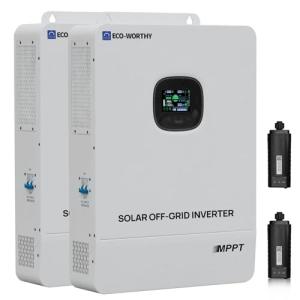
ECO-WORTHY 20000W Solar Inverter 48 Volt Inve...
Product Review Score
4.4 out of 5 stars
197 reviews$3,399.00
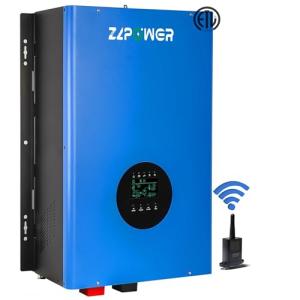
ZLPOWER UL1741 8000W 48V Solar Inverter,Built...
Product Review Score
4.66 out of 5 stars
172 reviews$1,569.00
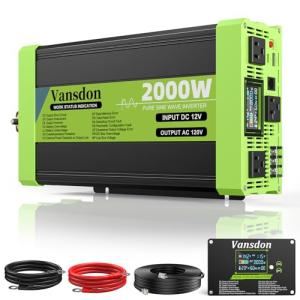
Vansdon 2000W Pure Sine Inverter
Product Review Score
4.52 out of 5 stars
215 reviews$135.99 $122.39
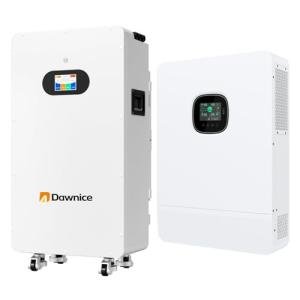
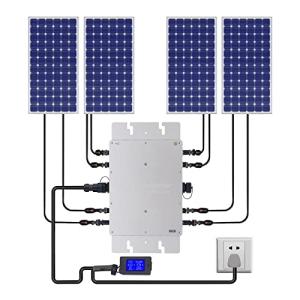
The Brain Behind Every Solar System
Your solar panels soak up sunlight all day long — but without a solar inverter, that energy is completely useless to you. Every appliance in your home runs on alternating current (AC), while solar panels produce direct current (DC). The inverter is the device that bridges that gap, silently converting raw panel output into the kind of electricity that powers your kettle, your TV, your washing machine, and everything else.
It's not an exaggeration to call the inverter the most important component in a solar setup. You can have the most efficient panels on the market, but a poorly chosen inverter will drag the whole system down. Get it right, and you're looking at decades of reliable, optimized energy production. Get it wrong, and you're leaving money on the table every single day.
How a Solar Inverter Actually Works
At its core, a solar inverter takes the DC electricity flowing out of your panels and converts it into 230V AC electricity (or 120V in North America) that your home can use. But modern inverters do a lot more than just convert power.
They continuously track the maximum power point of your solar array — the sweet spot where panels are generating the most possible energy given the current sunlight conditions. This process, called Maximum Power Point Tracking (MPPT), runs constantly in the background and can meaningfully boost the amount of energy your system harvests throughout the day.
Inverters also monitor your system's health in real time, detect faults, communicate with the grid, and in newer models, manage battery storage and smart home energy flows. They've evolved from simple converters into intelligent energy management hubs — and that evolution is reflected in the options you'll find on the market today.
Types of Solar Inverters
Understanding the different inverter types is the most important step in choosing the right one. Each has genuine strengths, and the best choice depends on your roof layout, budget, and long-term energy goals.
String Inverters
String inverters are the most widely installed type in residential and small commercial solar systems. Multiple solar panels are wired together in a "string," and all that power feeds into a single central inverter unit. They're reliable, cost-effective, and straightforward to maintain.
The main limitation is that the performance of the entire string is tied to its weakest link. If one panel is partially shaded — by a chimney, a tree branch, or even just a layer of dust — the output of every panel on that string can drop. For rooftops with good, unobstructed sun exposure, this isn't usually a problem. For more complex layouts, it can be.
String inverters are the go-to choice for homeowners who want a proven, affordable solution without unnecessary complexity.
Microinverters
Microinverters flip the script entirely. Instead of one central unit, each solar panel gets its own small inverter mounted directly underneath it. Every panel then operates independently, so shade on one panel has zero effect on the others.
This panel-level independence also means much more detailed monitoring — you can track the performance of each individual panel from an app, which makes it far easier to spot problems early. The trade-off is cost. Microinverters typically carry a higher upfront price than string inverters, though the gap has been narrowing. For complex rooftops, partially shaded installations, or anyone who wants the most granular system data available, they're well worth the investment.
Brands like Enphase have built their entire product lines around microinverter technology and are considered among the most trusted names in the industry.
Power Optimisers
Power optimisers sit between string inverters and microinverters in both price and function. They're installed on each panel, just like microinverters, but they don't convert the power themselves — instead, they condition the DC output of each panel before sending it to a central string inverter.
The result is that each panel can be individually optimized regardless of what its neighbours are doing, which solves the shading problem of standard string inverters without the full cost of going microinverter. SolarEdge is the dominant player in this space, and their optimiser-plus-inverter combination is one of the most popular residential solar setups in the world.
Hybrid Inverters
Hybrid inverters are built for the future. They handle all the standard solar-to-AC conversion duties while also managing a connected battery storage system. This means your home can store excess solar energy during the day and draw on it in the evening or during a grid outage, rather than simply exporting it to the grid (often at a low rate) and buying it back later at full price.
As battery storage becomes more affordable and energy independence becomes a more common goal, hybrid inverters are increasingly the smart default choice for new installations. Most modern hybrid models from brands like Fronius, Sungrow, and GoodWe can also be retrofitted with battery storage later if you're not ready to commit upfront — giving you a clear upgrade path without replacing the inverter.
Off-Grid Inverters
Off-grid inverters are designed for installations with no connection to the electricity network at all. They work in tandem with large battery banks to provide continuous power, managing everything from solar charging to generator backup and load control.
These are the right choice for remote properties, cabins, mobile homes, and anyone seeking true energy independence. They're the most complex type to design and install correctly, but they deliver something no grid-tied system can: complete self-sufficiency. Victron Energy's MultiPlus and Quattro series are consistently regarded as the benchmark for this category.
Key Features to Look For
Once you've settled on the type of inverter that fits your situation, the next step is comparing individual models. Here's what the specifications actually mean in practice.
Efficiency Rating
Efficiency tells you how much of the DC power coming from your panels actually makes it through the inverter and into your home as usable AC electricity. Top-tier models now achieve 98% efficiency or higher, meaning less than 2% of your solar harvest is lost in conversion. Over the lifetime of a system, even a 1–2% efficiency difference can translate to hundreds of dollars in energy savings, so this number is worth paying attention to.
MPPT Trackers
The number and quality of Maximum Power Point Tracking inputs matters, especially on larger or more complex rooftop installations. If your panels face different directions or are split across multiple roof planes, an inverter with multiple MPPT inputs lets each array segment be independently optimized. A single MPPT string inverter trying to manage panels facing east and west simultaneously will always be compromised — panels facing in multiple directions genuinely need separate tracking.
Monitoring and Connectivity
Real-time monitoring has gone from a nice-to-have to an expected standard feature. Almost every modern inverter offers Wi-Fi or Ethernet connectivity and an accompanying app that shows you live production data, historical performance, and alerts for anything out of the ordinary.
Better monitoring platforms let you view energy flows across generation, consumption, battery storage, and grid export all in one place. Some go further with remote diagnostics, firmware updates, and even integration with smart home platforms and time-of-use tariffs. If you plan to actively manage your energy use, invest in an inverter with a strong monitoring ecosystem — not just a basic data display.
IP Rating and Weather Resistance
Inverters are installed outdoors or in garages, utility rooms, and other exposed locations. An IP65 rating means the unit is fully dust-tight and protected against low-pressure water jets from any direction — a solid baseline for outdoor installation. Higher ratings like IP66 offer even stronger protection. If your inverter will be exposed to direct rain, coastal salt air, or extreme heat, check that the enclosure is rated accordingly.
Warranty
The industry standard for string inverter warranties has traditionally been 5–10 years, but the better brands now offer 10–12 years as standard, with extended coverage available. Microinverter manufacturers typically offer longer warranties — Enphase, for instance, is known for industry-leading warranty terms that reflect the longevity of panel-level units.
A warranty is only as good as the company standing behind it. When comparing options, look at both the length of coverage and the track record of the manufacturer's after-sales support.
Sizing Your Inverter Correctly
Getting the sizing right matters more than many buyers realise. The common rule of thumb is to match your inverter capacity to roughly 100% of your solar array's total wattage — so a 5 kW solar installation would typically pair with a 5 kW inverter.
That said, a degree of oversizing is standard practice. Most solar professionals recommend sizing the inverter at around 80–100% of total panel capacity, with the inverter capacity being 10–20% higher to accommodate potential future expansion and to ensure it's not constantly running at its absolute ceiling.
Go too small, and you'll clip your system's output on bright days when the panels are producing at full capacity. Go too large, and the inverter will run inefficiently at low load, and you'll have paid for capacity you never use. When in doubt, ask your installer to provide sizing calculations based on your specific roof, location, and consumption profile.
Leading Brands in 2026
The global inverter market is well-served by a strong lineup of established manufacturers. Here's how the main players are generally positioned:
Fronius (Austria) has held the top spot for residential quality among many installers for the better part of a decade. Their GEN24 series combines excellent build quality with strong monitoring and battery compatibility.
SolarEdge (Israel/US) leads the power optimiser segment and offers sophisticated panel-level monitoring. Their commercial three-phase inverters are among the most widely deployed globally.
Enphase (US) is the microinverter market leader, known for long warranties, excellent monitoring via the Enlighten platform, and strong customer support.
Sungrow (China) delivers some of the highest efficiency figures in the industry alongside competitive pricing, making them a popular choice across residential and commercial installations worldwide.
Huawei (China) brings advanced smart energy management capabilities and strong commercial offerings, particularly in markets where their FusionSolar platform has taken hold.
GoodWe, Growatt, and Solis round out the value end of the market, offering solid performance at more accessible price points — a good fit for budget-conscious installations or first-time solar buyers.
Installation and Maintenance
Solar inverters should always be installed by a qualified electrician or certified solar installer. Incorrect installation can void warranties, create safety hazards, and reduce system performance significantly.
Once installed, inverters are relatively low-maintenance. Keeping the unit well-ventilated, ensuring it isn't exposed to conditions outside its rated operating temperature range, and monitoring performance regularly through the manufacturer's app is generally all that's required for day-to-day upkeep.
Most issues that arise can be identified through the monitoring system before they become serious — which is another reason why robust remote monitoring capability is worth prioritising when choosing a model.
Making the Right Choice
Choosing a solar inverter doesn't have to be complicated, but it does reward careful thinking. Start with the type that matches your roof and energy goals. Then compare models on efficiency, warranty, monitoring quality, and build standards. And don't overlook the importance of buying from a supplier who can offer genuine after-sales support — a solar system is a 25-year investment, and the inverter is at the heart of it.
Browse our full range of solar inverters below to find the right match for your system.